


The 2016 International Student Tall Building Design Competition ran on the theme of "Cities to MegaCities: Shaping Dense Vertical Urbanism." The interplay with local culture is critical, as it not only adheres a project appropriately within a city, but communicates the values and imperatives of a place to a global audience. This communication can be meaningfully imparted in many ways – from building form, design inspiration, and motifs; to employed materials, technologies, and urban arrangement. Given the rise of international participation in the tall building world, we find ourselves at defining moment – where small decisions made today on a local scale can enable sweeping change worldwide. See more information on the five winners and projects below.
2016 International Student Tall Building Design Competition
Overview
1st Place
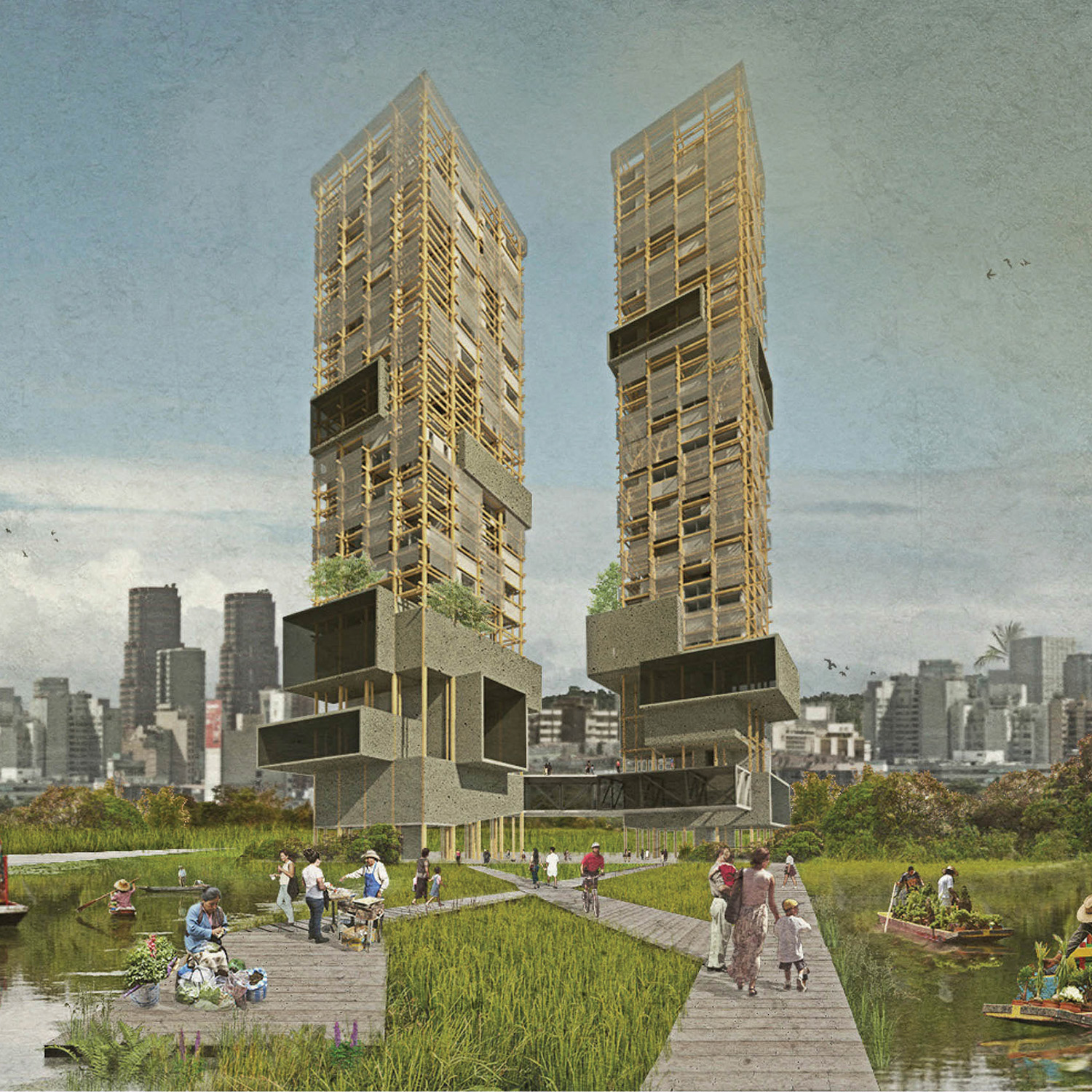
Hydro-City MXDF
Lisa Martinez and Gonzalo Casado, University of Arizona and Universidad Pontificia de Salamanca
Hydro-City MXDF seeks to address the housing and water crises in Mexico City by implementing a socially and ecologically sustainable network of mixed use tall buildings that would shelter communities living in unsafe locations. The ravines to the west of the city were once vital recharge basins for the aquifer below; now due to the lack of household plumbing in informal housing, water that passes through these basins is contaminated. The towers in the neighborhoods of in Chapultepec, Coyoacán and Tacubaya at the base of the ravines would offer shelter for communities living in ravines, and once human settlement was removed, the basins would return to their original function in channeling clean ground and subsurface water.
View presentation board
2nd Place
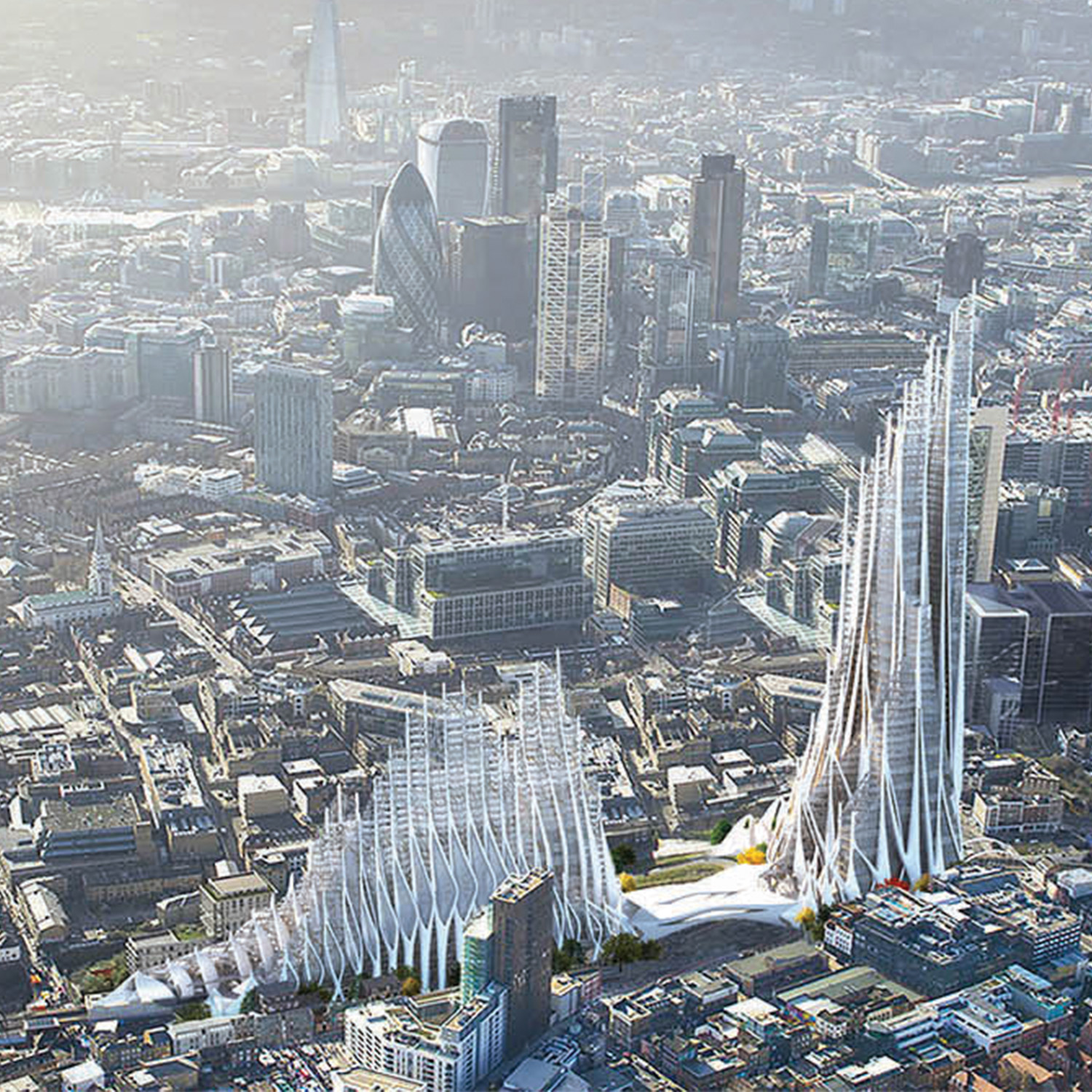
Bishopsgate Goodsyard: High Density Urban Order in Central London
Justin Oh, Lisa Albaugh, Benjamin Bourgoin, Jamie Edindjiklian, and Roberto Jenkins, Yale University
The project is organized into four main components: a high-density tower, a mid-rise typology, a train station that bridges between the two, and a park landscape that mediates between the existing viaduct and the various access points throughout the site. Each of the four components are given their own unique character, and by blending them into a continuous field they produce a differentiated system that accommodates diverse and overlapping programs at a hyper dense urban scale. The blending of four distinct architectural typologies addresses a diversity of urban functions, from living and working to recreation and transportation.
View presentation board
3rd Place
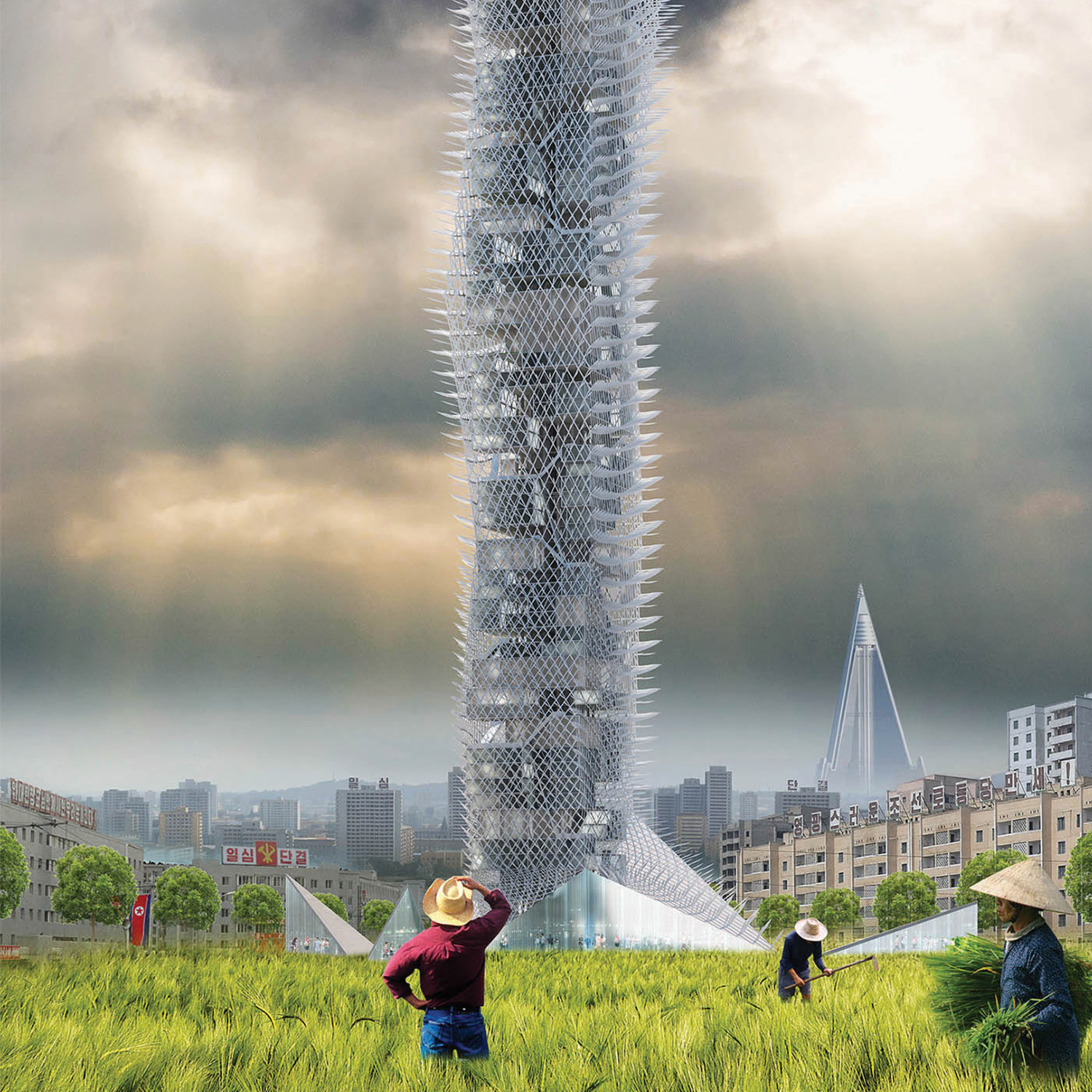
Micro District 1: Barrier of Future Urban Sprawl in Pyongyang
Hyun Chul Youn, Washington University in St. Louis
The Micro-district is the key concept for structuring residential blocks in socialist cities. Similar to Pery's Neighborhood Unit theory, the micro-district is composed with residential units, service facilities and schools, so that a district can work as a basic unit for living. However, the unique factor of the Micro-District, compare to the neighborhood unit theory, is that it also has 'production' facilities within a unit, such as workshops, light factories and manufacturing facilities. The purpose of it is to have the shortest distance between living and working space as well as to have a full sustaining unit that not only consumes products, but also produces them.
View presentation board
4th Place
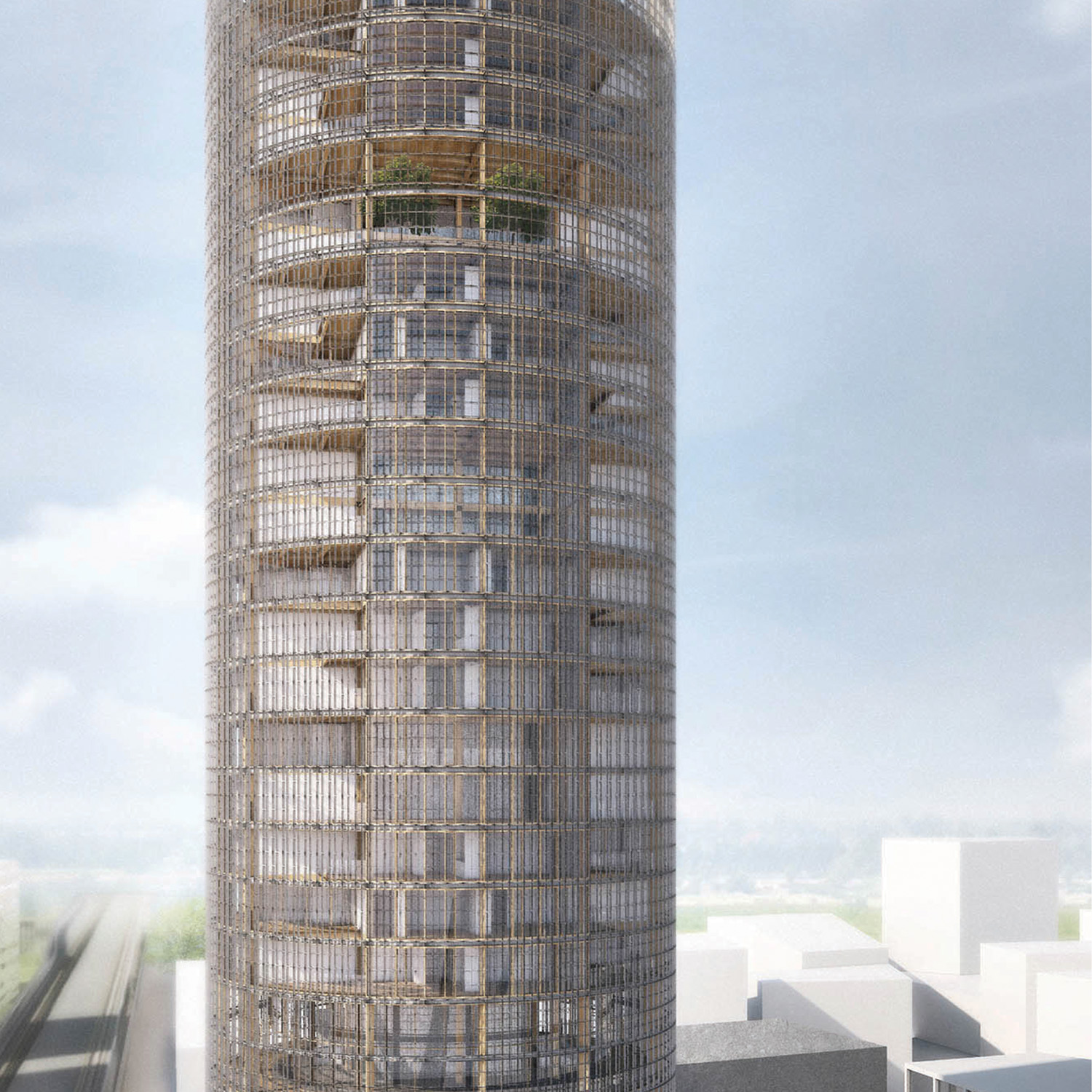
Wooden Residential High-Rise
Maximilian Janke and Tano Muffler, University of Stuttgart
The site is located right next to the station, giving it a special position in the area. We designed an office building and a public library to form a public space as an entrance to the quarter, while the tower sits right in the middle of it. This is at the same time the explanation for its round shape, to guide pedestrians fluently on both sides and to create the gateway from the residential area to the lake next to it. To create appropriate solutions for both residents and visitors of the area, the high-rise contains seven floors of apartments for people living away from home, staying just for a part time.
View presentation board
5th Place
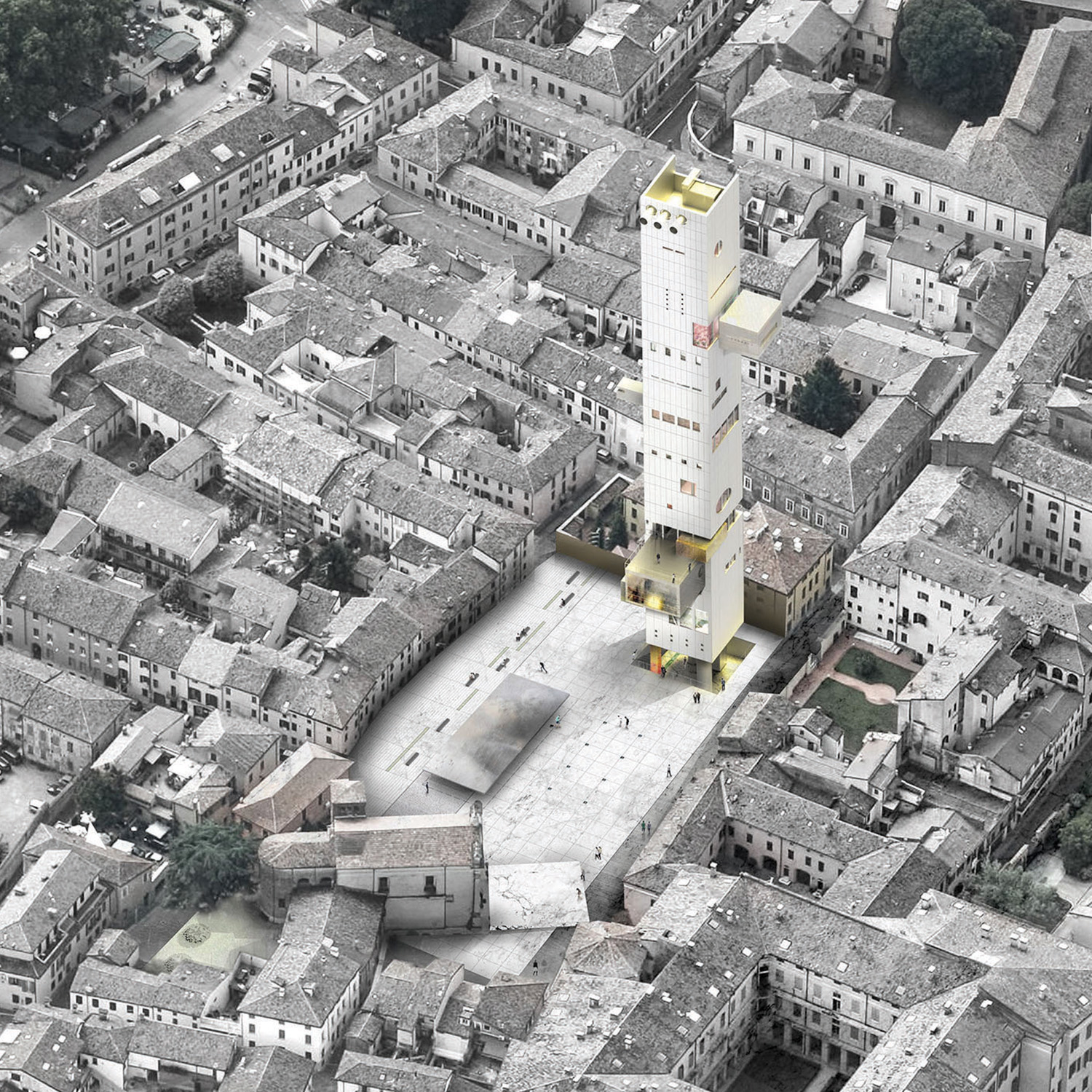
Mantova Performing Arts Centre
Adrian Labaut Hernandez, Aytan Javadova, and Maximilien Rousset, Politecnico di Milano
Mantova, Italy, a place with a very strong historical presence: narrow streets, churches, cobblestone. At the same time Mantova is completely inactive. There’s an important lack of activities and places to promote them. New concept of tower, understanding how to interact with a strong historic area, the project is located in this place specifically but is generic in its intentions. It aims to concentrate several possibilities in a very small area. Aesthetics are subordinated to interactions. The beauty of the performance. The context as a source of interaction that needs to be managed.
View presentation board
Funding Sponsor: Council on Vertical Urbanism
2025 International Student Tall Building Design Competition Winners
Funding Sponsor: AECOM
2023 International Student Tall Building Design Competition Winners
Funding Sponsor: Think Wood
2022 International Student Tall Building Design Competition
Funding Sponsor: TKE Aufzugswerke GmbH
2021 International Student Tall Building Design Competition
Funding Sponsor: Council on Vertical Urbanism
2020 International Student Tall Building Design Competition
Funding Sponsor: Tetra Tech
2019 International Student Tall Building Design Competition
Funding Sponsor: New World Development Company Limited
2018 International Student Tall Building Design Competition
2017 International Student Tall Building Design Competition
Funding Sponsor: Plaza Construction
2015 International Student Tall Building Design Competition

Take your research to new heights.
Fill the gaps in your research needs—from technical expertise and funding to promotion and dissemination—by partnering with the Council on Vertical Urbanism.
Let's Connect