


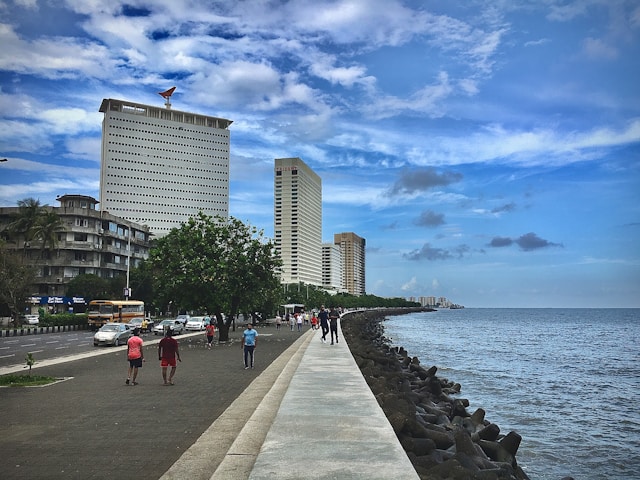
Mumbai is turning to private sector power to help solve one of its most persistent urban challenges: the lack of accessible green space. As rapid development transforms the city into a vast construction zone with new highways, metro lines, and an airport underway, residents have been left with roughly 1.24 square meters of public open space per person, according to a study published in the Journal of Public Space in 2024, far below cities like New Delhi and Bengaluru.
To change this, Reliance Industries, led by the Ambani family, has committed to creating a 130-acre Coastal Road Garden on newly reclaimed land. Announced by Nita Ambani in August 2025, the project will function as a much-needed “green lung” for Mumbai, aligning with the family’s growing role as major patrons of culture and public life.
City officials say the new park, along with plans to open the Mahalaxmi Race Course to the public during off-season, could help Mumbai reach its goal of expanding public space to two square meters per resident. While the city contains large ecological assets—such as Sanjay Gandhi National Park and extensive mangroves—most are inaccessible, making new public landscape projects especially valuable.
Reliance’s involvement also highlights a broader trend of billionaire-led urban transformation. For example, Gautam Adani is steering the redevelopment of the sprawling Dharavi settlement after decades of stalled government efforts. Experts note that the scale of Mumbai’s urban challenges increasingly requires private-sector participation with the caveat that contracts must remain transparent.
The Coastal Road Garden has been decades in the making. It was first proposed in the 1990s with a larger footprint envisioned by architect Hafeez Contractor’s firm. The plan stalled amid environmental and budget concerns but momentum returned in 2024 when the Brihanmumbai Municipal Corporation (BMC) invited bids from major firms. Reliance is developing the park through its mandated Corporate Social Responsibility funding, which requires large Indian companies to spend two percent of profits on public welfare.
While the project has been welcomed, citizen groups remain vigilant to ensure it is both socially and environmentally responsible. The Mumbai Coastal Forest (MCF) collective supports the garden but is lobbying for an urban forest instead of a manicured landscape, citing climate resilience, biodiversity benefits, and rising cyclone risks along the Arabian Sea. The group is also pushing for guarantees that the space will remain truly public, stating that there should be no entry fees, no private events, and no advertising.
Experts caution that soil limitations on reclaimed land may constrain extensive tree planting, but environmental advocates say the stakes are too high to miss the opportunity. “The problems that a forest can solve for the city are way more than what a garden would be able to,” said campaigner Mamta Mangaldas.
As planning continues, the Coastal Road Garden stands at the intersection of civic aspiration, climate urgency, and high-profile philanthropy—a look toward how Mumbai’s future public realm will take shape.
Read more at Bloomberg.