


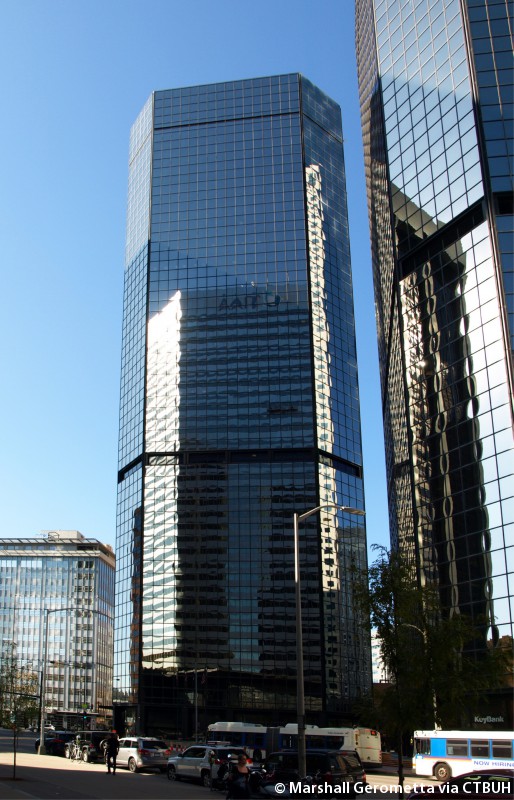
Real estate player, The Luzzatto Co., led by Asher Luzzatto, is expanding its downtown footprint in Denver after acquiring two major office properties at steep discounts—moves that will give the firm control of four skyscrapers totaling 1.75 million square feet (162,580 square meters), or 5.5 percent of downtown’s office supply.
The firm is under contract to purchase the Denver Energy Center—two high-rises between Broadway and 16th Street—for US$5.25 million, a staggering 97 percent discount from its last sale at US$176 million in 2013. The deal follows Luzzatto’s earlier US$3.2 million purchase of two high-rises on 17th Street, where the company plans a large-scale conversion to residential and mixed-use space.
Together, the projects could yield over 1,200 new residential units. The 17th Street project, dubbed High Fidelity, envisions 700 apartments, 50 hotel rooms, and new public amenities such as a bodega, bakery, art galleries, and coworking and childcare facilities. The Denver Energy Center is slated for another 500 units, with Tower Two prioritized for full conversion by 2026. “These will be transformative,” said Luzzatto. “They’re not going to be cookie cutter in any sense of the word.”
With downtown office vacancies near 37 percent—about 11.5 million square feet (1.06 million square meters), according to CBRE—city leaders have championed adaptive reuse projects as key to turning the Central Business District into a more livable “Central Neighborhood District.” Luzzatto’s developments align closely with this vision.
Yet financing such conversions is complex. Older office buildings often lack the plumbing, lighting, and floor plans needed for residential use, while rising construction costs and interest rates add further strain. Luzzatto acknowledges the challenge: “You have to have the courage to go into the unknown on cost and trust that if you build something great, it will work out.”
The High Fidelity project faces an additional hurdle: a ground-lease dispute at 633 17th St. that must be resolved before construction financing can move forward. Luzzatto is also seeking US$56 million in Downtown Development Authority gap funding—about US$80,000 per unit—to close financing gaps. The DDA has already allocated significant funds for similar office-to-residential projects downtown.
Despite the obstacles, Luzzatto remains optimistic: “Denver’s distress is actually its advantage. It’s in a great position to force change.” If completed, his projects could anchor a broader downtown recovery—transforming vacant office towers into vibrant, 24-hour urban neighborhoods.
Read more at the Denver Gazette.