Introduction
Those in the industry have many important technical factors to juggle when designing tall. And it may be that not all projects have taken a deep dive into perfecting the user experience at the top. To the occupant, observation areas and sightseeing platforms have “view” as their primary design purpose. There is a saying: “You had one job…” This certainly applies to the observation deck, and yet some fail to satisfy even the baseline requirement. From the perspective of the user, the unfettered view is that requirement.
Expectations on the part of the user have changed over time, expanding to include the ability to take effective photographs with both digital single-lens reflex (DSLR) and mobile-phone cameras. Yet the design of some of these spaces has been compromised over the years, often decreasing the vitality and immediacy of the viewing experience. Glass has been modified to answer to sustainable design requirements. Open-air viewing platforms have been secured against falls with wire and glass. Observation decks have been identified as major income sources, and the spaces increasingly filled with items and experiences “for sale.” Space becomes constricted and often cluttered, marring the exquisite feeling of being alone on the “mountaintop” to take in the view. There are ways to maintain occupant safety, promote low-carbon design and monetize space, without completely degrading the primary experiential value.
There are ways to maintain occupant safety, promote low-carbon design and monetize space, without completely degrading the primary experiential value—the view.
Establishing Best Practices
What are the potential best practices in the design of these venues? How do we measure the success of that experience? We can begin by categorizing the problem and responses with respect to:
- Aspects that are out of the developer’s and designer’s control.
- More subtle material design changes that can have a major impact.
- Major design moves with substantial impact, and cost.
What are the things that we cannot realistically control? The building location is usually predetermined, so that influences the potential view/obstructions, distance from other landmarks and presence of negative atmospheric conditions.
Material-related selection and design choices can have a positive or negative impact on the project, with little difference in cost. This would include the selection of the glass, color of the frames, interior finishes, lighting, and accounting for potential reflections. Additionally for exterior platforms, this includes the all-important design of railings and other safety systems.
Changes in the structural design of extremely tall buildings have more recently allowed eccentric loading and unusual massing. Major design moves and recent innovations include cantilevered or fully open-air viewing platforms, as well as rides and attractions at the top.
Distance from the Ground
There is and has always been a competition to build the tallest tower, with the consequence of placing observation levels increasingly higher. But beyond the initial thrill of the experience of extreme height, does this truly benefit the viewer? If one of the primary motivations to ascend is for “the view,” extreme distances from the ground can actually make it difficult to perceive details at ground level. Less time will be spent in examining surroundings if it is not readily possible to identify adjacent structures or neighborhoods. Many observation spaces will install graphic panels so that the viewer can look at the skyline and identify distant objects. Pay-for-use binoculars are also common, but this places an intermediary device (usually at a cost) between the patron and the immediacy of the view.
As a case in point, consider Tokyo Sky Tree, 2010 (highest observation level: 451.2 meters) versus Tokyo Tower, 1958 (highest observation level: 249.6 meters) (see Figure 1). The older Tokyo Tower is situated in a neighborhood with office towers and temples adjacent, providing for an interesting, highly detailed view of the ground. Sky Tree is situated in a low-rise area with little of interest to see at the ground level. Its great height and the persistent surrounding urban haze negate the view to other dense neighborhoods like Shibuya or Shinjuku, making it difficult to get a sense of the city.
Many purpose-built observation towers will provide a hierarchy of spaces from which to access the view, charging an additional fee to access the higher levels. This double-platform model was first seen in the Eiffel Tower in Paris (1889) and has been replicated worldwide. The upper platform is normally much smaller (due to the natural tapering of many towers for stability), further restricting occupancy. It can provide a more exhilarating experience if the additional height makes a perceptible difference in what can be viewed. As these high-level spaces tend to be more spatially constricted, they can suffer from crowding, and so care must be taken in space planning for queueing, and service facilities such as washrooms. There is an opportunity to radically change the look and feel of the architecture of these spaces, potentially enhancing the user experience and justifying in part the extra charge for access.
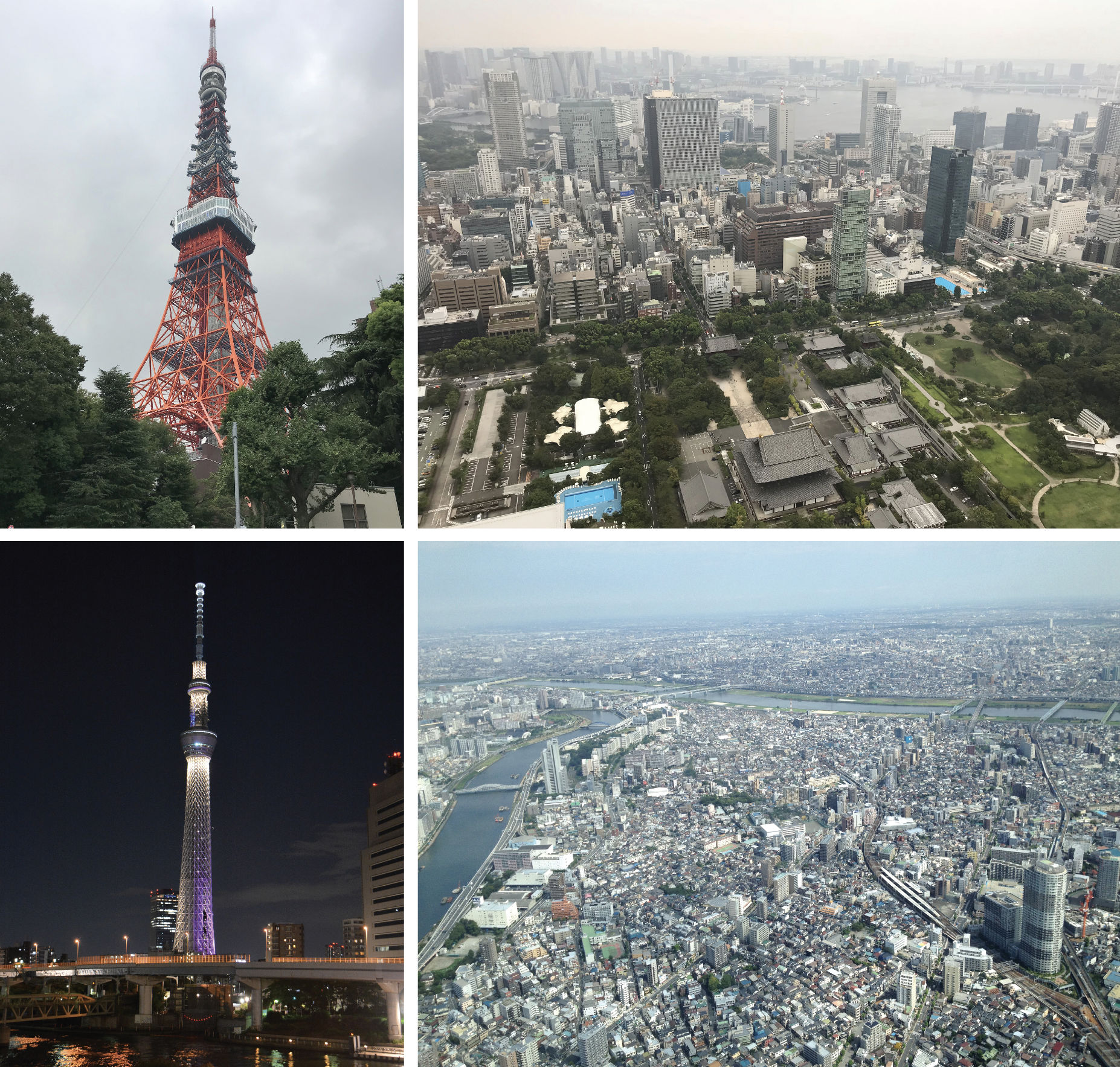
Figure 1. Tokyo Sky Tree, 2010 (highest observation level: 451.2 m) vs. Tokyo Tower, 1958 (249.6 m). Sky Tree (lower left) is situated in a low-rise area with little of interest to see at the ground level (lower right) The older Tokyo Tower (upper left) is situated in a neighborhood with office towers and temples adjacent (upper right), providing for an interesting highly detailed view of the ground.
Local Climate and Atmospheric Conditions
Does the local climate as influenced by the presence of air pollution or haze negate the view? In many urban centers, the persistence of haze can severely limit visibility. Observation levels are also often closed due to natural weather interference such as rain, fog, and severe storms. Industrial haze will not necessarily trigger the closure of an observation floor, even if the experience is less effective, as this may be seen as a frequently occurring issue; closure for haze would heavily impact potential income.
This condition is typified by Canton Tower in Guangzhou, China (see Figure 2). This city is notorious for its hazy atmosphere. However, the view from the observation area into the haze was still quite remarkable, given the floor-to-ceiling glass, diamond-patterned mullions, view through the steel diagrid, and choice of rather reflective, dark interior finish materials. The absence of electric lighting during the day visit enhanced the reflection of the façade in the flooring, extending the feeling of “being in the clouds.” The dark interior and lack of lights left the glazing fairly reflection-free, leaving a clearer view and assisting photography.
From an architectural design perspective, there is little a designer can do if the wish of the client is to have such a space. The lower and upper platform scenario can provide the possibility of a view at the lower level if the upper level is closed, maintaining income. It is possible to create a more ethereal feel to the observation space though via material and lighting choices, to enhance the sensation of “being in the clouds,” which may be important if the climate-obscured view is a persistent issue.
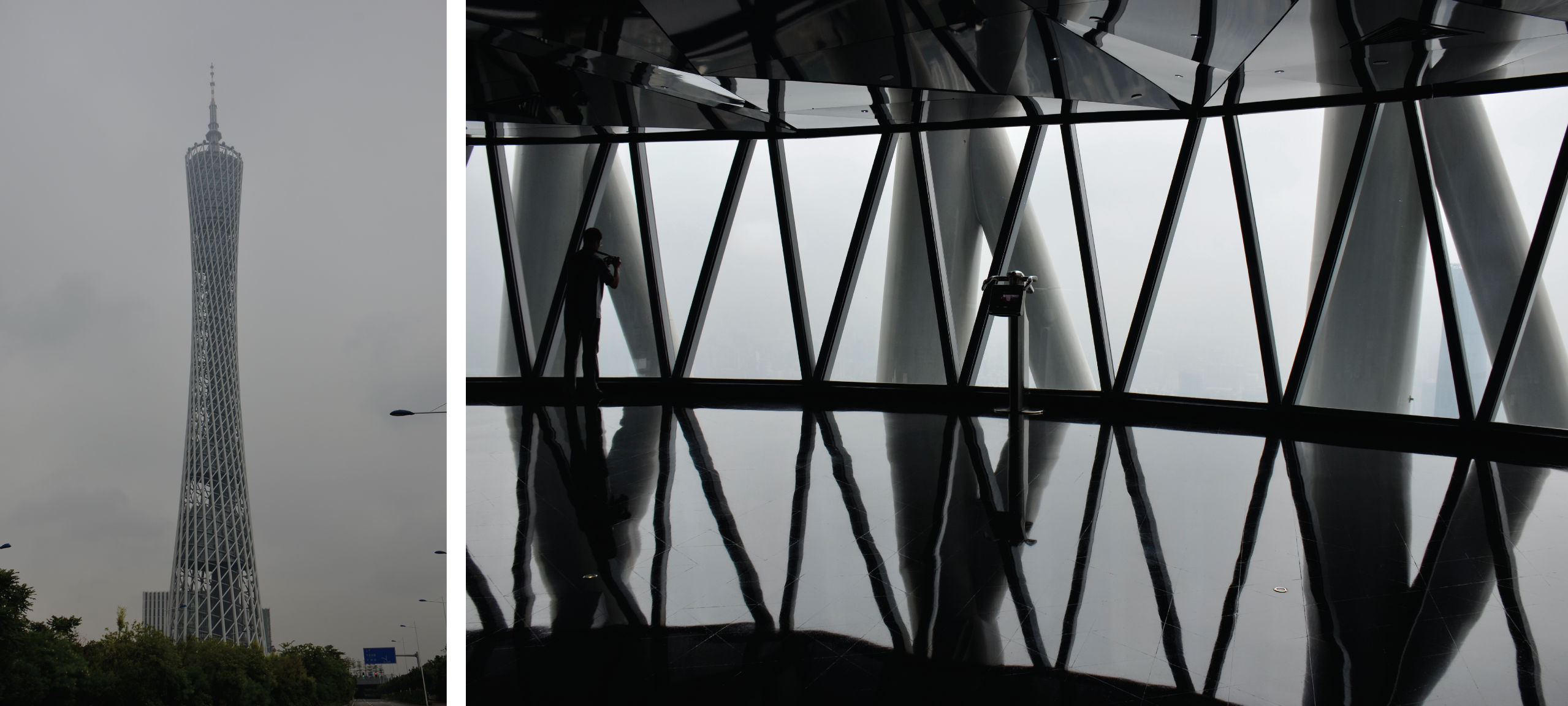
Figure 2. Canton Tower, Guangzhou (2010, observation level at 488 m). Despite the notorious haze for which the city is known, interesting visual experiences can still be had inside the observation deck, due to its design.
Indoor vs. Outdoor Viewing Areas
Historically observation towers provided outdoor viewing areas. Although many prize the experience of being outdoors at height, there can be compelling reasons to the design of conditioned indoor observation spaces. The ability to include exterior observation areas will vary as a function of climate, height, and wind speeds. Locations that experience large amounts of snow, rain and wind may find it difficult to justify outside viewing areas, as from an economic perspective these will need to be closed for significant amounts of time. As observation decks are tourist attractions, a balance of indoor and outdoor spaces may naturally coincide with the low and peak tourist seasons and thus self-adjust for capacity.
Outside of the pervasiveness of inclement weather, wind tends to be the most significant factor impacting the viability of exterior viewing platforms. Under no circumstances are flying objects acceptable, and so exterior platforms will require both fall and wind protection to meet modern safety standards. Where wind is a great concern, such as at the top level of Shibuya Sky in Tokyo, lockers are provided. No bags, purses or hats are permitted, as they create a potential hazard.
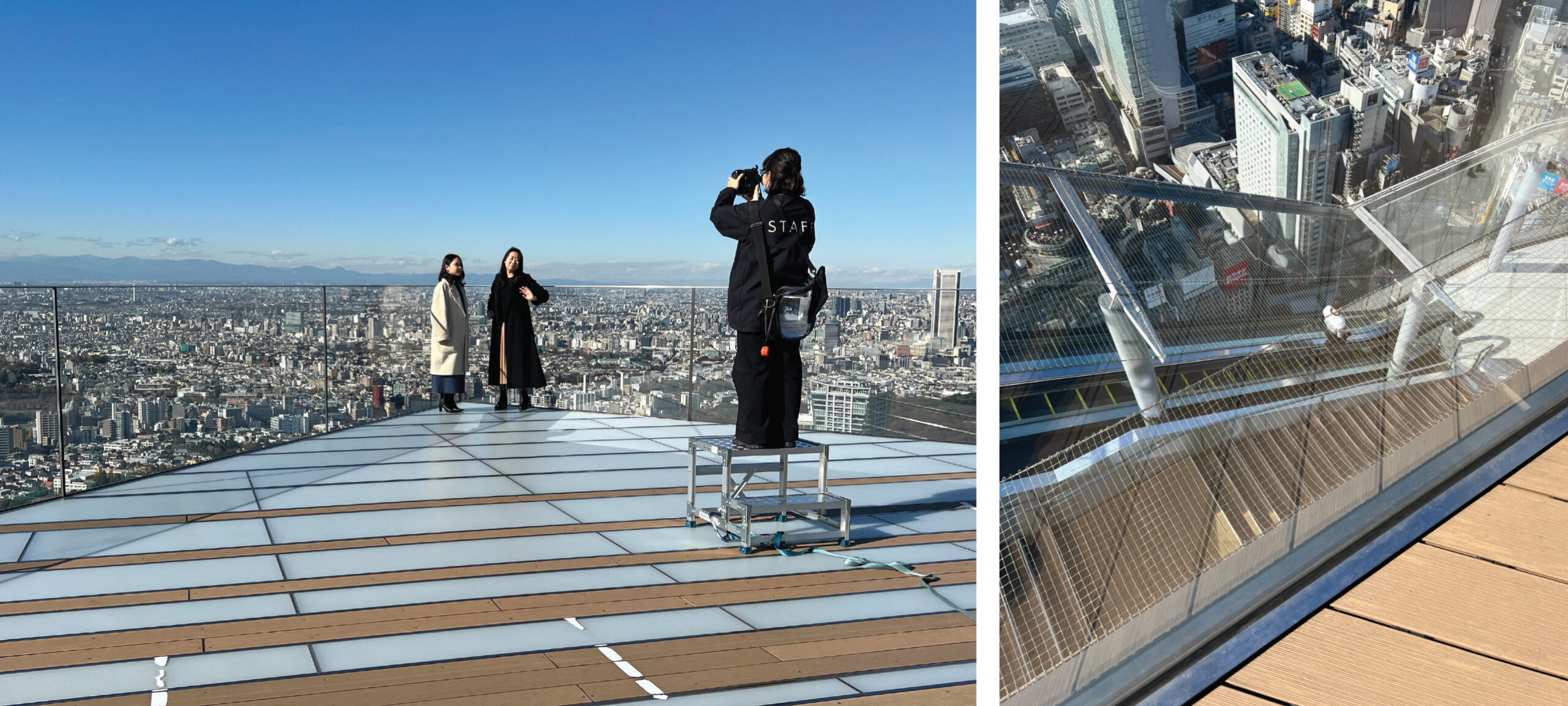
Figure 3. The observatory at Shibuya Sky, Tokyo (2019, observatory at 226 m) provides sightlines that give the impression one is standing unprotected at the edge of the roof, with Mt. Fuji beyond. The height of the glass railing sits tightly below the horizon .
Fall Protection for Outdoor Viewing Areas
When outdoor viewing areas can be included, designers should seek the most effective and least invasive means of fall protection, so as not to degrade the experience of the view and of the sense of being outdoors? The design of the fall protection will greatly impact the sensation of the outdoor experience as well as the ability to view and take photos. In 2023, the importance of the situational “selfie” cannot be underestimated. From an architectural design perspective, there is much that can be done to properly marry safety with the ability to get a good photo.
The legal required height of fall protection varies by jurisdiction. The height and completeness of fall protection will vary as a function of the falling distance. If the fall would be direct to the ground, protection normally consists of a non-climbable barrier that is a full floor in height (2.5 to 3 meters), consisting of glazing or mesh screens. If there can be a setback of the viewing floor to a fall buffer immediately below (often a lower viewing deck), lower railings can be used, allowing an unobstructed view. If the lower level is not visible from above, the sensation of openness can be enhanced for the user.
As a case in point, the selling feature of Shibuya Sky, Tokyo, is the ability to take a photo that gives the impression that one is standing unprotected at the edge of the roof, with Mt. Fuji beyond (see Figure 3). The height of the glass railing sits tightly below the horizon. This height is permissible because there is a mesh catch situated below the roof level, designed to catch errant phones if dropped over the edge. One floor below is the access level to the roof system, which would break an actual fall.
Historically, most buildings used railings and mesh to provide protection to the required height. In addition to being nonclimbable, designing mesh barriers requires an understanding of the size of a camera lens. Mobile phones are more forgiving, as the lenses are small, and it is possible to shoot through most sizes of mesh. DSLR lenses are comparatively large, and if the mesh is small, it becomes impossible to frame a shot without the interference of the mesh in the frame. As higher-strength and laminated glass technologies have advanced, these materials have become an increasingly common choice, providing a viewing experience superior to mesh. Glazed barriers can create a better sensation if they are well designed. They provide the least visual interference to the view and succeed in blocking the wind (see Figure 4). The negative impact of the glazed barrier on photography arises from the awkward effect of the natural greenish hue of the glass and potential reflections, which will vary as a function of the time of day.
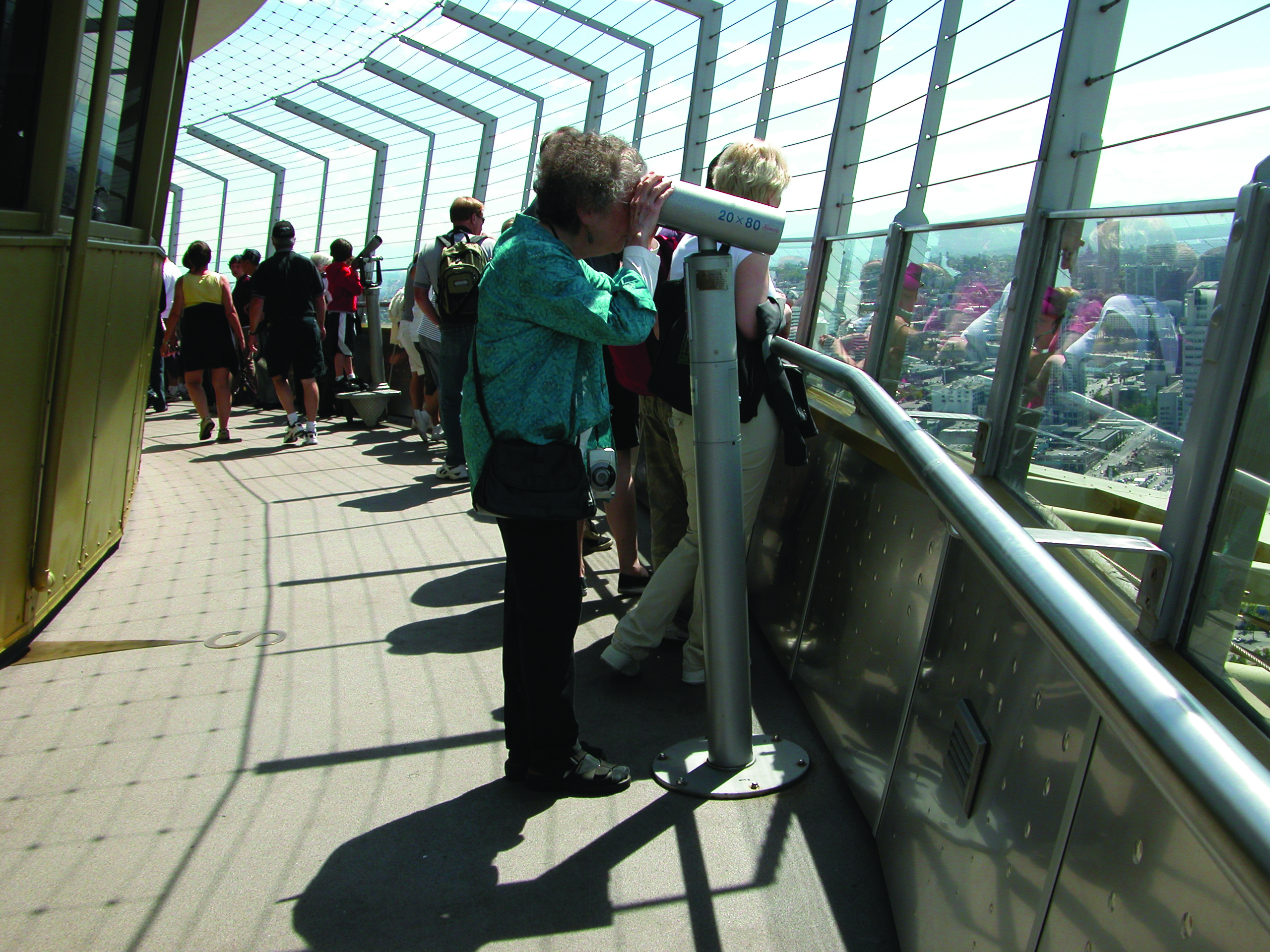
Figure 4. Contemporary and recently renovated observation decks, such as this one at Seattle’s Space Needle (1962, observatory at 161 m), have replaced mesh or wire fall-protection barriers with less-intrusive glazed systems.
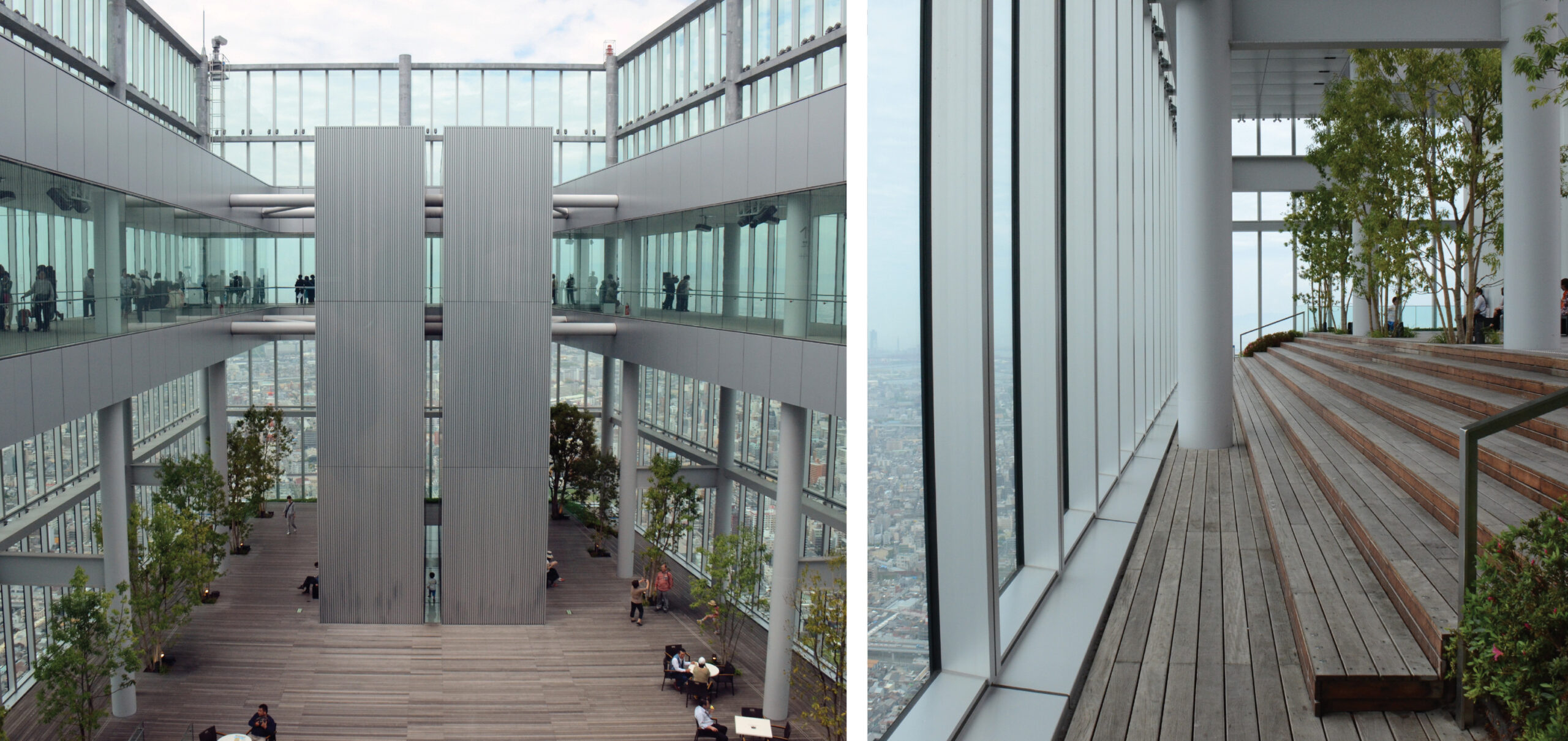
Figure 5. The Abeno Harukas Tower in Osaka (2014, observatory at 287.6 m) has an extremely well-designed two-story observation level.
Observatory Interior Design
Once at the top, there are many options for creating a high-quality viewing experience. This is largely based on the overall area available for viewing, as well as the position of the service core and elevator access. These have typically been located at the center of the floor plate, resulting in a fairly standard layout, varied mostly by the available floor-to-floor height at the observation level, the distance from the glass to the core, and the ability to build projecting volumes or platforms. Although these parameters impact both standalone observation towers and observation levels atop skyscrapers, standalone towers tend to be more flexible, as the observation space need not be confined within a more standard floor plate. For observation towers, the viewing platform is the essence of the program; for office towers, the observation level is often a minor added program and tends not to drive the tower design.
Nevertheless, some buildings defy this model successfully. The Abeno Harukas in Osaka, Japan, (2014, observatory at 287.6 meters) has an extremely well-designed two-story observation level (see Figure 5). The service core has been offset, allowing a spacious layout, including an open-air atrium with covered viewing platforms. A stepped seating area allows for a relaxed view to the city. The observatory was a major design focus for this mixed-use tower, not an afterthought.
With monetization being a high priority for many owners, pressure may rise to place accommodate gift shops, restaurants and coffee shops in addition to washrooms and other essential service spaces on the upper levels of an observation space. These can create pinch points in the layout. Likewise, the shape of the floor plate and orientation of interior design elements can work against optimal viewing (see Figure 6).
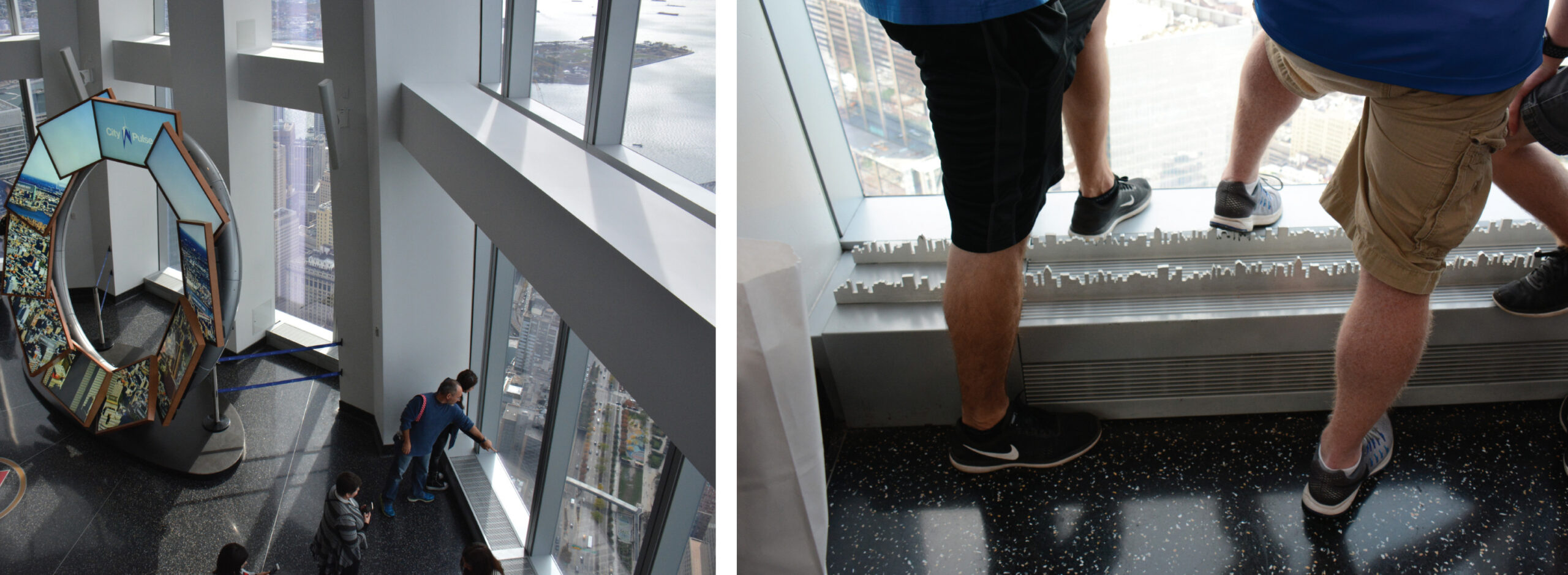
Figure 6. One World Trade Center, New York City (2014, observatory at 386.5 m), has several issues in its observation floor that work against the view. The tapering of the tower results in the shortest façades facing the prime views up and down the island. “Attractions” sit in front of these views, leaving the viewer to look obliquely through the longer façades. It is difficult to take photos, as the angled view causes reflections. “Skyline”-shaped barriers inhibit window access.
Glazing
The choice of glazing on contemporary buildings is greatly impacted by the desire to limit heat gain and loss. Over the years, the industry has moved to multi-layer sealed glazing as a routine specification. Thermal control has been achieved through the creation of spectrally selective glass. Exterior shading is uncommon at height. With the exception of very dark tinted or colored glazing, the human eye is able to naturally adjust its interpretation of color to a normalized state. How, then, does the choice of the glass itself impact the view? Even relatively “clear” glass can present processing difficulties for cameras. Images taken on DSLR cameras, and particularly mobile phone cameras, will have a marked greenish hue, resulting from the natural presence of iron in the silica sand from which the glass is made (see figures 7 and 8). In the era of immediately-uploaded social media, the choice of glazing can ruin the images, as specialty editing software is required to properly remove the greenish hue.
Low-iron glass is made with silica sand, with a low iron-particle count compared to other glass types. This eliminates the greenish-blue tint seen in standard window glass applications. This type of glazing is already used in solar applications where high transmission levels are desired. Since the view is the primary purpose for the observation floor, low-iron glass should be prioritized.
Although is not optimal for energy conservation, a balance in the overall energy performance of the building may be achievable through other measures. The desire for energy efficiency needs to be balanced with the clarity of the view, the potential for overheating due to excessive solar gain, as well as glare. It may be argued that prioritizing a clear view at the expense of sustainable parameters may be reasonable for one floor out of 150. Overall low-carbon goals can be achieved elsewhere. Observation floors need to maintain the view at all times; therefore, blinds are not favorable options for reducing glare. Interior finishes of a more subdued nature can help to visually cool the space, though at the same time, dark colors tend to retain solar gain, and so may require higher levels of cooling to balance the effect.
Observation spaces vary significantly in the degree to which they allow patrons to position their cameras adjacent to the glass. For the optimal view to the surrounds, as well as for photography, it is essential to have direct access to the glass in order to reduce reflections and glare. Of course, it is essential that there is adequate strength in the overall façade system to prevent accidents resulting from excess pressure on the glass. Many towers place a railing system between the patron and the glass for extra protection, which can frustrate the experience. The majority of observation spaces orient the glazing in a standard vertical format. Some choose to slope the glass outwards to provide a more direct view down. Vertical glass tends to suffer more from reflections, whereas sloped glass tends to be more photo-friendly in that regard.
Returning to the two preeminent Tokyo observation towers as an example (see Figure 9), the higher-level observation platform at Tokyo Sky Tree makes use of a tubular spiral ramp to take the user from the initial elevator arrival point, one floor up, to the elevator return point. The recently renovated upper viewing level of Tokyo Tower has a more constricted space than the lower level. Both projects slope the glass towards the view. This helps photography by minimizing reflections by placing the lens parallel to the glass. However, the large platform outside of the glass in Tokyo Tower partially blocks the view down. In both cases, the architecture of the upper levels is noticeably different from that of the lower observation levels.
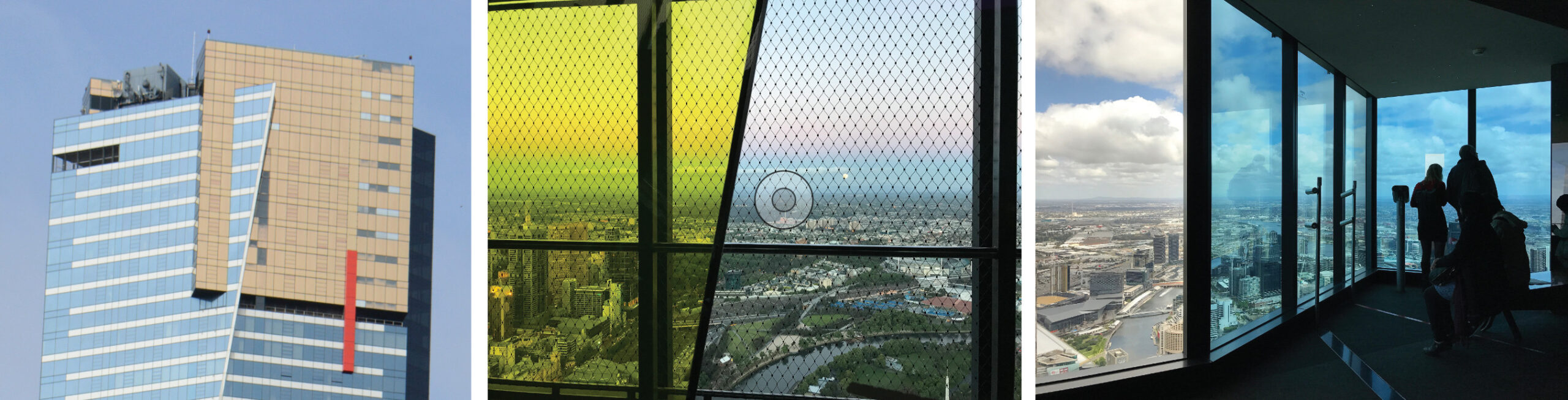
Figure 7. The Eureka Tower in Melbourne (2006, observatory at 285 m), has an articulated top, largely based on variations in the types of glazing used. This very negatively impacts the viewing areas in the tower, providing reduced opportunities to view through clear glazing. Mesh has also been used to enclose the open-air portion, which mars the view.
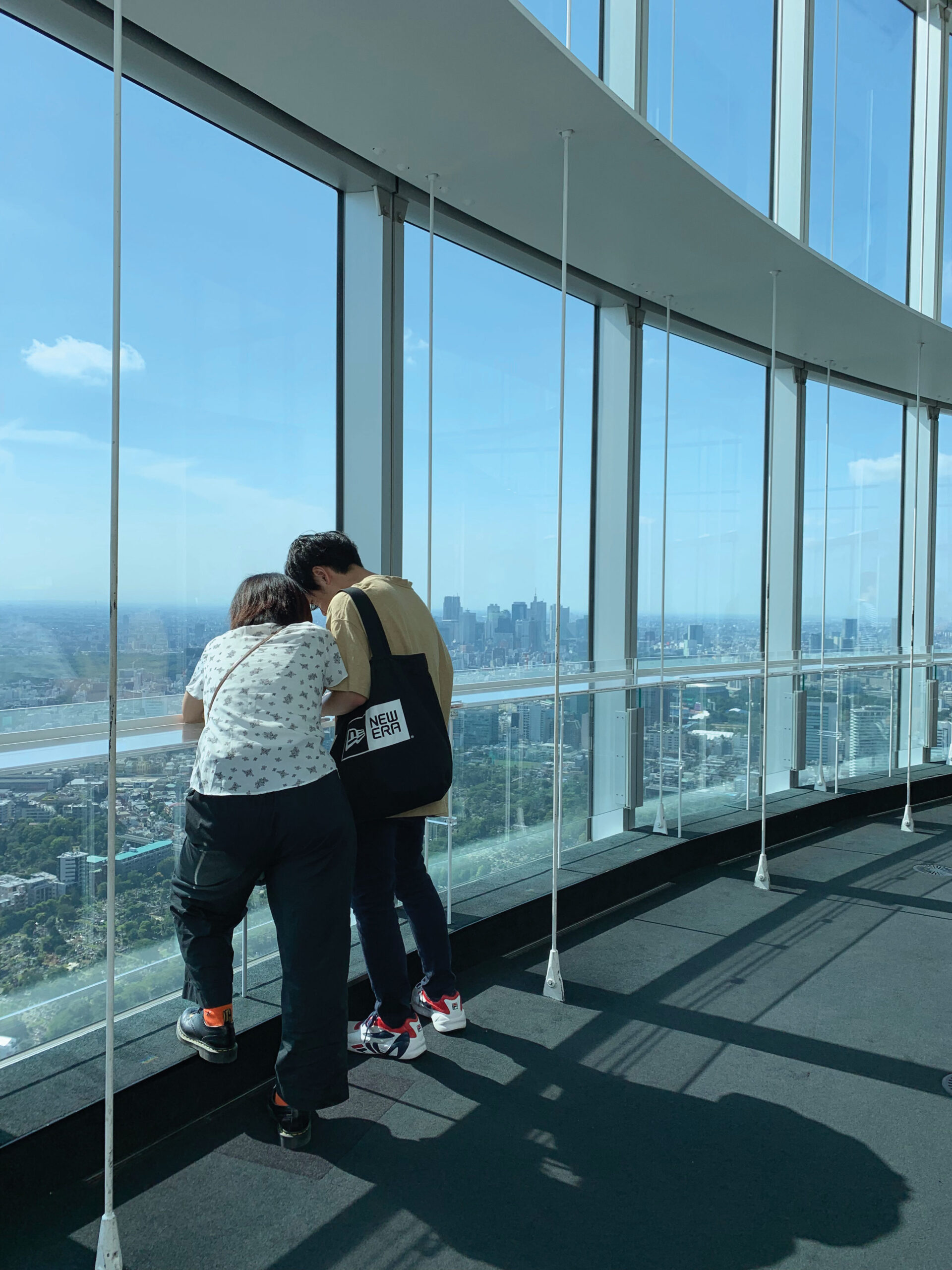
Figure 8. The observation level at Mori Tower in Tokyo provides generous glass counters along the glass perimeter, to encourage patrons to enjoy the view. The greenish hue, though, is very dominant in the space, even to the naked eye. The dark-colored floor tones down the exceedingly bright light levels in the double-height space. Light shelves provide some respite from the glare.
Reflections
While reflections on glass can somewhat mar a daytime experience, most viewing platforms are open during dark hours; here the avoidance of reflections presents a greater challenge (see Figure 10). The natural view through the glass and the ability to take photos can be greatly compromised by reflections from interior lights and signage. Although lights are necessary for the safety of the patrons and integral to sales kiosks, thought should be given to the creation of areas where reflections can be minimized. To reduce the impact of reflections on photos, it is necessary to either have full and direct contact of the lens with the glass to block reflections, or to provide a black “hood” over the DSLR lens to block reflections, while allowing for a better positioning of the camera for the shot. Vertical glass orientation is more difficult here, as the direct lens-to-glass aspect only permits a long-distance shot, and not a view downward. Sloped glass allows for an easier view down without undue glare. Most observatories do not permit tripod-assisted photography, so for long-exposure handheld shots, mitigating glare can become difficult to manage.
The nature of the curtain wall framing can cause reflections as well. Bright finished aluminum and deep frames are more reflective than darker hues. This also holds for interior finishes. An extremely subtle yet important aspect of the curtain wall design at the observation space lies in the color of the aluminum framing. Deep, light-colored aluminum frames will reflect on the glass, so shots taken towards the ground will reveal these frames if specific care is not taken to avoid them (see Figure 11).
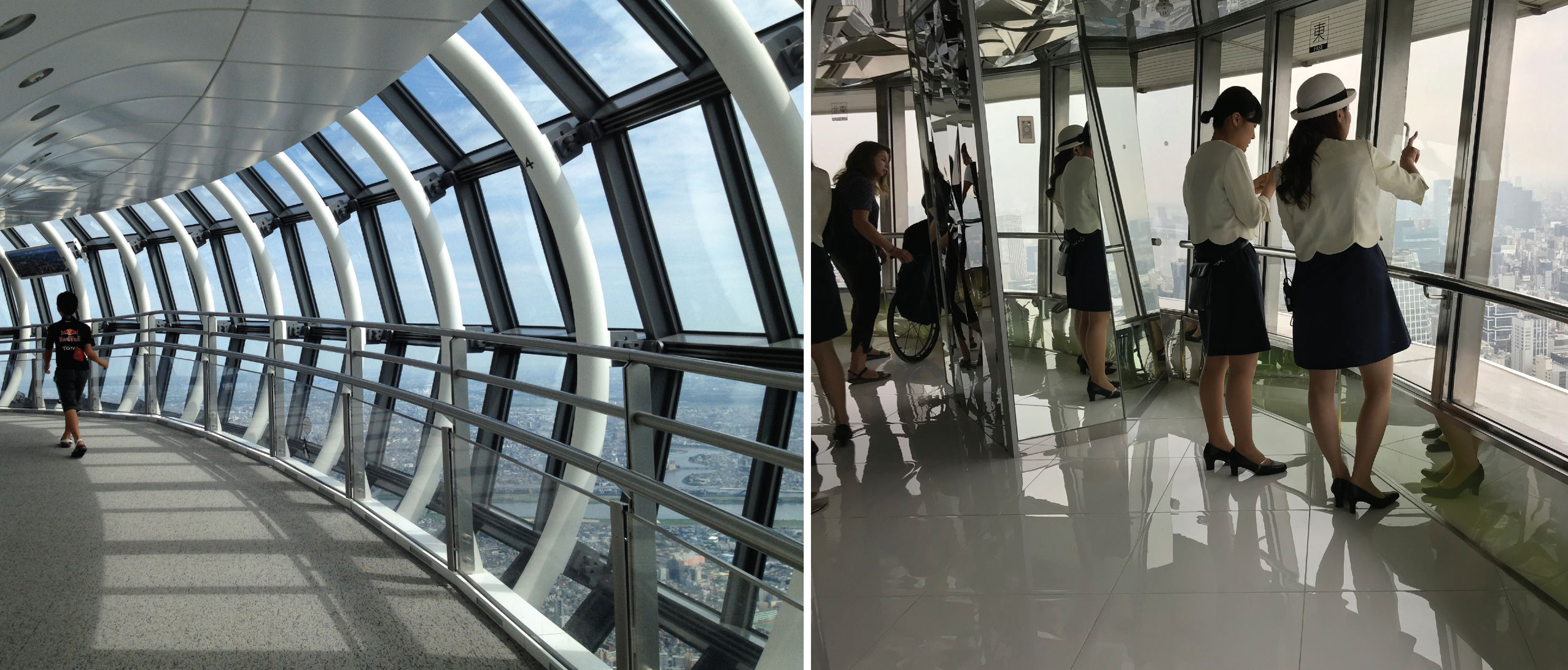
Figure 9. The higher-level observation platform at Tokyo Sky Tree (left) makes use of a tubular spiral ramp to take the user from the initial elevator arrival point, one floor up, to the elevator return point. The recently renovated upper viewing level of Tokyo Tower (right) has a more constricted space than the lower level. Both projects slope the glass towards the view.
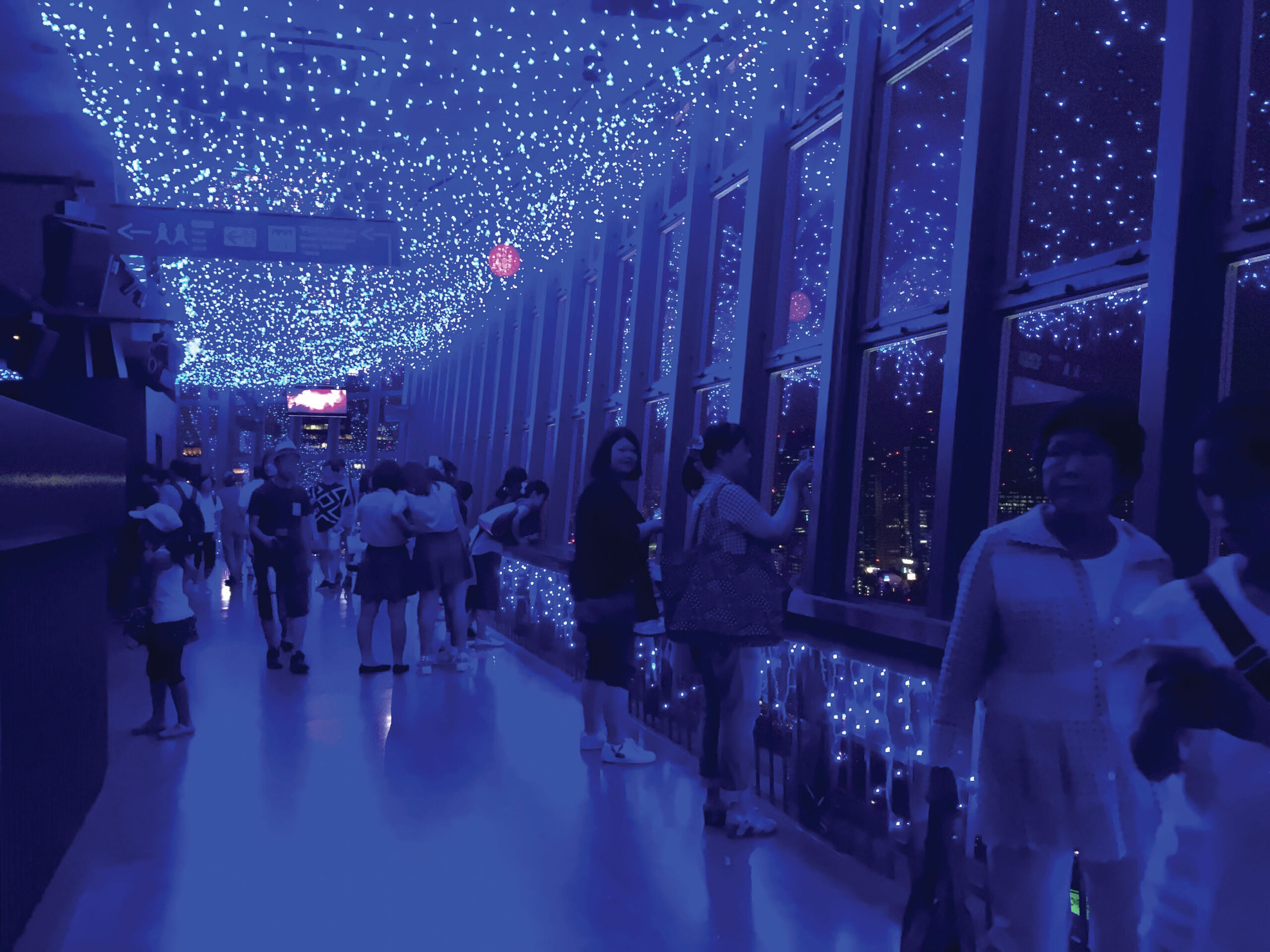
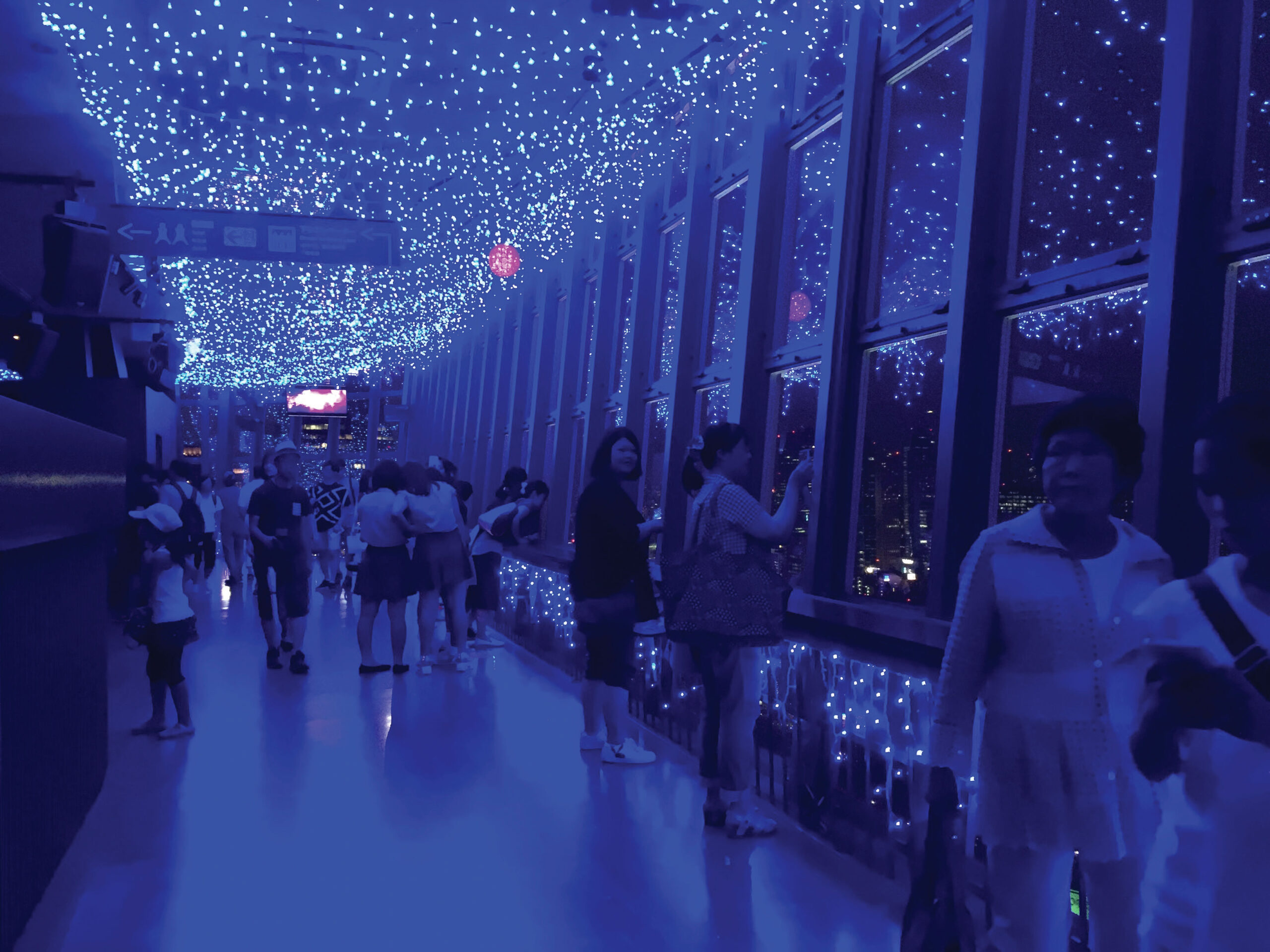
Figure 10. The festive lights that adorn the ceiling of the Tokyo Tower observatory create excessive reflections on the viewing glass at night.
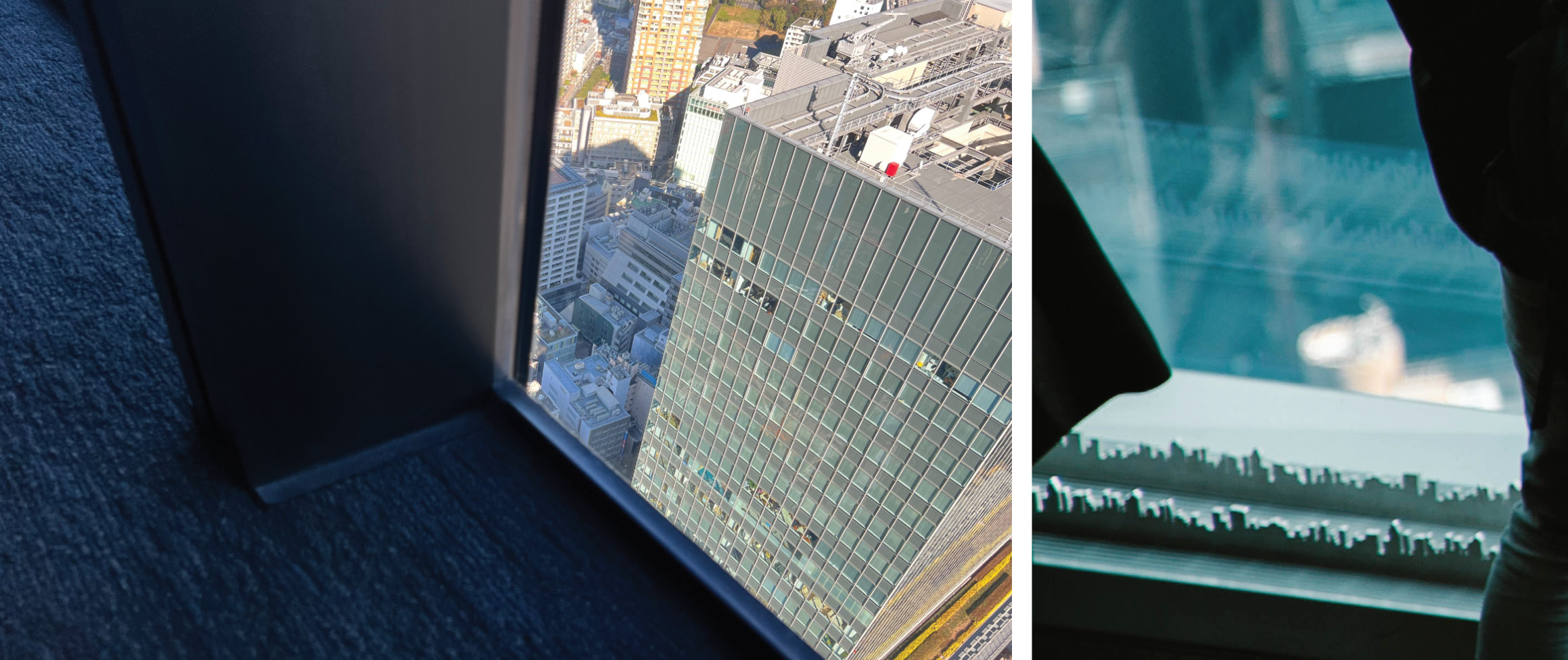
Figure 11. The black frames and carpet detail at the base of the windows of Shibuya Sky, Tokyo (left) minimize re-flections on the glass. The bright aluminum frame and heating grill at the base of One World Trade Center, New York City (right) create reflections on the glass, and the bright finish competes with the view.
Framing the Unobstructed View
We have examined the height of the space, the nature of the glass, the need to minimize reflections and glare, as well as the color of the frame. The nature of the architecture itself also must be considered. Its form and added features can work to create an iconic element in the skyline as viewed from the exterior, while presenting barriers to views from the interior (see figures 12 and 13). Although constituting a major element of intervention in the overall design, striking the balance between what is seen from the outside and what can be seen from the inside is critical to the success of the observation floors. And, although many top floors of tall buildings have not been purposefully designed as monetized observation spaces, the restaurants, and lounges that they house are used by patrons who have likely paid a premium for taking in a great view.
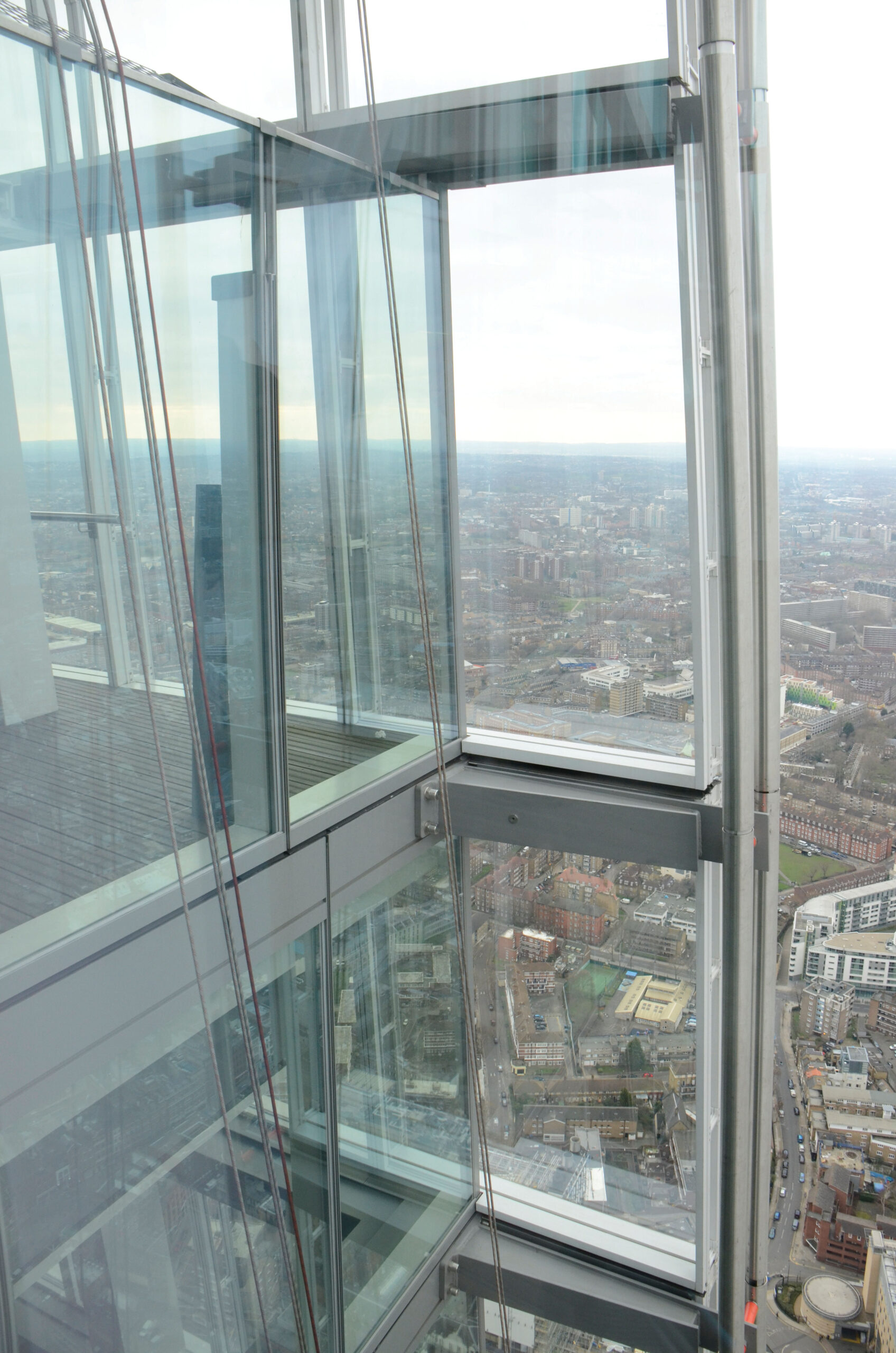
Figure 12. While architecturally very integral to this iconic tower, the glazed curtain wall extensions at the Shard, London (2013, observatory at 244.3 m) impede the view and create additional reflections.
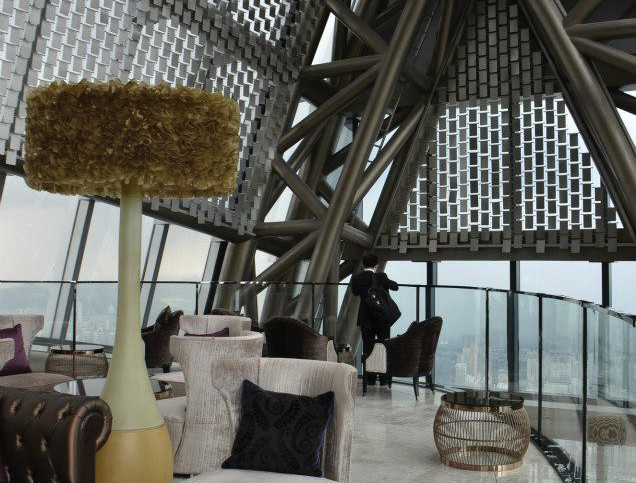
Figure 13. The observation floor of KK100 in Shenzhen (2011, observatory at 427.1 m), uses interior shades set between the curved triangular trusses that define the top of the tower. The seating area sits well back from the glass, negating a significant opportunity for a direct view.
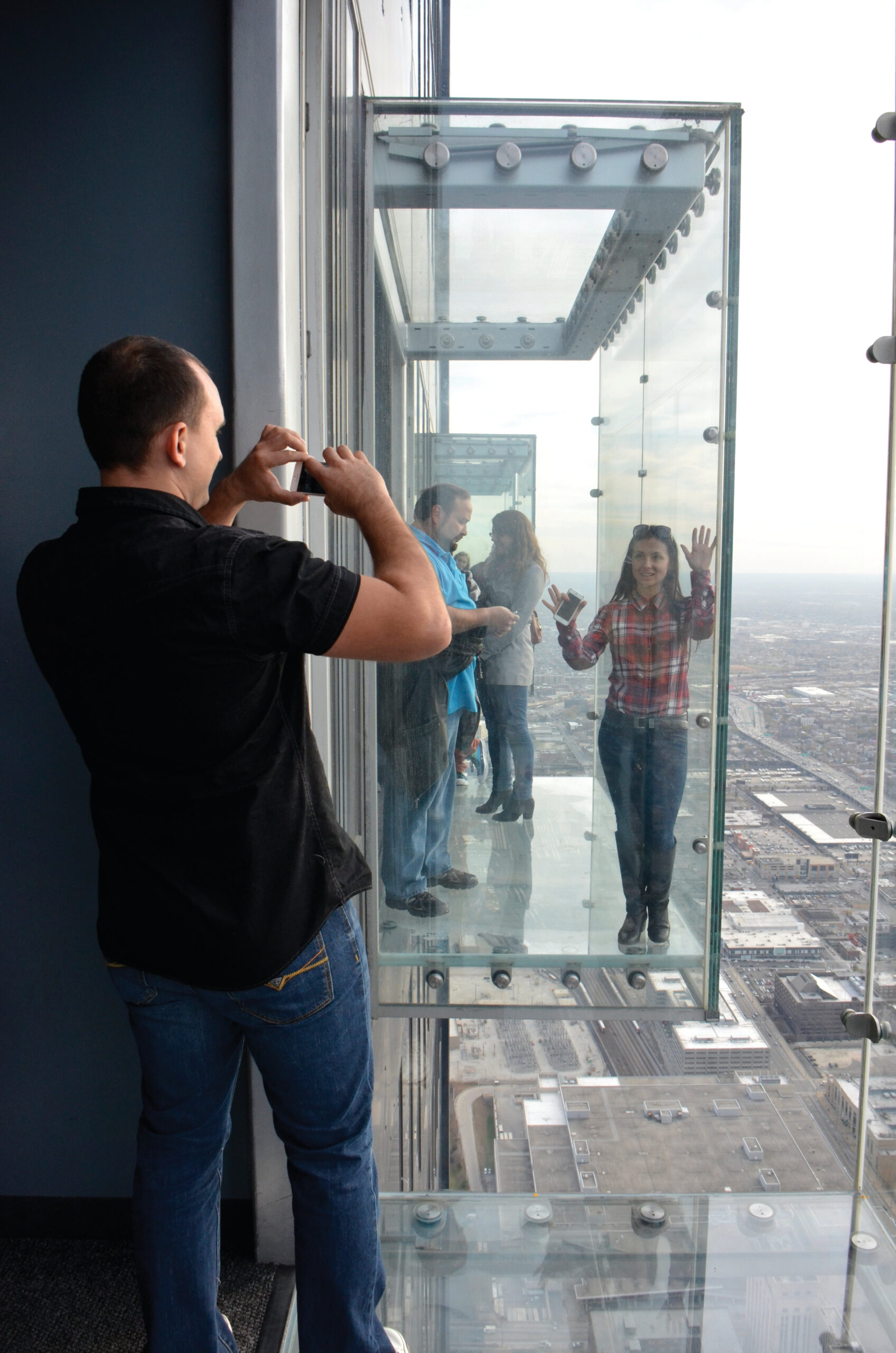
Figure 14. The invention of laminated glass has allowed for the addition of extraordinary experiences at height. The extensions to the Skydeck observation area at Willis Tower (observatory: 412.7 m), illustrate the potential of this material as a way to enhance the possible experience of more standard-shaped towers.
Innovation
Technical advances in the construction of supertall buildings has allowed for an increased freedom in the design of spaces at the tops of buildings. Towers no longer need to be tapered and symmetrical to create stability. Wind studies are possible to verify the impact of odd geometries on stability and user experience. With the level of investment being made, it is critical that vibration and excessive wind are properly understood and mitigated. The strength of laminated glass allows for transparent, yet secure fall protection around the perimeter as well as see-through floors for the daring, to enhance the thrill of height.
As a result, newer projects are changing the approach to the design of observation spaces, taking advantage of technical advances in structural engineering and materials. Where previously towers tended towards internalized viewing areas, cantilevered extensions are now possible.
The projecting platform is used to provide a 180-to-270-degree view capability. This method has been successfully employed in existing towers through the addition of projecting glass boxes, as in the case of the Ledge at Willis Tower (formerly known Sears Tower) in Chicago (see Figure 14). The glass floor itself allows for a straight view down, which when moved outside the building envelope proper, also facilities a semi-spherical view of the surrounding areas. Newer projects such as 30 Hudson Yards (see Figure 15) and The Summit at One Vanderbilt Avenue, both in New York City, have added projecting platforms as very significant architectural features, so as to expand the view and improve the value of the platform as a destination.
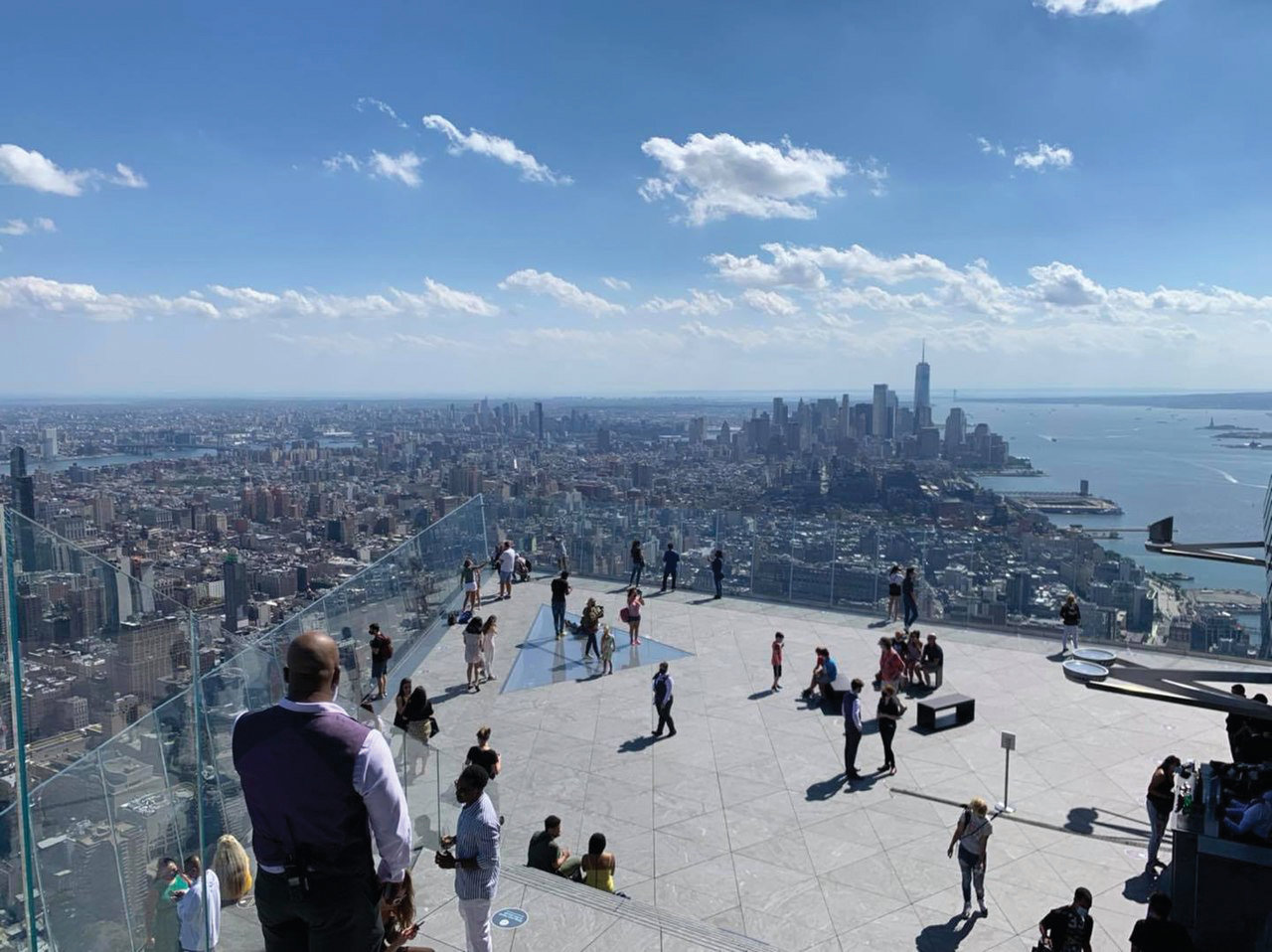
Figure 15. The Edge viewing platform at 30 Hudson Yards, New York City (2019, observatory at 336.7 m). The project also includes a glass floor to further enhance the viewing experience. © hypnotoad78 (cc by-sa)
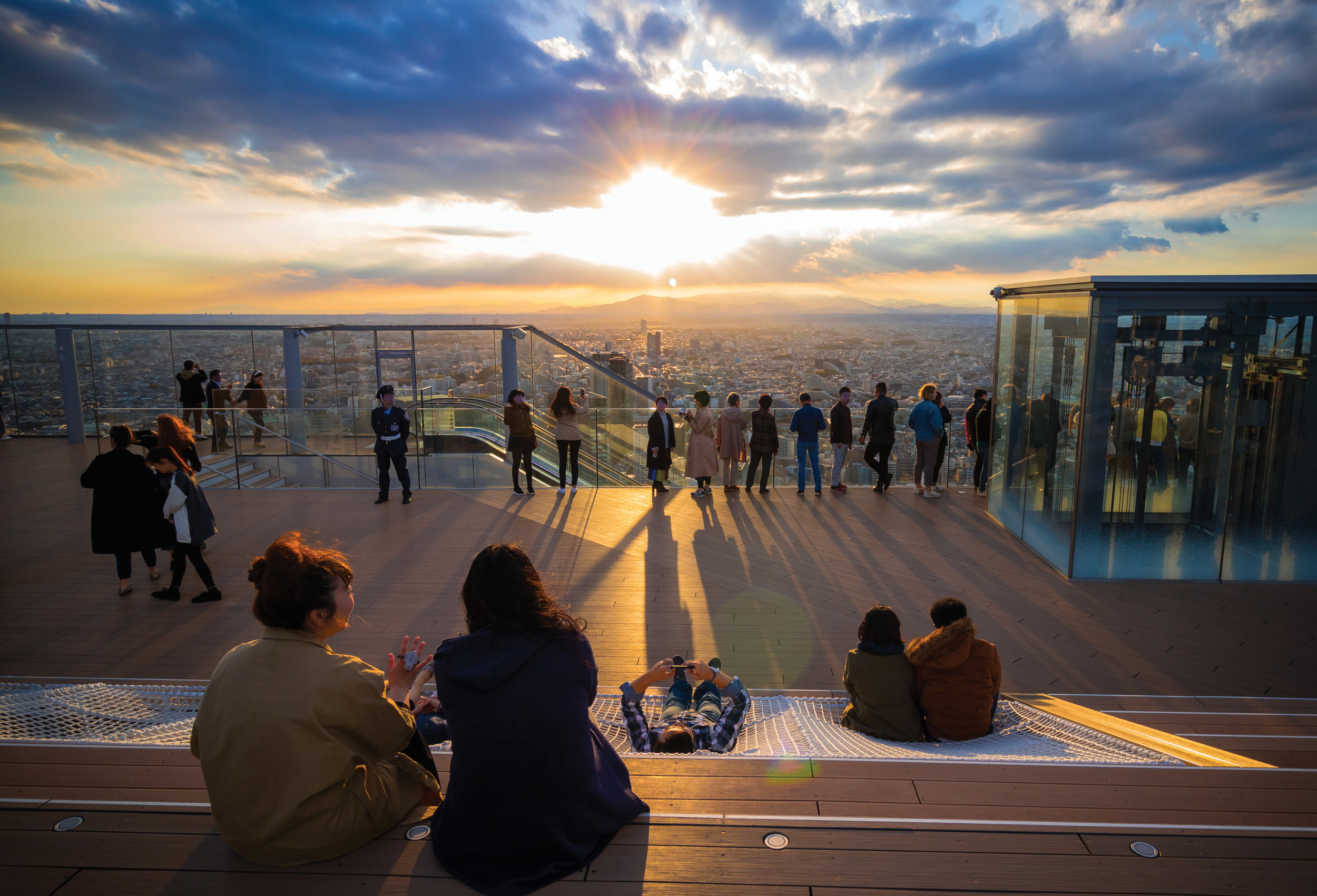
Figure 16. The rooftop of Shibuya Sky, Tokyo has been designed to provide patrons with a variety of viewing experiences of the city of Tokyo. It includes seating areas, lounges, small bars/food concessions and numerous photo opportunities. The feeling is spacious and without pressure. The tickets are timed to prevent overcrowding to maximize the experience. © Kakidai (cc by-sa)
Conclusion
We have begun to describe an approach to best practices for the design of the observation levels of tall buildings that is user-driven. Of primary concern, and common to all projects, is the technical aspect of glazing design, to promote clarity of view, limit reflections and ensure close access to the glass itself. It is still possible to answer equally to client needs for improved safety, crowd control and monetization of the facility. However, more careful consideration of unobstructed and quality access to the view, from the perspective of human sight as well as photography, is needed. There is a need to provide a better understanding of measures that can be taken to improve the experience of the visitor.
Unless otherwise noted, all photography credits in this paper are to the author.
About the Author
Terri Meyer Boake is a full professor at the School of Architecture at the University of Waterloo in Canada. She has been teaching building construction, environmental design, design studio and film since 1986. Her area of research passion is architecturally exposed structural steel, and she has now published four extensive books on the subject with Birkhauser. She works with several agencies developing teaching resources for architectural education. Boake serves on committees with the Council on Tall Buildings and Urban Habitat, the Canadian Institute of Steel Construction Education and Research Council, the Building Technology Educators’ Society and the Ontario Association of Architects’ Committee for the Sustainable Built Environment. She is an avid photographer, documenting construction processes and completed buildings.
7 Melville Street South Cambridge, ON N1S 2H4, Canada
t: +1 416 258 5000
e: [email protected]
uwaterloo.ca/architecture/profile/tboake