


Studio Overview
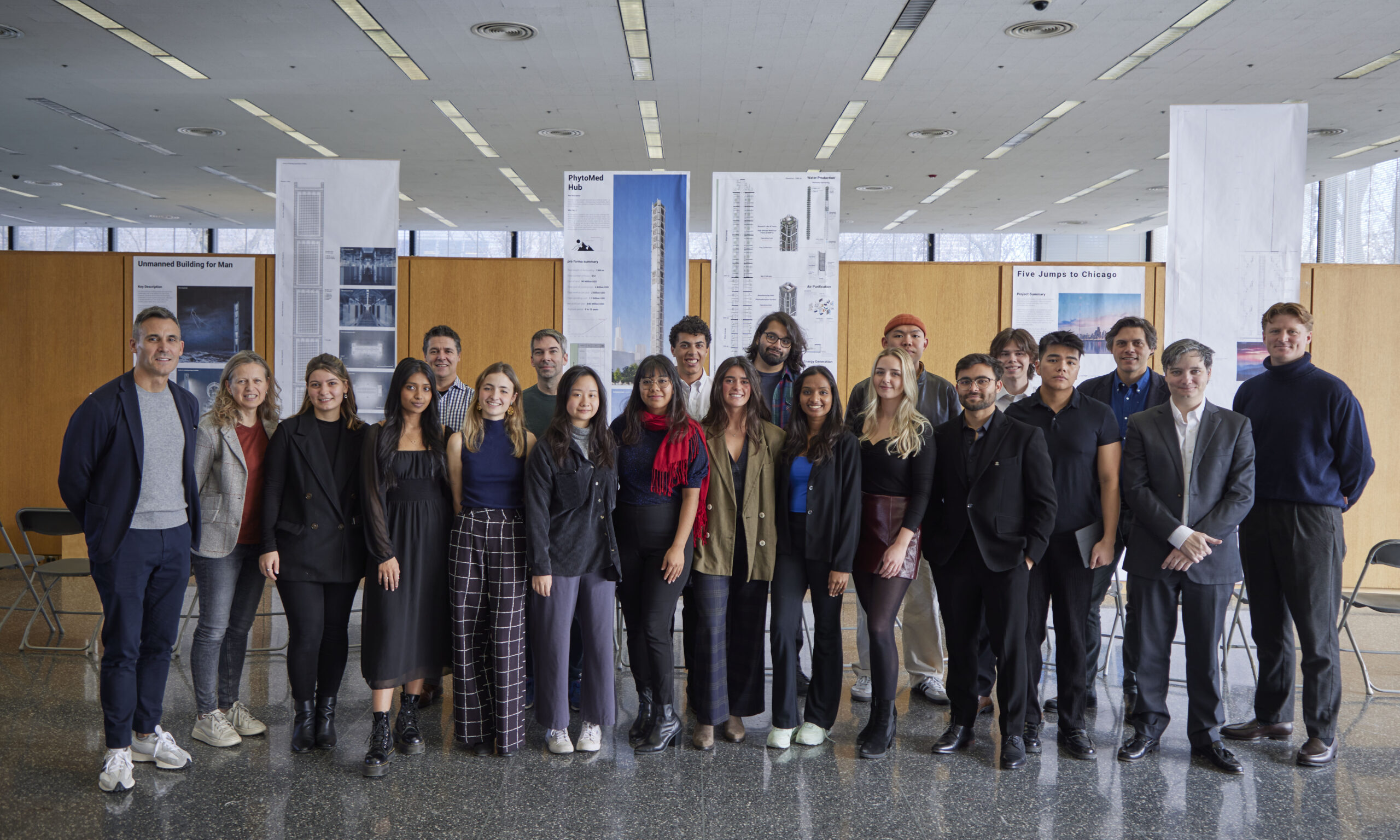
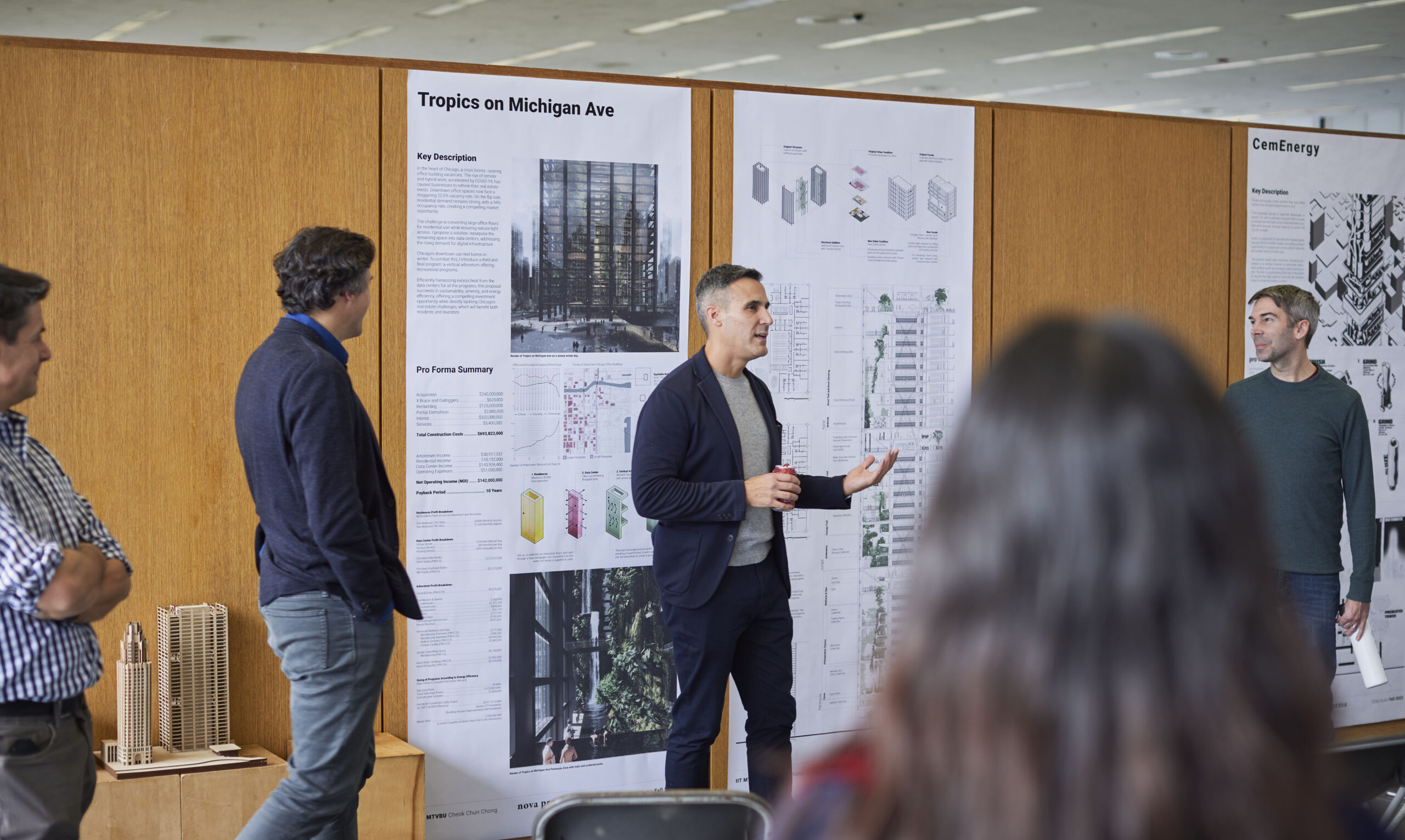
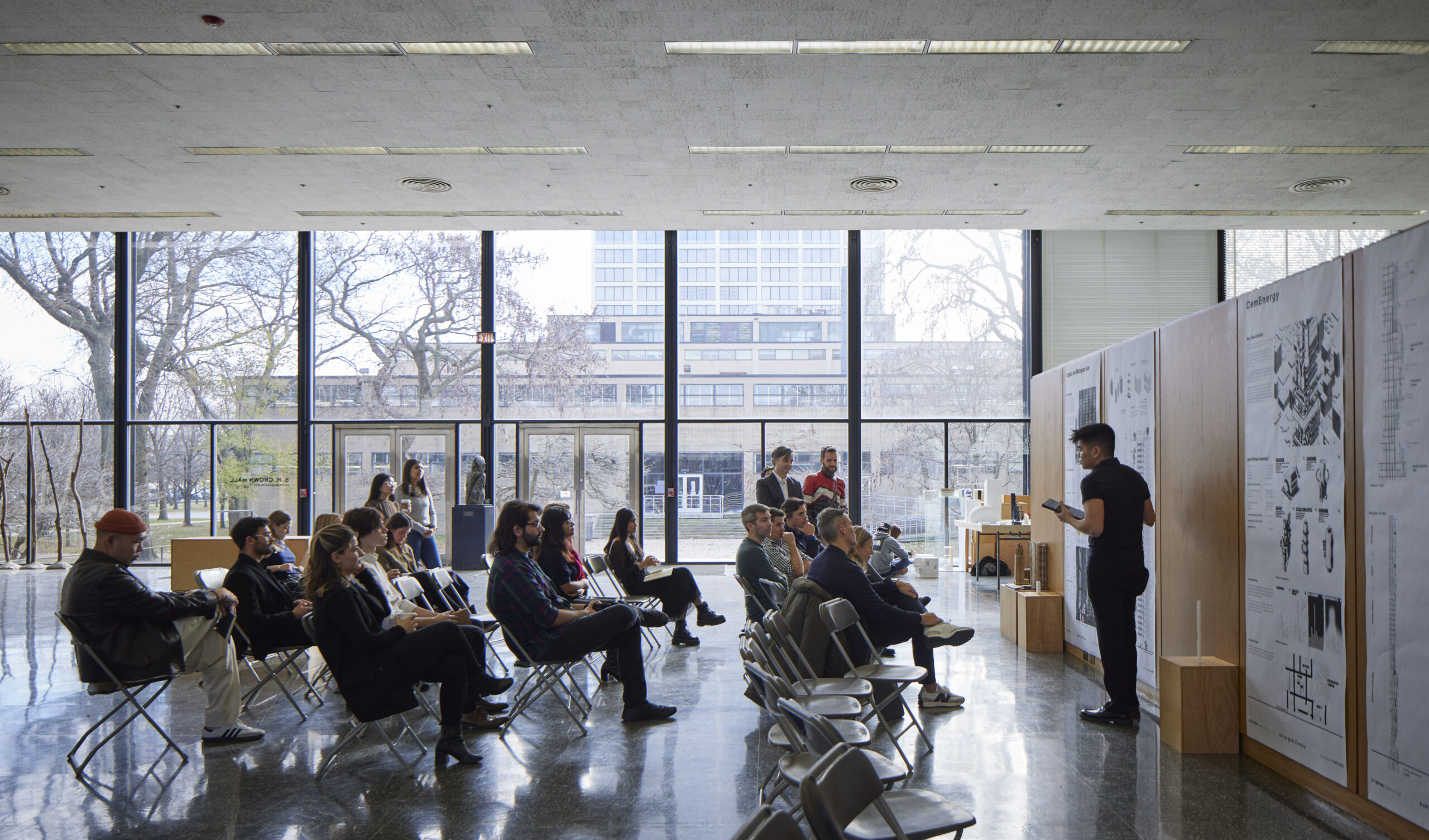
The Fall 2023 MTBVU design studio, Nova Pro Forma, marked the first design studio under the newly launched Master of Tall Buildings and Vertical Urbanism (MTBVU) program at Illinois Institute of Technology. Led by Skidmore, Owings & Merrill (SOM), the studio introduced students to the interdisciplinary nature of tall building design, emphasizing the relationship between architectural vision, urban context, and the economic realities that shape large-scale development.
Under the guidance of three senior colleagues at SOM—Scott Duncan, Design Partner; Jorge Rovira, Senior Associate Principal; and Jason Fisher, Senior Associate Principal—the studio challenged students to reimagine the tall building as the embodiment of emerging and entirely new uses that respond to evolving modes of working and the ecological imperatives facing cities today.
Students were asked to develop both an architectural proposal and a “nova pro forma”—a development and financial framework supporting the viability of the project. Each proposal explored how tall buildings could host new urban infrastructures by focusing on one of several speculative programmatic alternatives: carbon capture, energy generation, energy storage, food production, server farming, medicine, or a hybrid model combining all six to support multifamily housing.
Through this process, students produced design proposals that integrated architectural innovation with strategic thinking about development feasibility. The studio encouraged students to move beyond form-making to consider how tall buildings can operate as productive systems within the urban environment—addressing environmental challenges while responding to evolving economic and societal needs.
Featured Projects
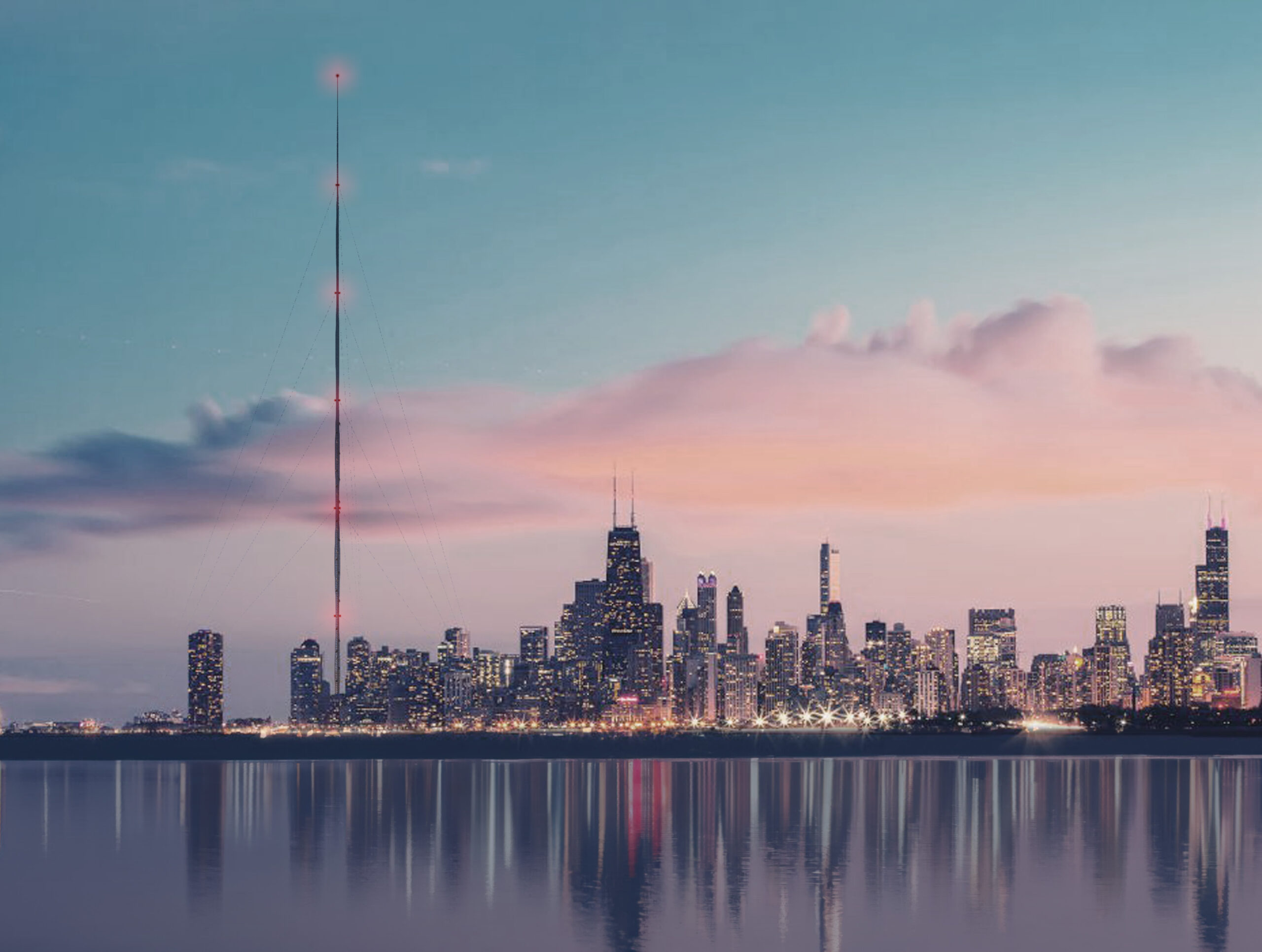
The Living Carbon Effect by Allison Drooger, a sustainable tower soaring 762 meters in Chicago, redefines urban architecture. Beyond its status as a significant landmark, the tower integrates carbon capture systems, water purification, and revenue-generating residences. Strategically positioned between the river and slip, the building utilizes the two bodies of water to aid in the carbon capture system, returning the unused water back to the river cleaner than before. Utilizing the stack effect and a combination of Direct Air Capture and microorganisms, the tower efficiently captures and processes carbon.
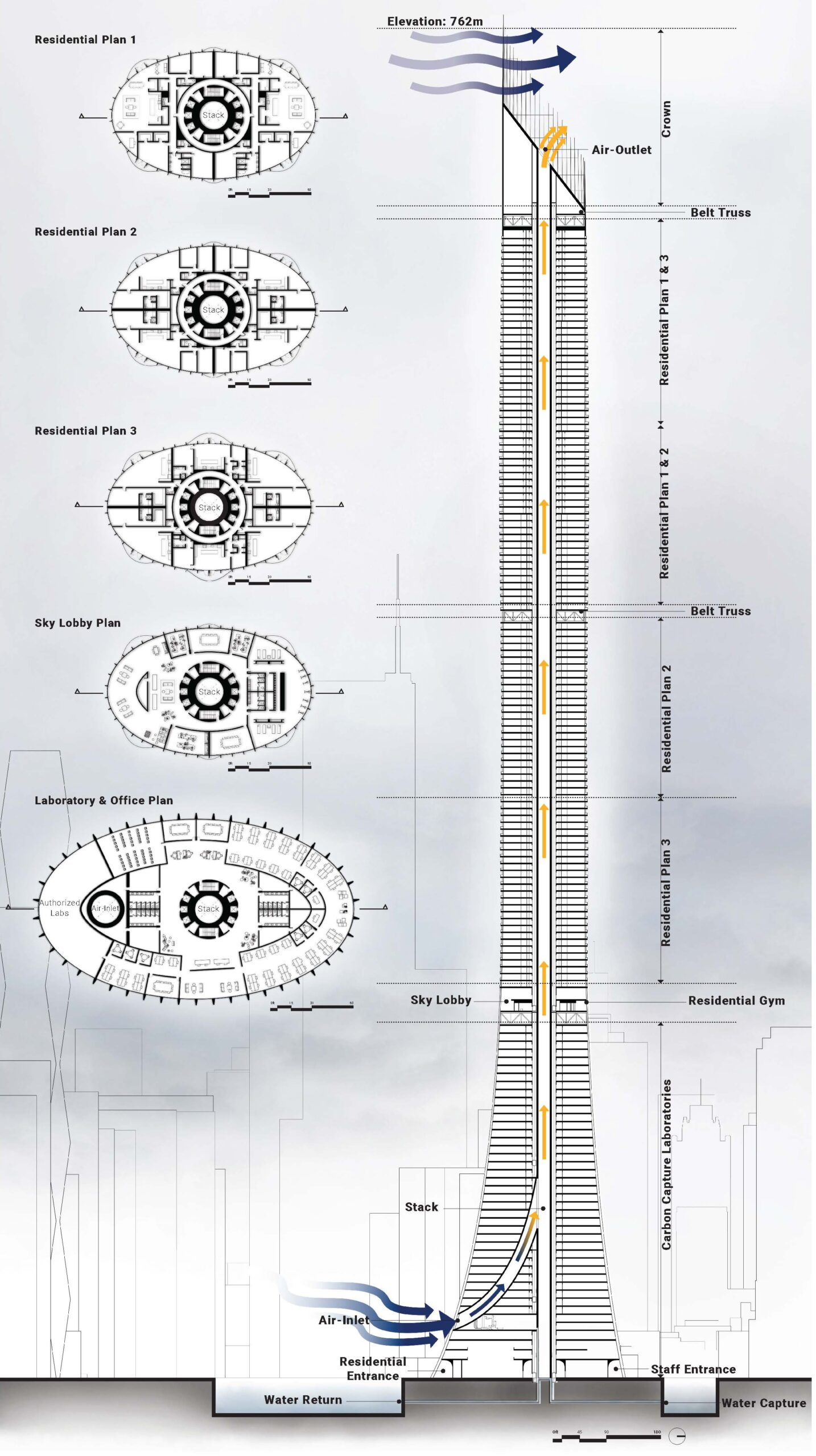
The Living Carbon Effect building section by Allison Drooger
PhytoMed Hub by Omair Godil envisions a medical tower dedicated to sustainable, plant-based healthcare. Informed by research on High Altitude Medicinal Plants (HAMPs), the tower uses vertical height to recreate the natural conditions these plants require to thrive. By mimicking their native environments, the design reduces the energy needed for cultivation while supporting the growing global demand for medicinal plants such as Artemisia annua.
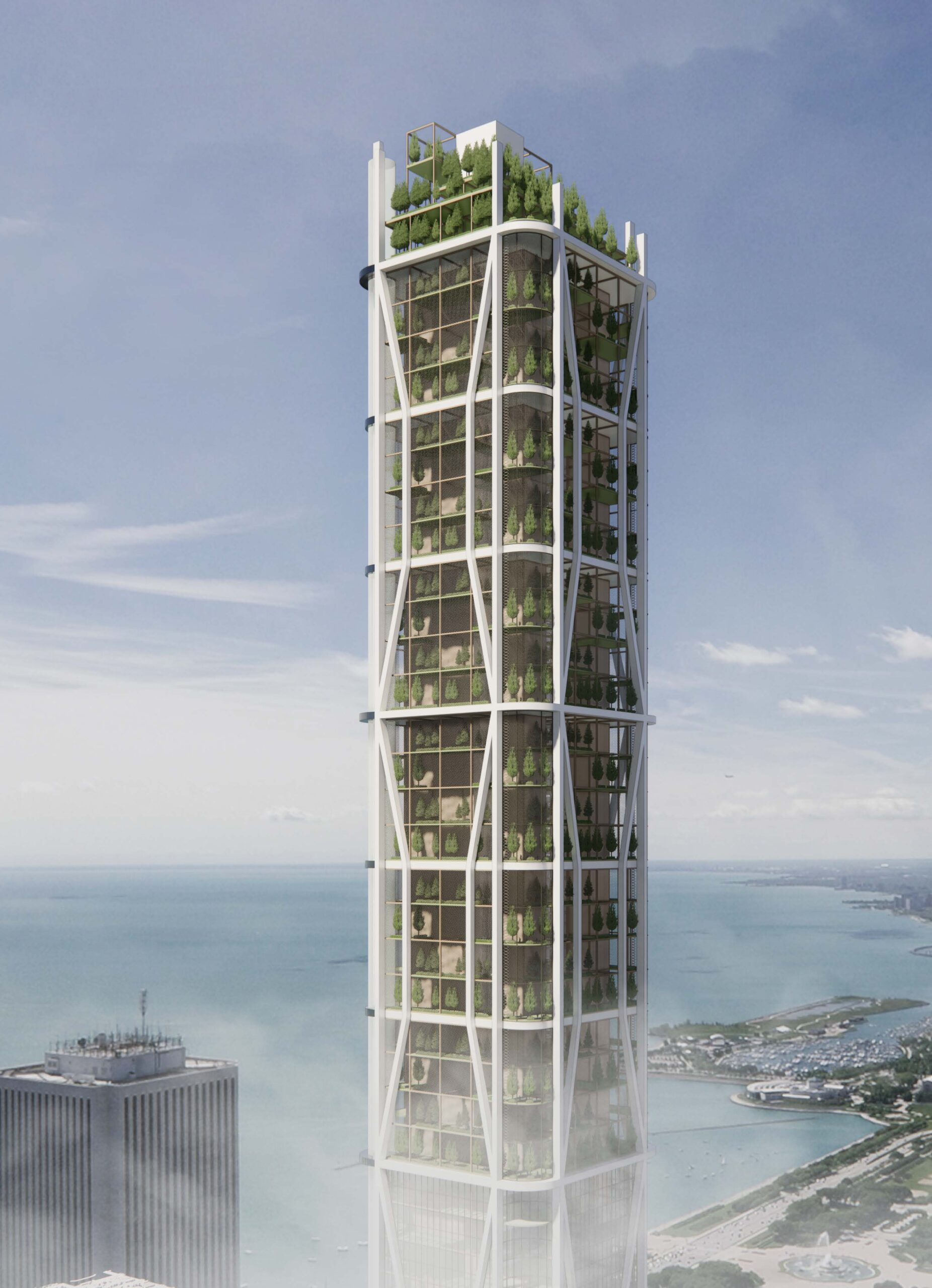
PhytoMed Hub by Omair Godil