


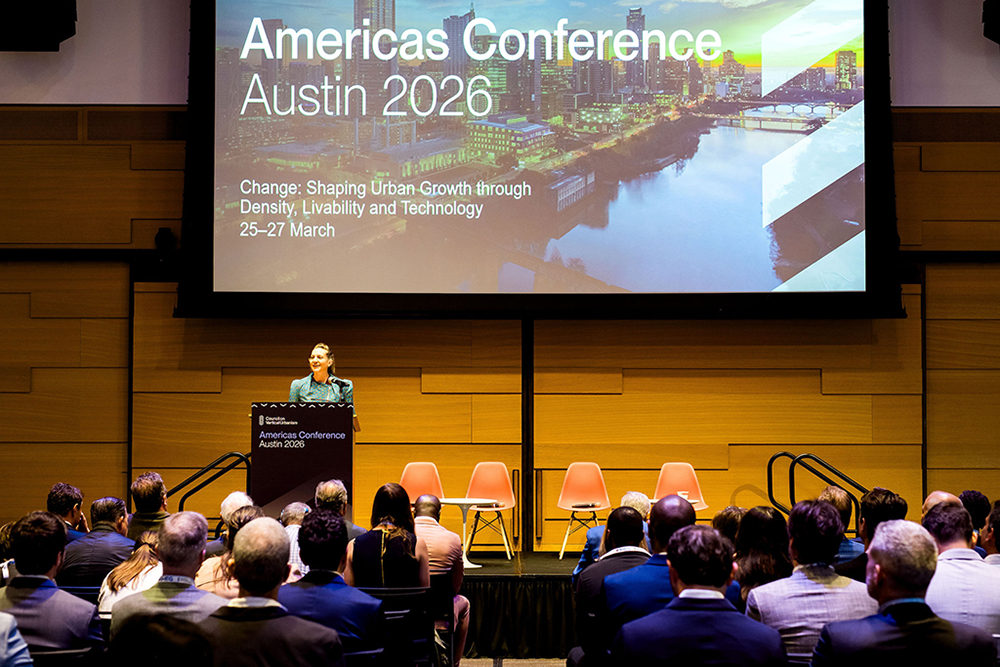
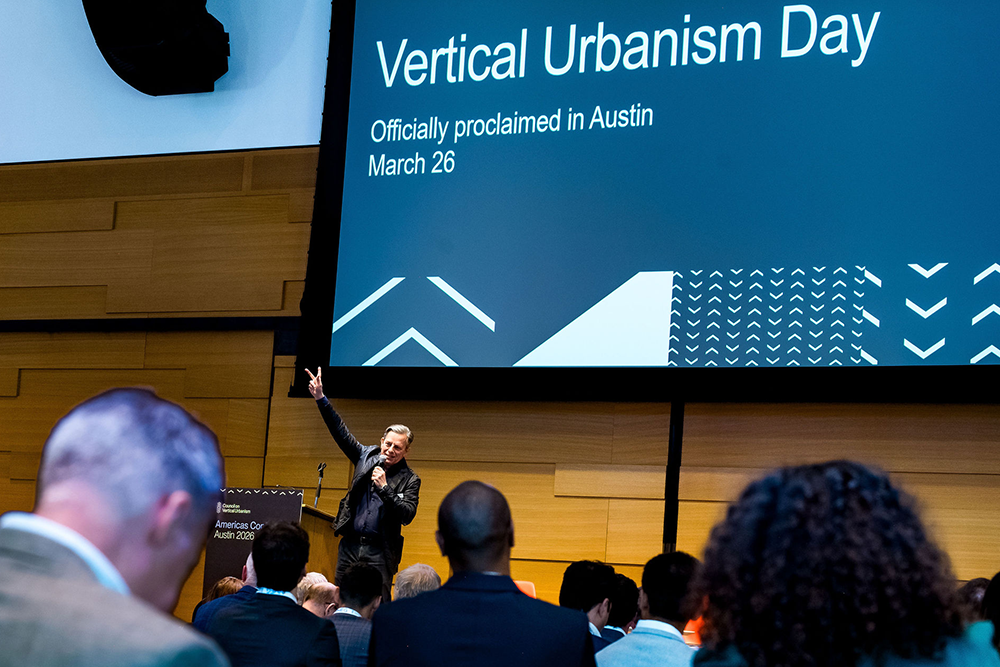
The CVU 2026 Americas Conference, “Change: Shaping Urban Growth through Density, Livability and Technology,” was held at the Austin Central Library on 26 March 2026. The conference emphasized the growth and development of downtowns in the Americas looking at key examples of new office and mixed-use projects, and city policies in multiple regions including New York City, Chicago, Miami, São Paulo, Dallas, and Austin. Presenters also shared how structural technologies and an emphasis on accessibility and inclusion are supporting growth and success in dense cities.
With an incredible turnout of over 200 attendees from across North and South America, as well as Europe, and Asia, delegates joined CVU for thought-provoking presentations, stimulating conversation, astounding off-site tours, and multiple networking opportunities. The conference convened thought leaders, experts, policymakers, and industry representatives representing various sectors and interests across the Americas region.
The presentations and discussions from throughout the day on Thursday, 26 March are detailed further in this summary report below, along with a summary of the networking reception held later that night and the off-site tours held the following day on Friday, 27 March.
We’d like to thank the CVU Americas Steering Committee, the CVU Texas Chapter, sponsors, partners, and CVU leaders who made this a successful event.
Platinum
DeSimone Consulting Engineering
IMEG
Gold
DCI Engineers
Gensler
MHS Architecture
Rhode Partners
SOM
Stantec
UNS
Silver
Facade Access Solutions
Langan
Northwestern University
Program Partners
PNC Architects | Sobha Realty
constructsteel
FG | Talls Solutions
MVRDV Next
KPF
Core Conference, Thursday, 26 March | Opening Remarks and Plenary
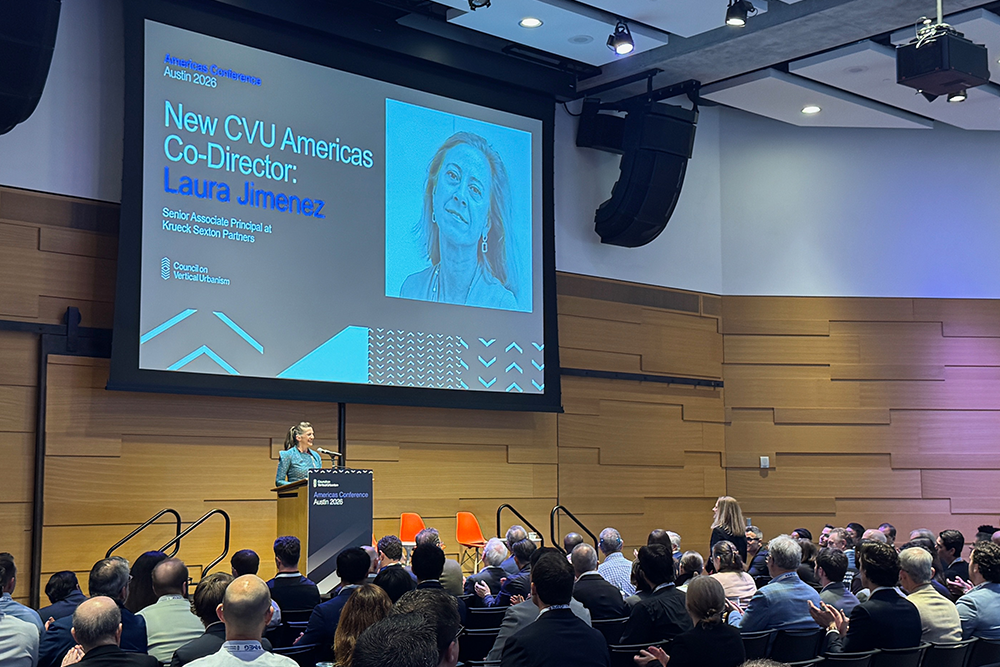
Opening the day’s event, CVU Americas Region Co-director Shelley Finnigan gave brief welcome remarks on behalf of the local CVU steering committee, welcoming attendees to the 2026 Americas regional conference and thanking the conference sponsors. She then announced the exciting news that Laura Jiménez will be joining her as Co-director of the Americas region.
Next, CVU Board Chair Shonn Mills took to the stage in true Texas fashion giving a big welcome to the crowd and presenting an overview of current tall building trends and the latest initiatives that the Council is leading. Following him, Davon Barbour, President and CEO at Downtown Austin Alliance welcomed everyone to Austin and gave a presentation on the strategic plan priorities that the alliance is focusing on including the economic development. He stated that while downtown Austin is only 0.5% of the landmass of the urban area, it accounts for 10% of the assessed value, making it a big player in the metro area’s growth and success.
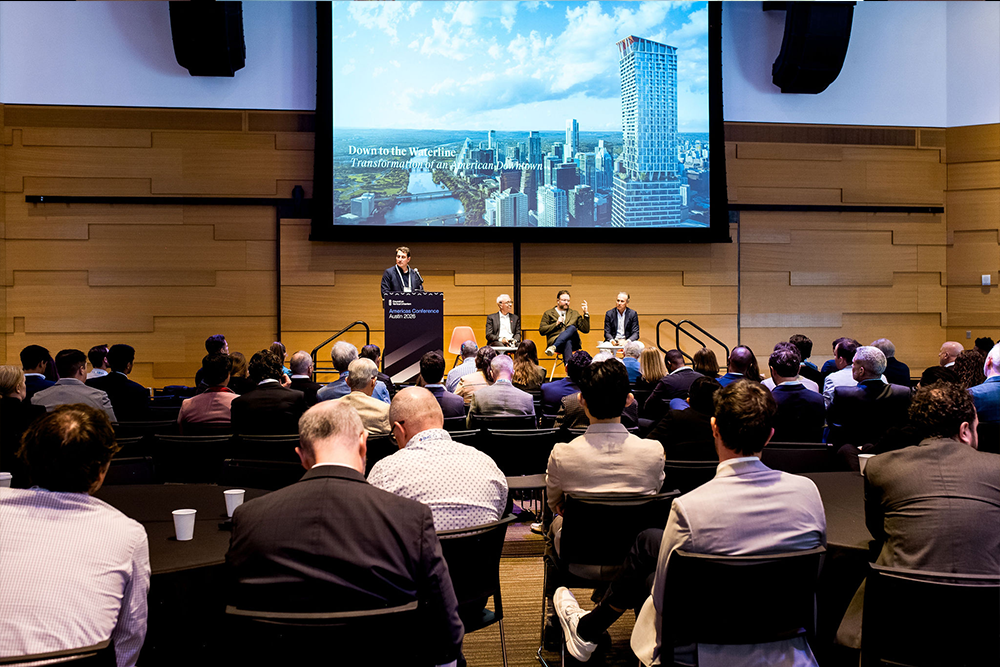
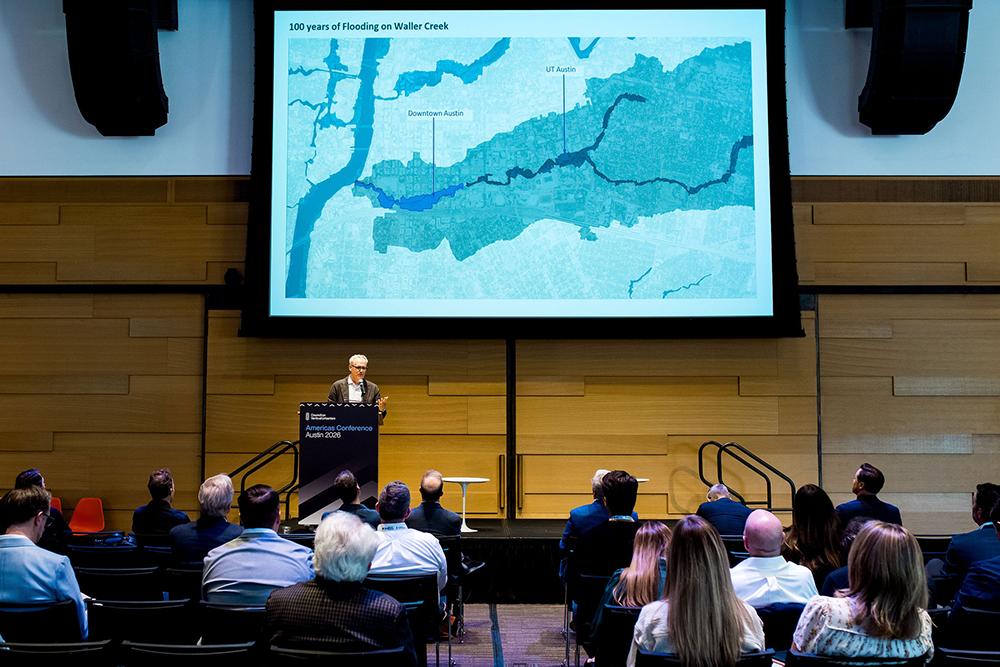
It was a great introduction leading to the opening plenary centered on one of Austin’s most ambitious projects, the 74-story Waterline. Moderated by Franz Prinsloo, Senior Associate Principal at KPF, the plenary explored how the project reflects Austin’s rapid evolution. Lawrence (Larry) Speck, Architect and Senior Designer at LPA Design Studios, grounded the discussion with a historical perspective on the city’s development. Andrew Klare, Design Director, joined by a cameo video appearance of James van Klemperer, Partner at KPF who shared the design ambition behind the Waterline. Explaining how it opens up the ground plane, Klare illustrated how the design responds to Austin’s unique urban context, taking inspiration from the strata lines of neighboring Waller Creek.
Adding a developer’s lens, Seth Johnston, Executive Vice President at Lincoln Property Company, shared that his company didn’t set out to be the tallest building in the city but looked at what was financially feasible, while considering what the public wanted. He shared how the project came to life, from early vision to the strategic decision to prioritize an office-led mixed-use program, connecting the reimagined greenbelt of Waterloo Greenway with the revitalized Lady Bird Lake waterfront.
Together, the conversation demonstrated how density, connectivity, and the public realm can come together to define a more integrated urban future.
Core Conference, Thursday, 26 March | Morning Sessions
Following a short coffee break, delegates joined a session in one of the two conference tracks. In Track A, the session “Austin Rising” provided a deeper look into the many developments that are transforming the city and supporting the exponential growth it is currently witnessing. Presentations by Brett Rhode, Director at Rhode Partners with Kris Swanson at Principal at DCI Engineers gave unique insights into the development and design of residential building The Independent and Gullivar Shepard, Partner and Landscape Architect at Michael Van Valkenburgh Associates shared the process for the under-construction Waterloo Greenway. Both projects were included in the CVU 2026 Americas Conference off-site tour offerings that attendees could attend on Friday, 27 March.
Other presentations showcasing the growth and development in Austin were given by Riley Triggs, Capital Delivery Consultant at Capital Delivery Services with Leonardo da Costa, Principal at LMN Architects on the Austin Convention Center reconstruction, designed to be the first net zero convention center in the world; Andrew Kao, Architect and Associate at Gensler on the recently completed mixed-use Sixth & Guadalupe project that is one of Austin’s tallest buildings; Kevin Conway, Senior Associate Principal at Skidmore, Owings & Merrill on Verde Square; and Talmadge Smith, Principal, Design Director at Page, now Stantec who gave insights into challenging and creatively addressing current city codes for design success in the presentation Transforming North Austin with a Transit-Oriented Vertically Mixed Use Neighborhood.
In Track B, the session theme “Technology and Innovation Driving Change” moderated by Shelley Finnigan ranged from data-driven design decisions to structural engineering considerations for seismic and wind conditions to adaptive reuse and envelope technologies.
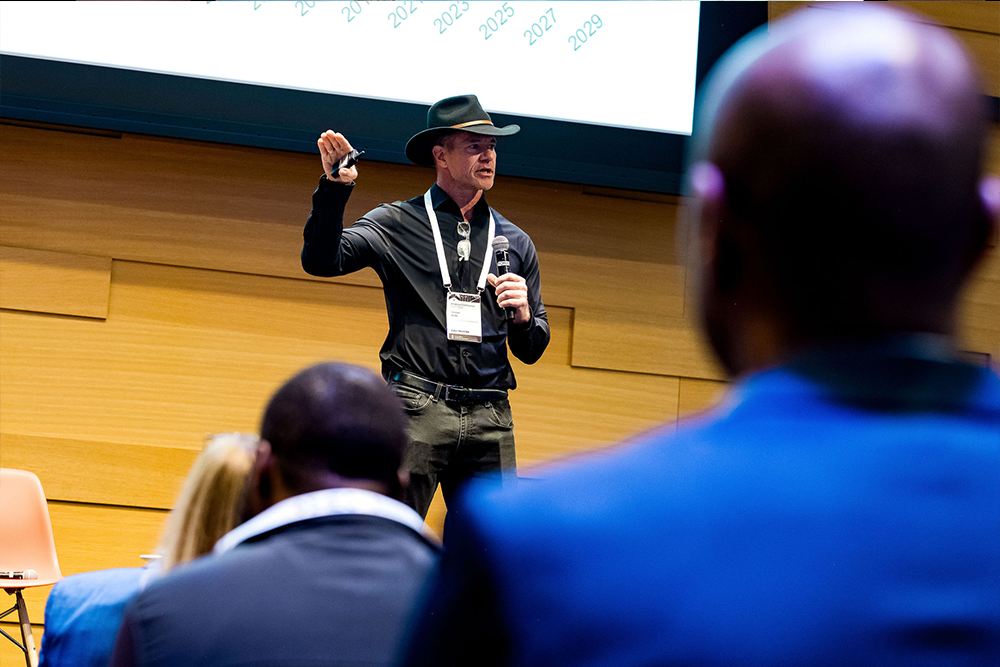
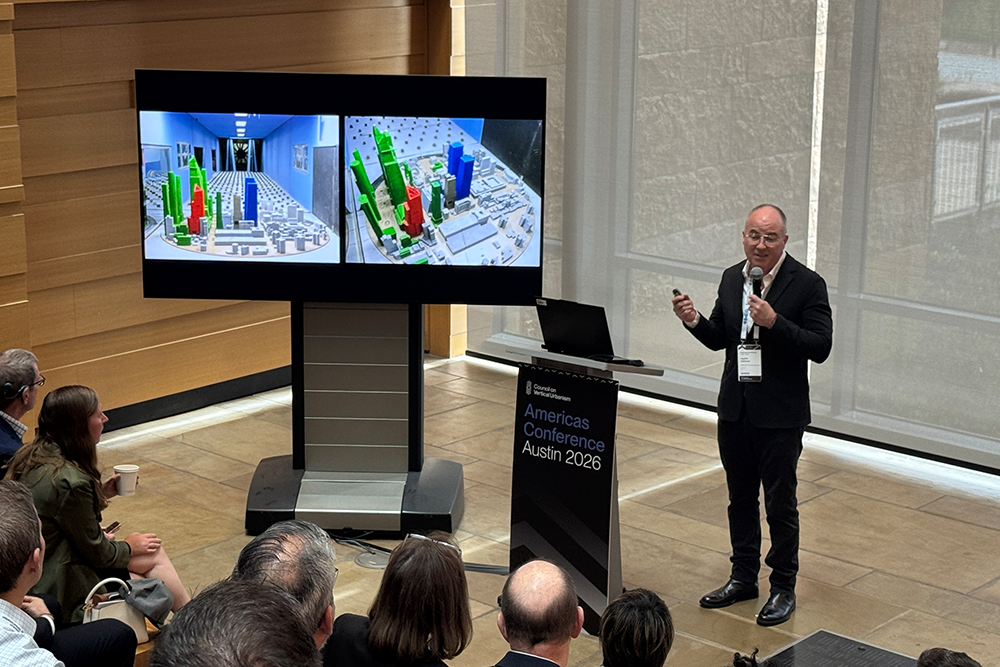
In this session Stephen DeSimone, chairman and CEO at DeSimone Consulting Engineering gave a presentation addressing how wind shapes every tall building, from subtle sway to acoustics, affecting structural designs and deeper considerations. Drawing on decades of experience, DeSimone explored how structural engineers often need to solve and understand the factors, like wind, that go beyond the typical assumptions and how wind remains one of the most critical forces shaping tall building design. His presentation gave an inside look at the strategies and innovations engineers use, giving multiple project examples such as 41 W 57th Street and 125 Greenwich in New York City to address and mitigate these effects and push the boundaries of what’s possible in high-rise construction.
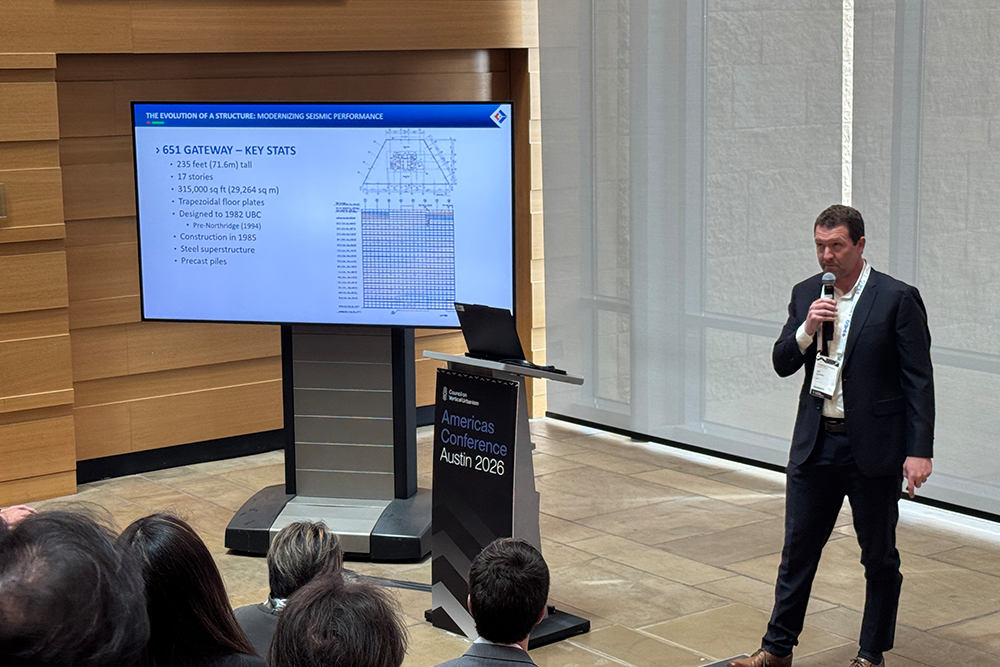
Joe Gulden, Associate Principal and Project Executive at IMEG delivered an insightful presentation on The Evolution of a Structure: Modernizing Seismic Performance. Exploring the evolution of seismic design from the early 1980s to the Northridge earthquake event that changed design considerations in 1994, he evaluated how structural systems can be adapted and upgraded to meet evolving seismic demands, highlighting the importance of resilience, performance, and longevity in today’s built environment. Using the example of 651 Gateway in south San Francisco, his session underscored that modernization is not just about compliance—it’s about extending the life and value of our buildings while preparing them for future risks.
Highlighting the changing nature of data-driven decisions were Rodrigo Rocha, Partner at OSPA Group in Digital Twins for Vertical Urbanism: Mapping Tall-Building Data and Frans van Vuure, Director at UNS with Experience Design Tool: Assessing Cognitive Behavior. Van Vuure also shared that UNS recently opened an office in Austin, further demonstrating the global nature of the work being developed in the city. Other speakers in the session included Philip Castillo, Executive Vice President and Managing Director at Jahn/ talking about the transformation of the James R. Thompson Center for Google in Chicago and Steven Pantazis, High-Rise and Technical Design Leader at RATIO highlighting the process of designing for envelope design excellence in a climate changing world.
Delegates took a break for lunch after these informative presentations.
Core Conference, Thursday, 26 March | Afternoon Sessions
After lunch, delegates broke out to join the sessions distributed over the two tracks.
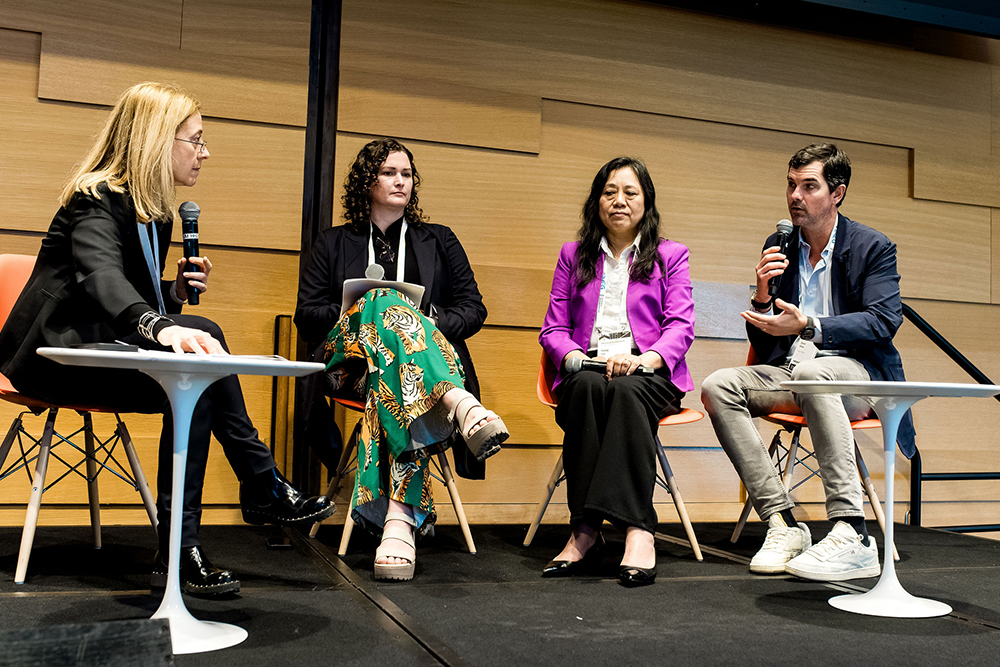
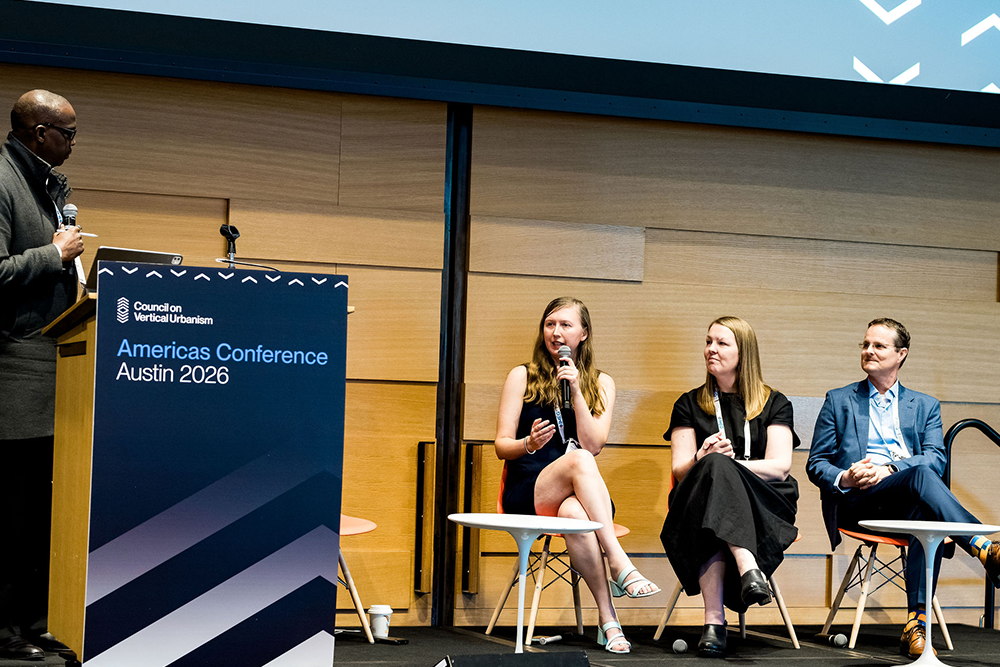
Track A had two different sessions themed “Planning for Change in the Americas” and “New Paradigms of Sustainability, Attainability and Accessibility.” During the session “Planning for Change in the Americas,” leaders from across the public and private sectors examined how cities can create frameworks for growth that are equitable, sustainable, and accessible to all. Moderated by Laura Jiménez, Senior Associate Principal at Krueck Sexton Partners, the panel brought together Emily Liu, Director of the Planning and Development Department for the City of Dallas; David Snow, Planning Director for the City of Miami; and Sarah Kellerman, Senior Associate at Perkins + Will.
Drawing from perspectives in municipal leadership and design practice, the discussion explored how planning communities across the Americas are adapting to shifting economic pressures, climate-related challenges, and changing urban demands. Panelists shared insights on how cities and institutions are responding to forces both within and beyond their control, highlighting strategies that support resilient growth, inclusive development, and long-term urban accessibility.
In the “New Paradigms of Sustainability, Attainability and Accessibility” session, speakers examined one of the most fundamental dimensions of urban livability: attainability. Chaired by Mide Akinsade, Design Director and Principal at atelierMIDE and framed around the question of how cities can ensure safe, affordable, and accessible environments for people of all ages, backgrounds, and abilities, the presentations and discussion highlighted both the challenges facing the built environment and the innovative solutions emerging across the sector.
Christy Vanek, Director, Global Disability Accommodations & Accessibility at Otis Elevator Company gave an inspiring presentation on the future of accessible mobility in vertical environments. Renée Strand, Owner/Principal of Holst Architecture shared how using mass timber as the structure in the Julia West House in Portland, Oregon, delivered huge benefits both in the construction schedule and in overall well-being for this permanent supportive housing project for low-income residents.
Dr. Alric (Ric) Andersen, Product Line Manager at Gerdau and member of constructsteel, addressed the decarbonization of the steel industry, focusing on near-term strategies and immediate opportunities for reducing carbon impacts within the construction sector. He shared case studies of projects that included the 56-story Torre Reforma in Mexico City, the 57-story Salesforce Tower in Chicago, as well as global low- to mid-rise projects in London, Tokyo, and South Korea.
Together, the speakers underscored how thoughtful design, material innovation, and inclusive infrastructure are central to creating more humane and sustainable cities for all.
Track B focused on the theme “Transformative Developments in the Americas” highlighted transformative developments across the Americas that are reshaping cities in the urban, environmental, and economic dimensions. Chaired by CVU Director of Research and Thought Leadership Daniel Safarik, the presentations brought together leading practitioners whose work is redefining how growth and resilience are approached in rapidly changing contexts.
From the presentation of Alberto Vidal, CEO at Vidal Arquitectos, who explored urban resilience through the Libertad HO Mons Civitas project in Monterrey, Mexico to the focus on placemaking as a driver of urban vitality by Juan Rodriguez, Associate Principal at MHS Architecture, the session overall emphasized the evolving relationship between design and city-making, particularly amidst the rising skylines of New Jersey cities. Speaker Daniel Villafranca, Director of Sustainability and Innovation at Portafolio Immobiliario additionally examined how performance measurement can actively inform design decisions rooted in nature-based strategies, citing examples from San José, Costa Rica.
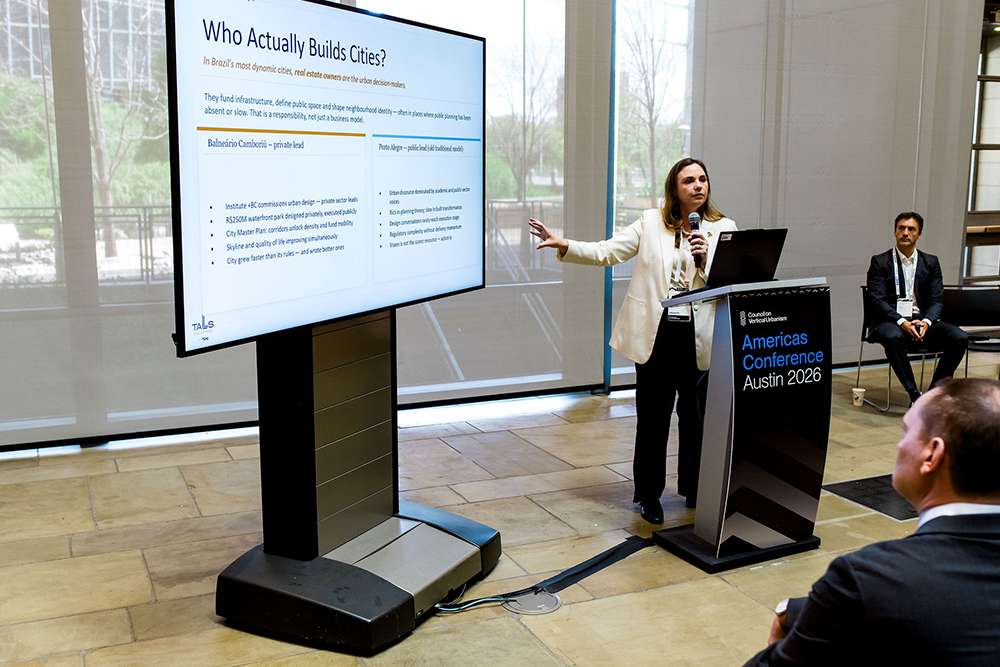
Stephane Domeneghini, Executive Director at Talls Solutions | Groupo FG, FG Empreendimentos and Luis Villanova, Head of Urbanism and Vertical Architecture at Talls Solutions expanded the conversation beyond major metropolitan centers, presenting the Brazilian case for tall buildings as catalysts for regional development that creates value. Having worked on some of the tallest existing and under construction buildings in Brazil such as the completed One Tower (290 meters) and the in-the-works Senna Tower (544 meter), Domeneghini shared insights of working with multiple stakeholders to achieve the best outcome in design and quality of life for tenants and the neighborhood. Villanova added to the presentation by giving a history of planning for tall buildings in Brazil and the relationship between density, zoning codes and city centers.
Afterward, Safarik moderated a Q&A session with the audience. Collectively, the speakers illustrated how innovative urban strategies are creating new realities across the Americas.
Core Conference, Thursday, 26 March | Closing Plenary
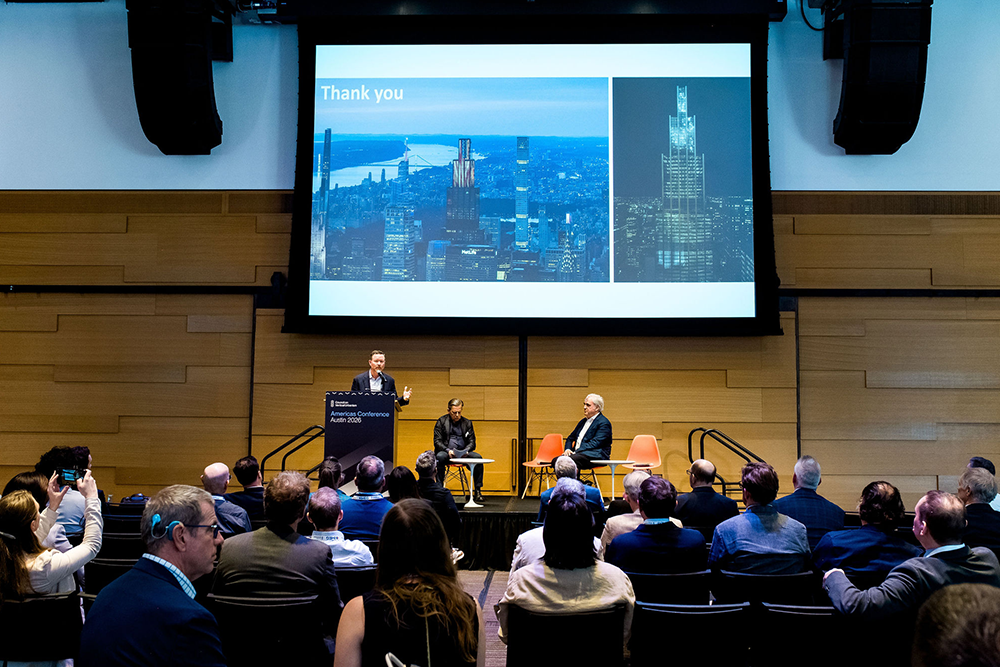
The closing plenary brought the question of “How has the workplace been redefined in today’s downtown cities?” into sharp focus through two landmark projects that are helping shape the next generation of urban office environments.
James Shea, Managing Director at JPMorganChase, presented the new JPMorgan Chase World Headquarters in New York City, offering insight into how one of the world’s leading financial institutions is reimagining the workplace for a new era of talent, flexibility, and urban presence.
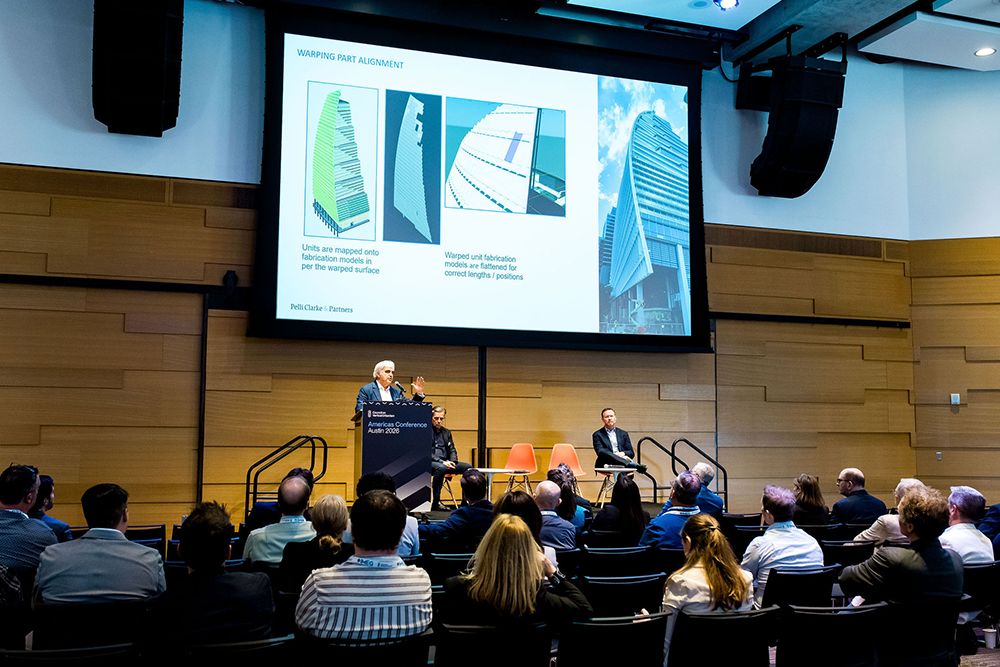
Joining him, William (Bill) Butler, Partner at Pelli Clarke & Partners, shared the story behind Block 185 in Austin, also known as the “sail tower” and newly occupied by Google. He presented how this project is contributing to the continued transformation of Austin’s downtown core and redefining office culture.
Following this, CVU CEO Javier Quintana de Uña furthered the conversation with a series of questions for further insights and inspiration.
The dialogue underscored a key theme emerging across global cities in that the definition of “Class A” space is evolving. It is moving toward environments that prioritize quality, connectivity, experience, and long-term urban vitality.
Wrapping up the conference, Scott Duncan, Partner at SOM and CVU Board of Trustees thanked everyone for attending and welcomed them to join us at the networking reception afterward.
Networking Reception, Thursday, 26 March
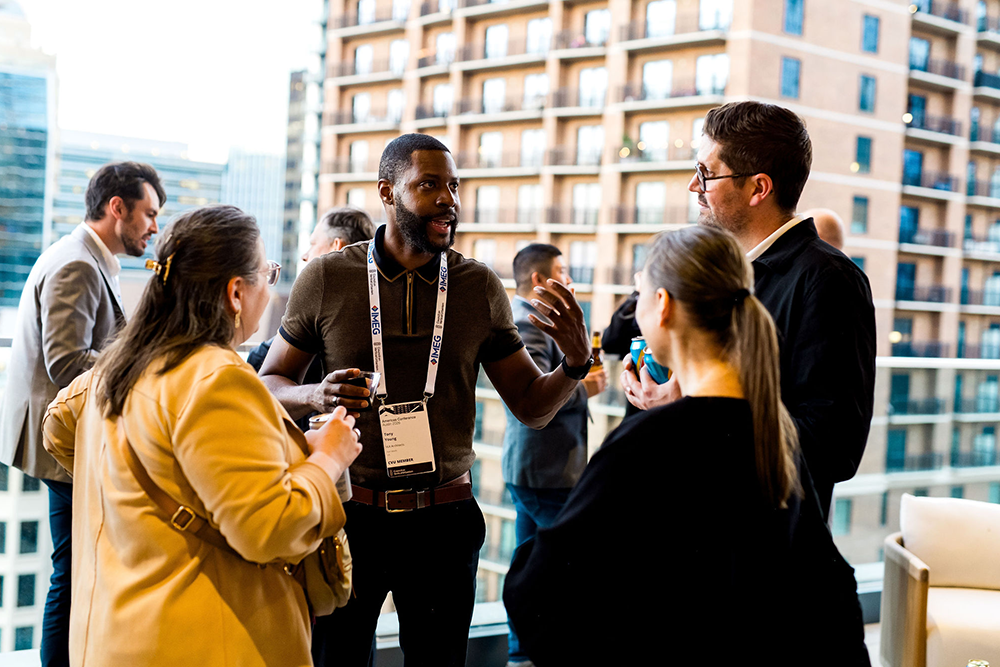
The networking reception held at The Republic, one of the city’s most prominent new office high-rises redefining the downtown skyline, kindly hosted by Lincoln Property Company, offered delegates a chance to continue the conversations from the day.
As one of the city’s boldest new additions to the skyline and a remarkable setting for connection and conversation, this 46-story office high-rise, completed in 2025, is across from the historic Republic Square Park, where Austin’s first city lots were sold in 1839. The Republic symbolizes the city’s continuing evolution of entrepreneurial energy, progressive design culture, and dynamic urban lifestyle.
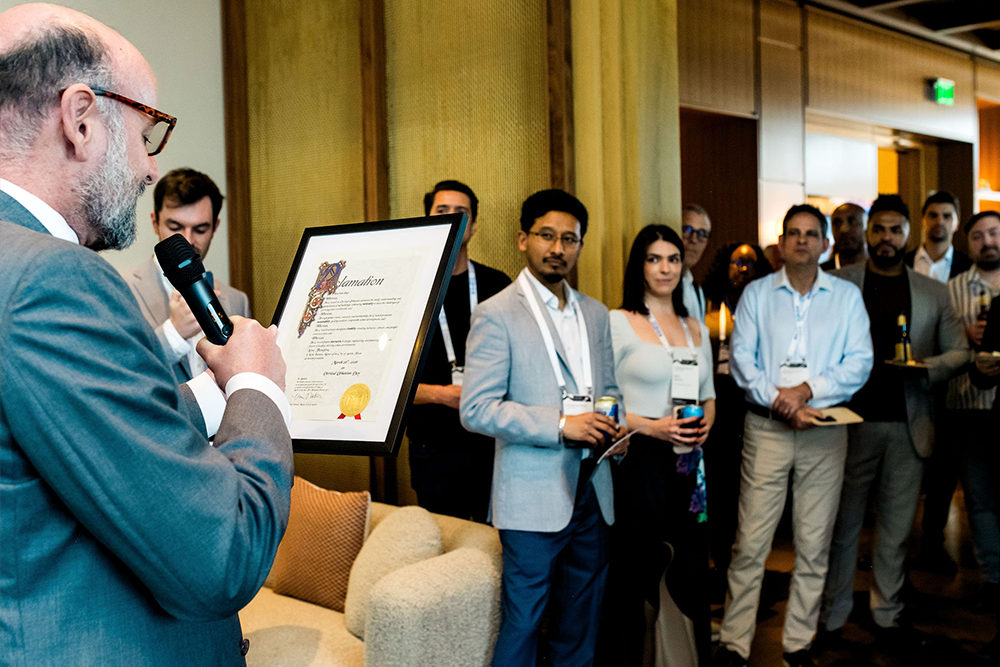
During the reception, Mayor Pro Tem Jose “Chito” Vela III joined attendees and shared the official proclamation of Kirk Watson, Mayor of the City of Austin that March 26, 2026, will be recognized as Vertical Urbanism Day. It was a meaningful recognition reflecting the growing understanding that thoughtful vertical development is essential to addressing the challenges of urban growth worldwide and recognizing its role in shaping more sustainable, resilient, connected, and livable cities.
With sweeping views of downtown, state-of-the-art workplace amenities, and a setting that embodies innovation and architectural ambition, the evening was the perfect opportunity to build new relationships and reflect on the day.
Off-sites, Friday, 27 March
In the morning, delegates went to off-site tours around Austin.
44 East Avenue
Capturing the ethos of Austin and completed in 2023, the project sits in the vibrant downtown Rainey neighborhood and has a spectacular lakeside setting. Led by Brad Stein, President of Intracorp Texas and Larry Speck, Senior Designer of LPA Design Studios, the design reflects a thoughtful collaboration between designers Page Architects, Michael Hsu and Dwg.
Attendees toured key features such as the 11th floor club and event room, playroom, conference rooms, family and game area, two guest suites, catering kitchen, fitness facilities, circular cenote pool and outdoor deck overlooking Ladybird Lake along with two dog runs and varied outdoor spaces. On the 37th floor is a sky lounge and deck with indoor and outdoor event and meeting space. The building has achieved an Austin Green Energy Building 3 star rating, similar to a LEED silver rating, and a WELL Health and Safety Rating.
The Independent
Led by representatives from Rhode Partners, attendees toured this 58-story, multi-family residential project that is located at the confluence of an urban creek, several major cross-town bicycle routes, and a formerly industrial site undergoing redevelopment. The project promotes renewed civic links while strengthening the city residents’ connection with nature. Due to a restricted site varied program, the design has residential tiers push and pull to cantilever four distinct blocks, featuring a 30-foot (9.1-meter) cantilevered amenity deck on the 34th floor, providing soaring views across the city.
Interior spaces reflect a programmatic commitment to a vertical neighborhood. Two entire floors of competitive and luxury condo amenities are allocated over 20,000 square feet (1,858 square meters) including an expansive pool deck, a dog lounge, fitness facilities, and a cantilevered board room, theater, and lounge. The refined material palette and sleek detailing throughout steps away from a standard condo project and into an upscale museum-influenced design.
The Waterloo Greenway
The Waterloo Greenway is a planned 1.5-mile-long public space corridor with the reconstruction of Waller Creek at its center. Attendees were led by John Rigdon, Chief Planning & Design Officer at the Waterloo Greenway Conservancy and Gullivar Shepard, Partner-in-charge at Michael van Valkenburgh Associates on an insightful tour of this under construction site in which the lower third of the project connecting Lady Bird Lake to 4th Street will be opening in June 2026.
This Conservancy and City-led project dovetails with millions of square feet of downtown Austin and forms the armature for a new district that helps anchor the wave of infrastructure projects underway and close by including TxDOT’s CapEx, The COA’s cap-and-stitch project, the rebuilding of the Austin Convention Center, and the Waterline. The tour gave a sneak peak of the project nearing construction completion and shared lessons learned and value propositions emerging around the interfaces and adjacencies with other public and private development projects.
Waterline
Currently under construction, attendees got a special tour led by Andrew Klare of KPF and representatives from Liberty Property Company, the developer of the project. Waterline is a 74-story mixed-use supertall at the eastern edge of downtown Austin. When completed it will become the tallest building in the state of Texas.
Designed as a vertical urban district, the project integrates residential, hospitality, office, and retail uses within a single structure. Its sculpted form responds to the surrounding landscape, with strong visual and physical connections to Waller Creek, Lady Bird Lake, and the Rainey Street area. Attendees got an opportunity to experience this major high-rise project in its final construction phases, providing insight into supertall design and the role of mixed-use development that is shaping Austin’s rapidly evolving skyline.
Learn more about the Americas region and how to get involved.