


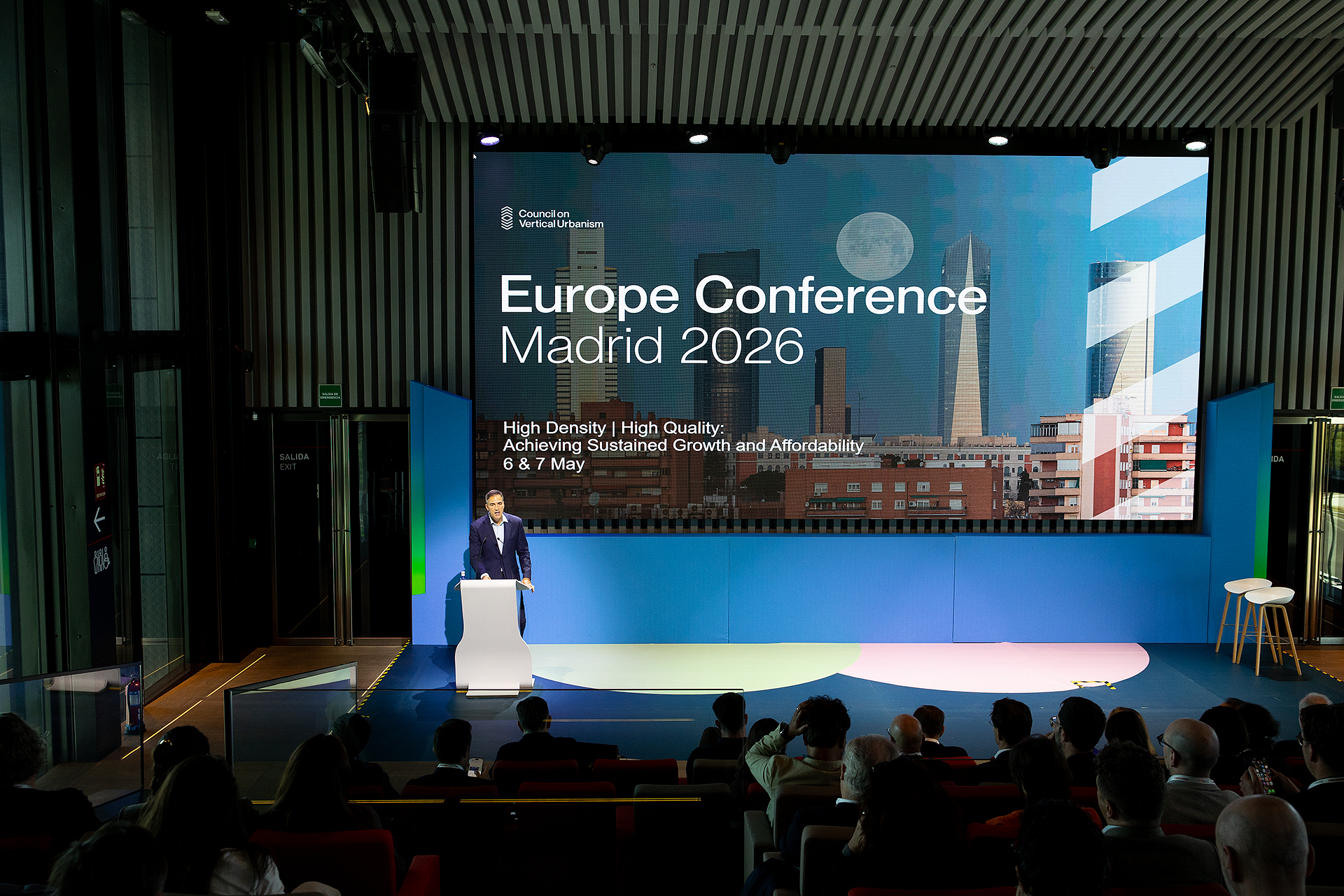
The CVU 2026 Europe Conference, “High Density | High Quality: Achieving Sustained Growth and Affordability,” was held in Madrid on 6 & 7 May at two incredible venues, the Torre Foster and Espacio Caleido. The conference emphasized how density is transforming in European cities to build strategically with infrastructure, align with redeveloping industrial areas, and increase housing, all while looking ahead to large-scale mixed-use as a potential solution for addressing today’s rapidly evolving urban needs. Presenters also shared solutions for sustainability and lowering operational and embodied carbon.
Reaching 240+ attendees from 21 countries representing 109 companies across Europe, North America, and globally, delegates joined CVU for thought-provoking presentations, stimulating conversation, astounding off-sites, and multiple networking opportunities. The conference brought together thought leaders, experts, policymakers, and industry representatives who represented the various sectors and interests across the region.
Presentations and discussion took place during the first half of the day on Thursday, 6 May and Friday, 7 May, and are detailed further in this summary report below, along with a summary of the off-site tours and networking reception held later in the day on Thursday, 6 May.
We’d like to thank the CVU Europe Steering Committee, the CVU Iberia Chapter, sponsors, partners and CVU leaders who made this a successful event.
Platinum
KONE
Otis
Espacio Caleido
Pérez-Llorca
Gold
Arquitectonica
Crea Madrid Nuevo Norte
Facade Access Solutions (part of Alimak)
Jangho
Tecnostrutture
Thornton Thomasetti
Silver
Porcelanosa
Program Partners
PNC Architects | Sobha Realty
Constructsteel
Talls Solutions | FG Empreendimentos
MVRDVNext
KPF
Supporting Partners
ADPI (Asociación Profesional de Diseñadores de Iluminación)
Asprima (Associacion de Promotores Immobiliarios de Madrid)
COAM (Colegio Oficial Arquitectos de Madrid)
Tecniberia
Sima
Media Partners
Ecoconstrucción
Interempresos Media
NAN Arquitectura
Thursday, 6 May | Core Conference, 9am to 1pm at Torre Foster
To start the first day of the conference, attendees convened at the iconic 248-meter Torre Foster, the second tallest building in the country. Designed by Foster + Partners, the setting reflected the ambition and energy of the conversations ahead, and the opening remarks by CVU CEO Javier Quintana de Uña and CVU Board Chair Shonn Mills set the tone with a strong focus on the urban scale—how cities grow, connect, and evolve in response to today’s most pressing challenges.
Speakers Alberto Ibort Franch, Head Partner of Land Planning and Environmental Law at Pérez-Llorca and Pablo Hernández Fuentes, Marketing Leader, Iberia, Africa & Middle East at Otis welcomed the global CVU community as the first day’s host and main sponsor.
Next, Myriam Peón González, Director General of the Madrid General Plan Office of Madrid City Council and Iñaqui Carnicero Alonso-Colmenares, Security General at the Ministry of Housing and Urban Agenda framed the dialogue of Madrid’s urban planning and design revolution, stating that vertical urbanism provides the opportunity to balance neighborhoods that have limited land for new development. They additionally shared the creation of a new public platform tool for better responding to societal needs, their concept of 4D urban planning for the city of Madrid, and the importance of strong collaborations for design success. It was an insightful start to the program in exploring how high-density development can deliver quality, livability, and long-term value.
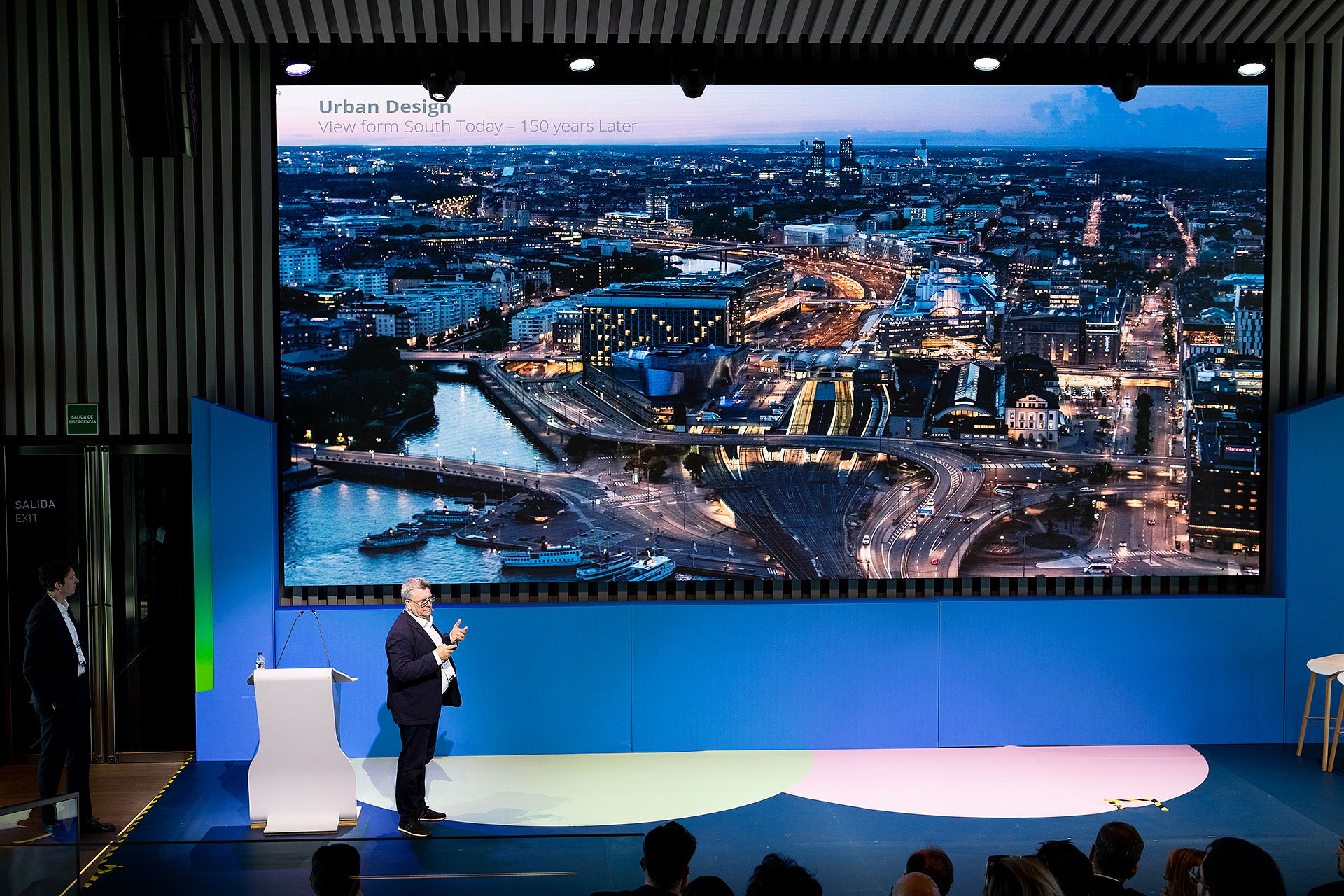
The day continued with meaningful sessions highlighting key aspects of development in the region. In the next session, “From Zero to High Density: Building Over Transport Infrastructure,” chaired by Jerónimo van Schendel Erice, Academic Director at IE School of Architecture and Design, speakers Alejandro Fernandez, Associate Principal, Thornton Tomasetti and Mark Atkinson, Partner at Foster + Partners, posed the question, “How do you transform a piece of infrastructure that has long divided a city into something that brings it back together?” Their presentation on the Stockholm Central Train Station project reflected a careful balance between performance and people while expanding the capacity by 40 percent while building a new mixed-use district above the tracks. What stood out was not just the scale of the intervention, but its intention: to reconnect the east and west sides of Stockholm, stitching the city back together in a way that feels both ambitious and deeply human.
Other projects shared giving further examples of building density with transport infrastructure were Stuttgart 21 by Michael Rathgeb, Managing Director, Ingenhoven Architects and Roland Bechmann, Managing Director & Partner, Werner Sobek AG; and Madrid Chamartin with Astrid Piber, Partner, UNS and Fermín Vázquez, Founder, b720 Fermín Vázquez Arquitectos.
Following this was the session “Mending Cities: New, Dense Neighborhoods in Former Industrial Areas,” chaired by Gita Maruthayanar, Project Director, Ramboll, which brought insights into how cities across the region are addressing the need for more housing and the repair of disused industrial sites. Almudena Cano, Sustainable Urban Development, Metrovacesa, Miguel de Leon Ortiz Diez, Director, Ortiz León Arquitectos, and Marcos Ramos, New Building Solutions, Strategic Customers & Major Projects Director, KONE gave a standout presentation focused on the Madrid Clesa Redevelopment, that is being re-envisioned as a dense, mixed-use, and integrated urban system.
Sited where the former CLESA factory site, with a building designed by Spanish architect Alejandro de la Soto in the 1960s, this is being reincorporated in to the overall scheme located alongside the Oria Innovation Campus. Over 50 percent is landscaped area, demonstrating how fragmented industrial land can be repaired and reconnected to meet today’s housing needs while creating new opportunities for innovation, community, and accessibility.
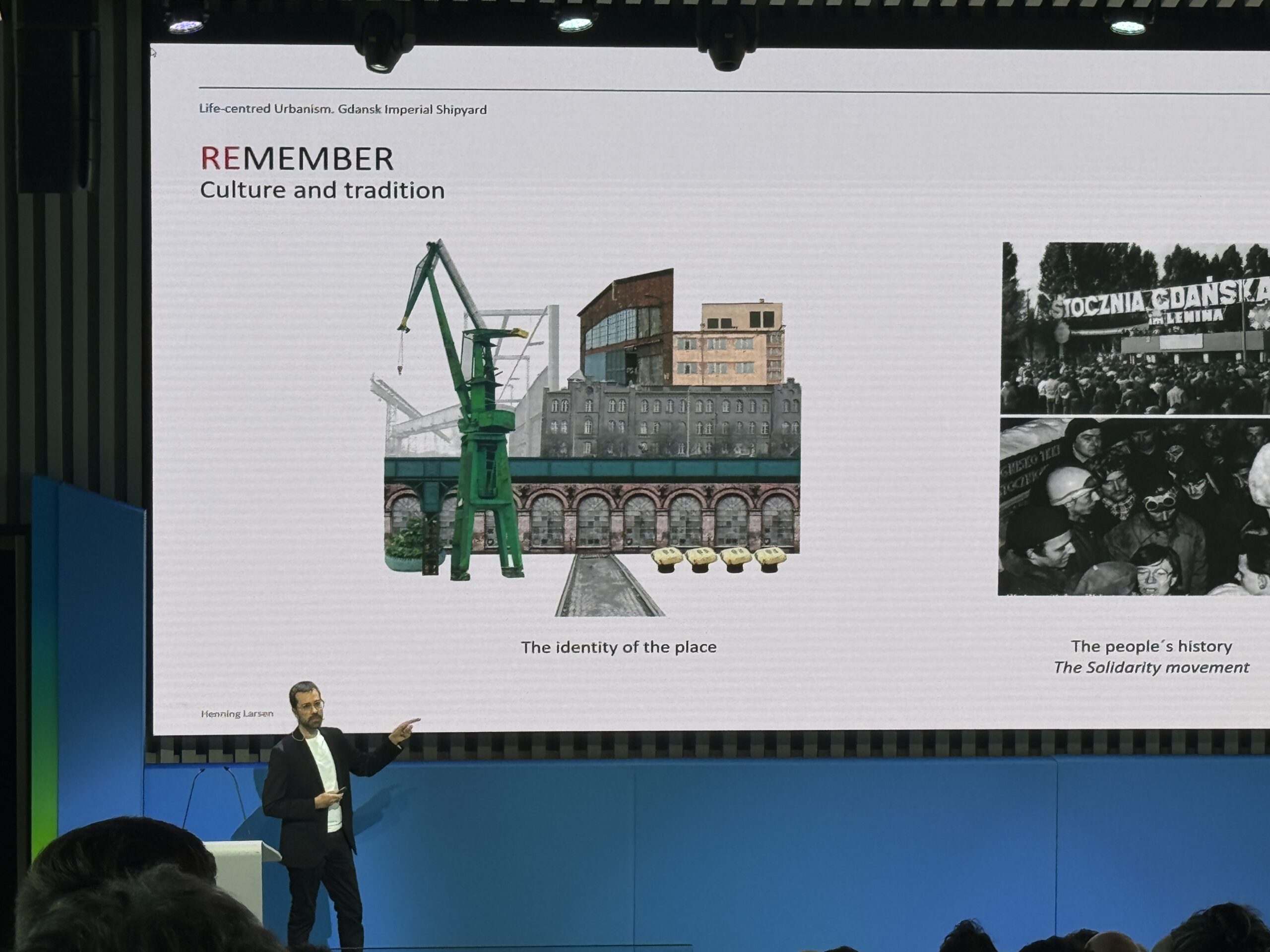
Other presentations in this session included the Gdańsk Imperial Shipyard in Poland shared by Jose Carlos Fernandez Martinez, Associate Design Director, Henning Larsen; and Mayfield and Holt Town, two separate projects in Manchester demonstrating community involvement and placemaking as key to the design presented by Lucas Lawrence, Company Director, Studio Egret West. Insights into these ambitious transformations and the collaborative efforts required to bring these projects to life are a powerful example of how cities can thoughtfully evolve with purpose.
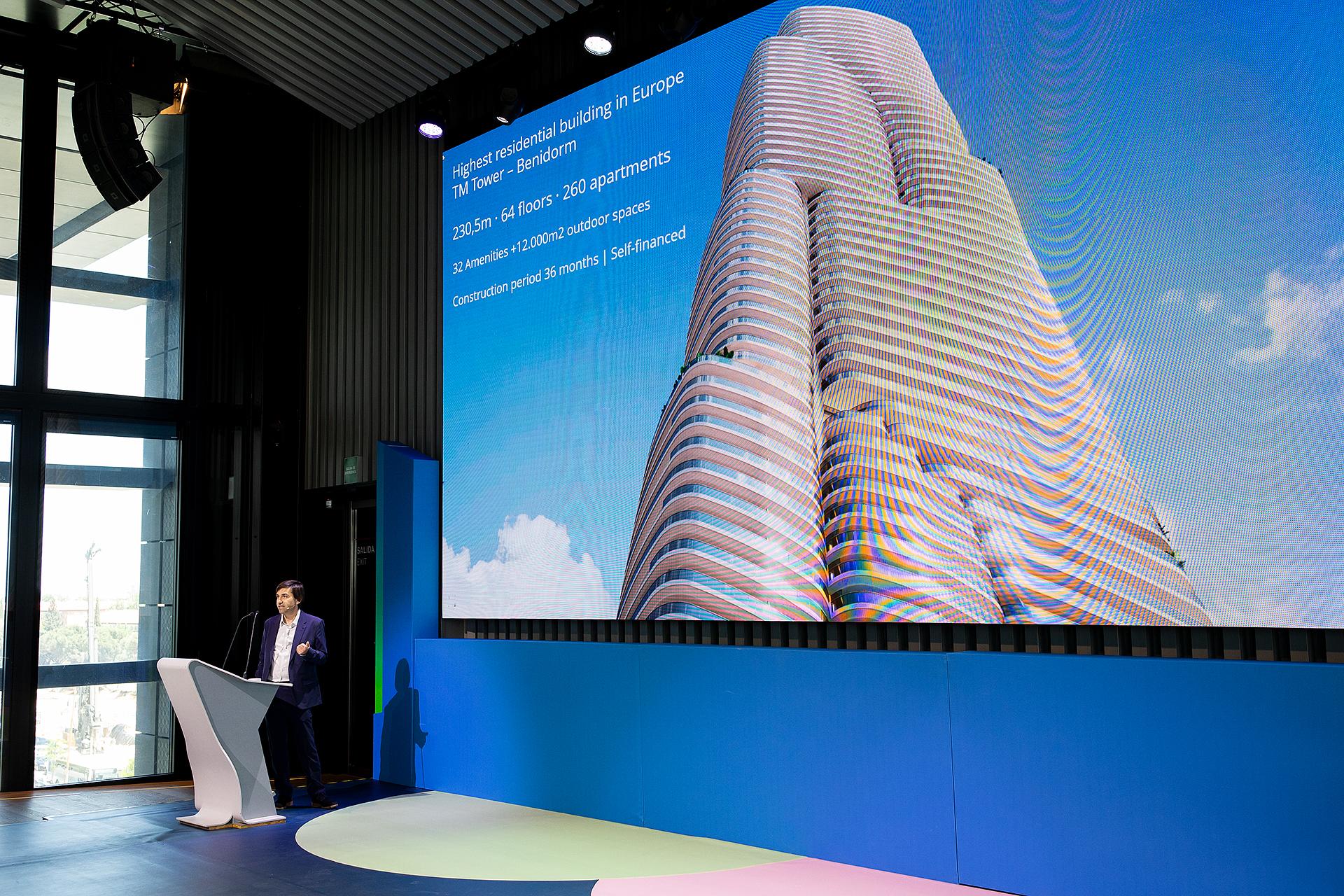
Chaired by Ariane Dienstag, Founder, Ariane Dienstag sas, the session “Tower and Mass Tourism: A Successful Nexus?,” looked at projects in the Mediterranean, a desirable tourist and living destination not just to Europeans but globally. Ricardo Mateu, Founder/Managing Director, UHA Architects presented KEAN, a project in Limassol, Cyprus and unique composition of this 60,000 square meter development comprising a mix of commercial and residential high-rises arranged around a series of private gardens and public pedestrian plazas. Presenters Jose de la Pena Gomez-Millan, Founder and Partner, Bakpak and Pablo Garcia, Development Manager, TM Group Immobiliario shared a brief history of vertical development in Benidorm, Spain, and TM Tower, a recent proposal for a new, 230-meter, 64-floor tower inspired by Mediterranean coral reefs and featuring wrap-around terraces, is adding excitement to the skyline. Now under construction, delivery of the first residences is expected in September 2028.
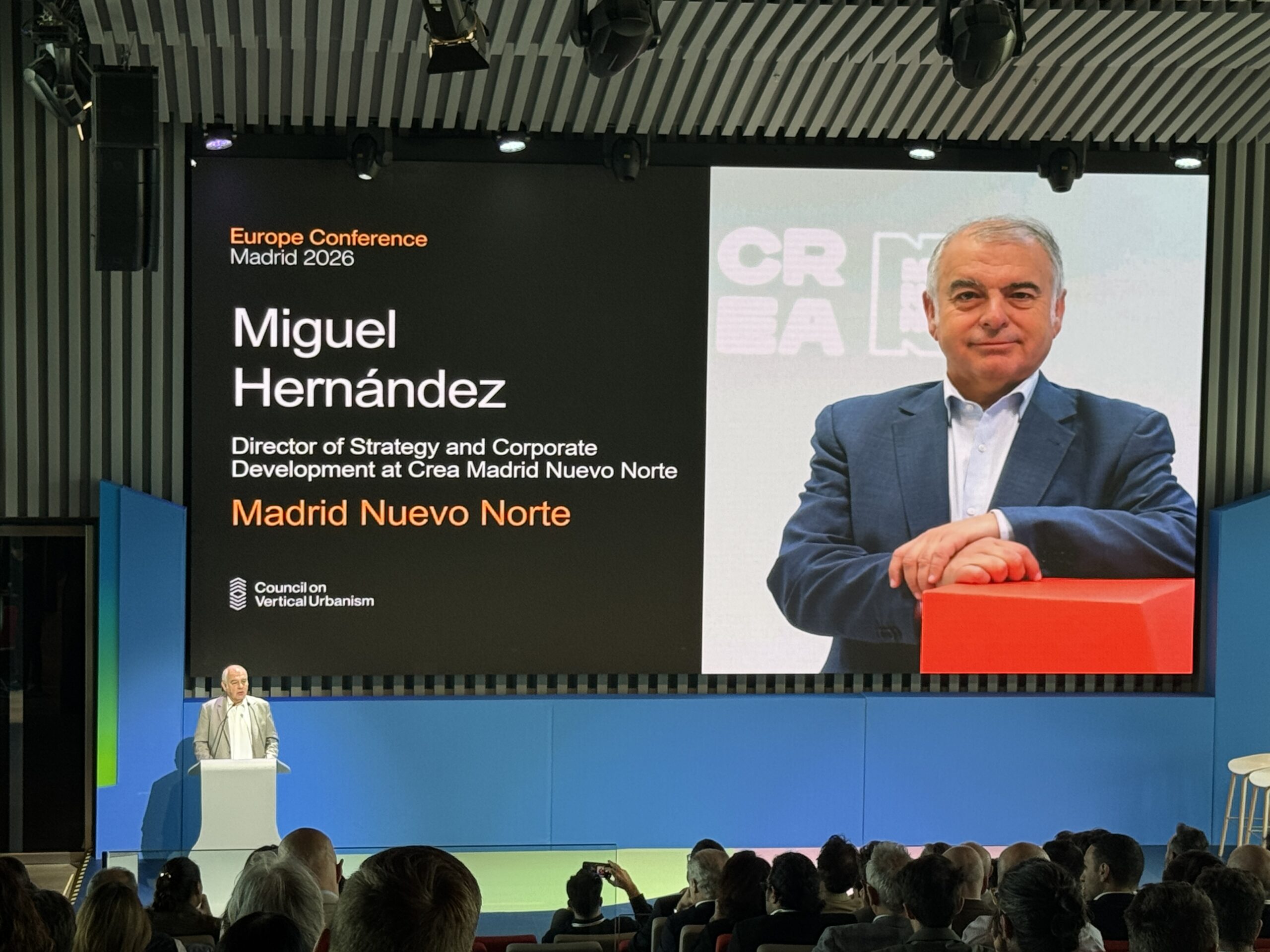
Closing out the first day of the conference, speaker Miguel Hernández, Director of Strategy and Corporate Development at Crea Madrid Nuevo Norte, shared an inside look of Madrid Nuevo Norte, a landmark regeneration effort set to reshape 2.65 million square meters of the city over the coming decades.
Anchored by the redesign of Chamartín railway station and the introduction of a new metro line, the project will deliver up to 11,700 homes and hundreds of office buildings, forming a new business district that redefines the city’s economic center. Among its ambitions is a landmark skyscraper, signaling Madrid’s growing global presence.
More than a development, Madrid Nuevo Norte represents a long-term vision for connectivity, density, and opportunity—demonstrating how infrastructure-led planning can unlock entirely new urban futures. It was a suitable place to end the presentations, as attendees were later to embark across Madrid for off-site tours in the afternoon.
Thursday, 6 May | Off-sites and Opening Networking Reception
After lunch, delegates broke off to attend off-site tours around the city.
IE Tower
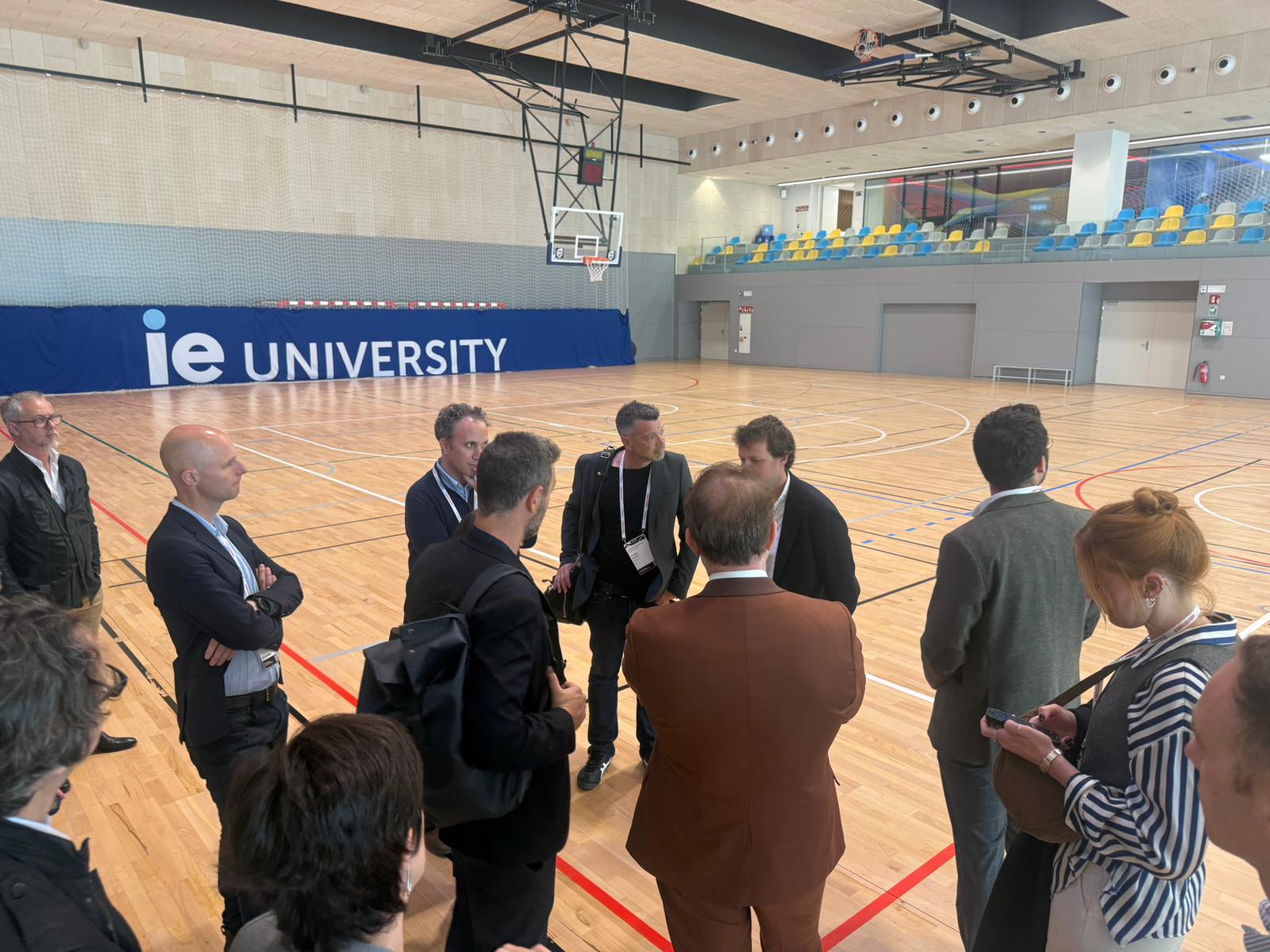
Rising within Madrid’s evolving northern skyline, IE Tower—also known as Caleido—redefines the vertical campus as a dense, interconnected environment for learning, research, and community. Designed to host up to 6,000 students and 500 staff, the tower brings together classrooms, academic departments, and shared amenities within a highly adaptable spatial framework. Cristina Mateo, Associate Dean at IE School of Architecture and Design and Marcos Cortés, Associate & Creative Director at Serrano Suñer Arquitectura led the tour sharing insights into its open-plan floorplates, varied geometries, and expansive teaching levels interspersed by double-height “plazas” that serve as social condensers, fostering interaction and informal exchange.
Santiago Bernabéu Stadium
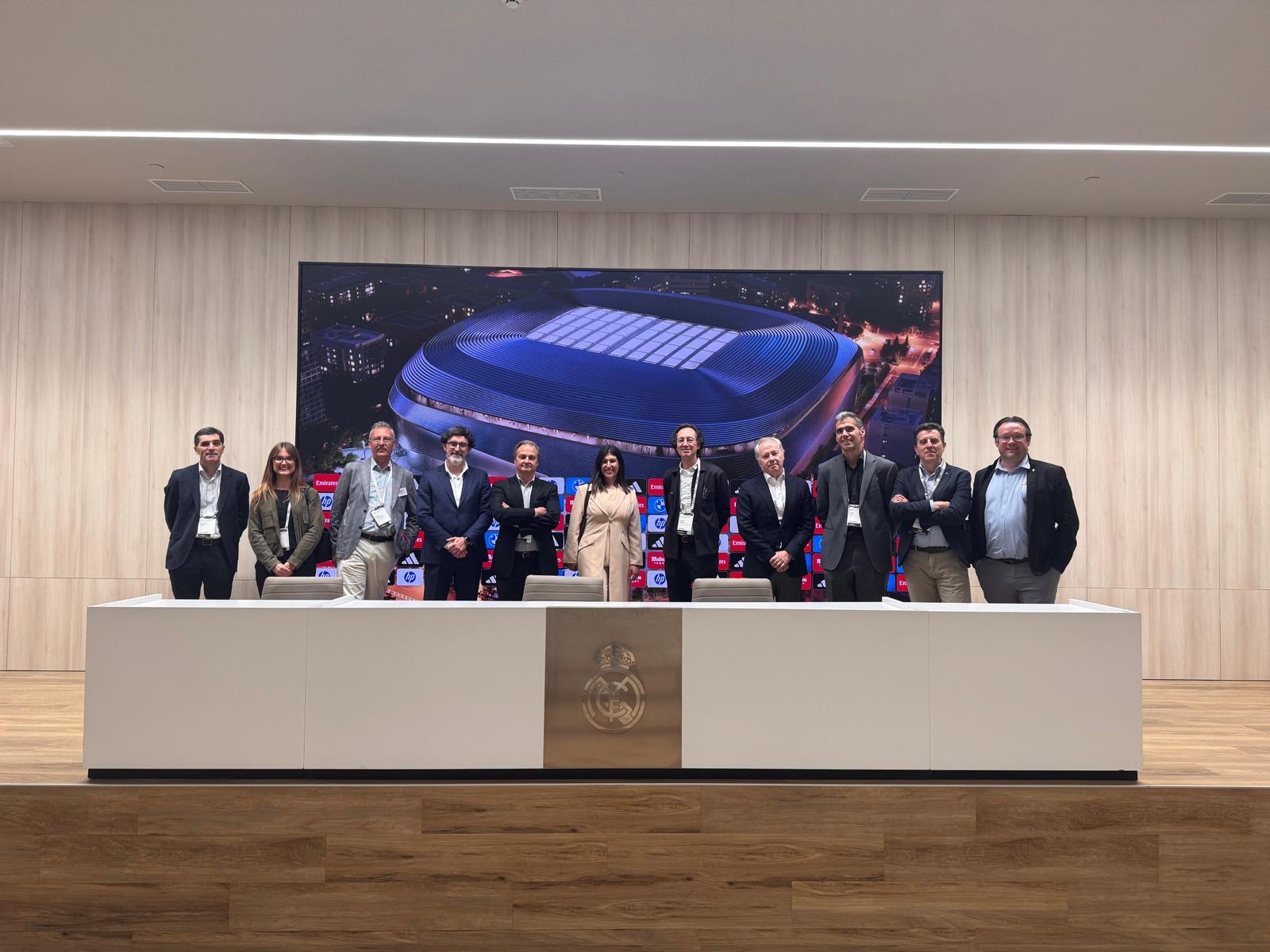
The transformation of Real Madrid’s home at the Santiago Bernabéu Stadium has redefined the venue as a cutting-edge, multi-use arena that merges innovative architecture, advanced engineering, and immersive visitor experiences. This tour, led by senior representatives from Porcelanosa and architects who worked on the renovation, they highlighted key structural interventions, including the new façade, panoramic viewpoints, and technical galleries housing the stadium’s mechanical and control systems. They also explained how the design supports rapid conversion between sporting events and large-scale performances.
Torres Blancas
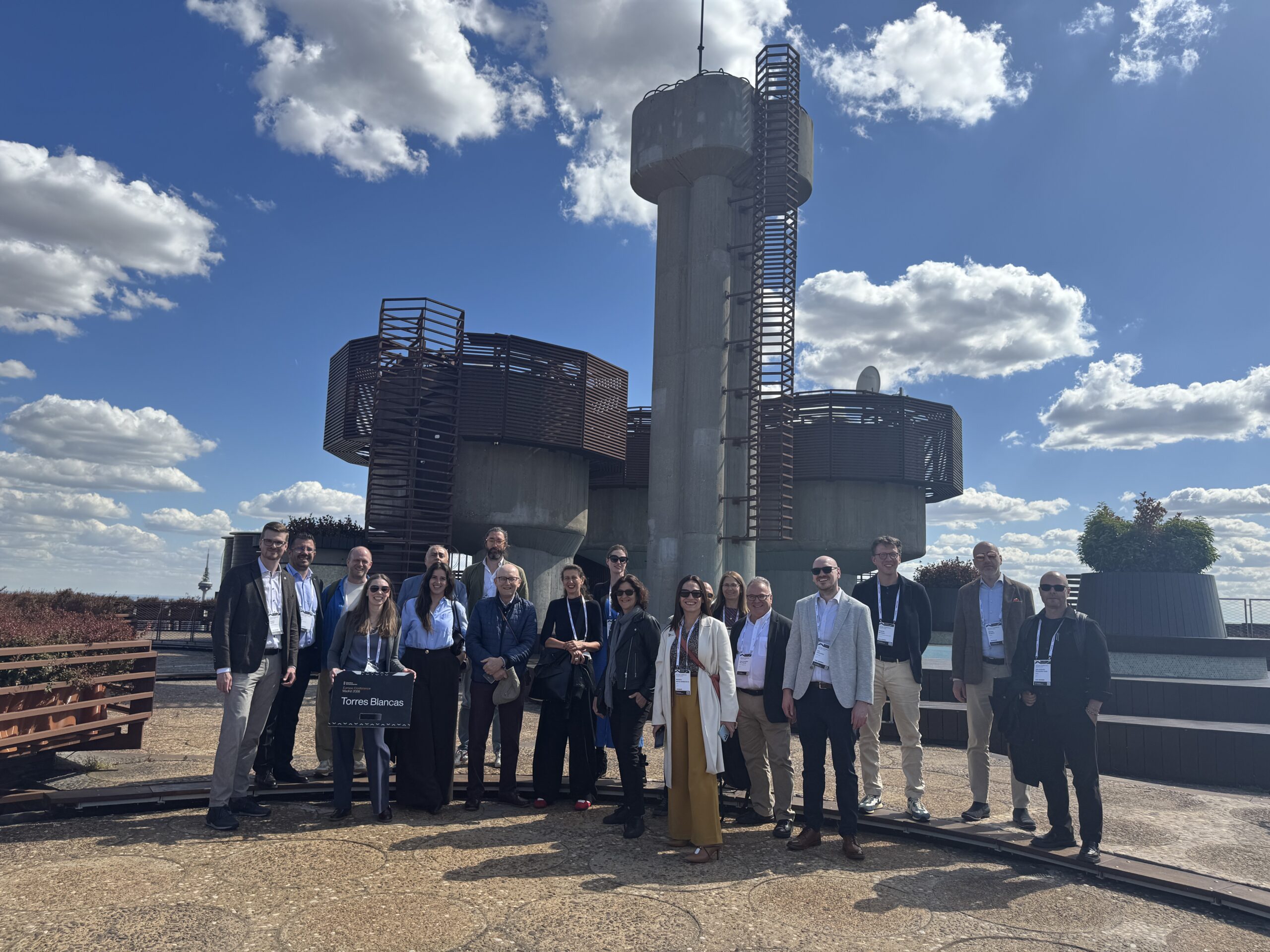
One of Madrid’s most iconic examples of organic modernism, Torres Blancas is a celebrated residential high-rise designed by Francisco Javier Sáenz de Oiza. Completed in 1969, the building challenges conventional high-rise design with its sculptural concrete forms, rounded balconies, and tree-like vertical structure—an architectural vision that reimagines urban living as a “vertical garden city.” Led by the son of architect, Javier Sáenz de Oiza, attendees got to explore multiple entry points and their relationship to the surrounding area, the structural expression of terraces, the lobby, and rooftop where sculptural volumes frame the pool and terrace.
Torre Castelar
Originally completed in 1983 and celebrated for its bold engineering and suspended structural system, in 2010 the building was thoughtfully renovated by the original architect’s son, who modernized the interiors and upgraded the façade while carefully preserving the building’s distinctive architectural vision. Led by Zaloa Mayor, Project Director, Rafael de La-Hoz Arquitectos, the tour offered first-hand insight into the strategies used to adapt the building to current standards. This included upgrades to the double-skin façade that improve daylighting, energy performance, and occupant comfort.
Torre Foster, Torre Espacio & Torre de Cristal—Building Maintenance
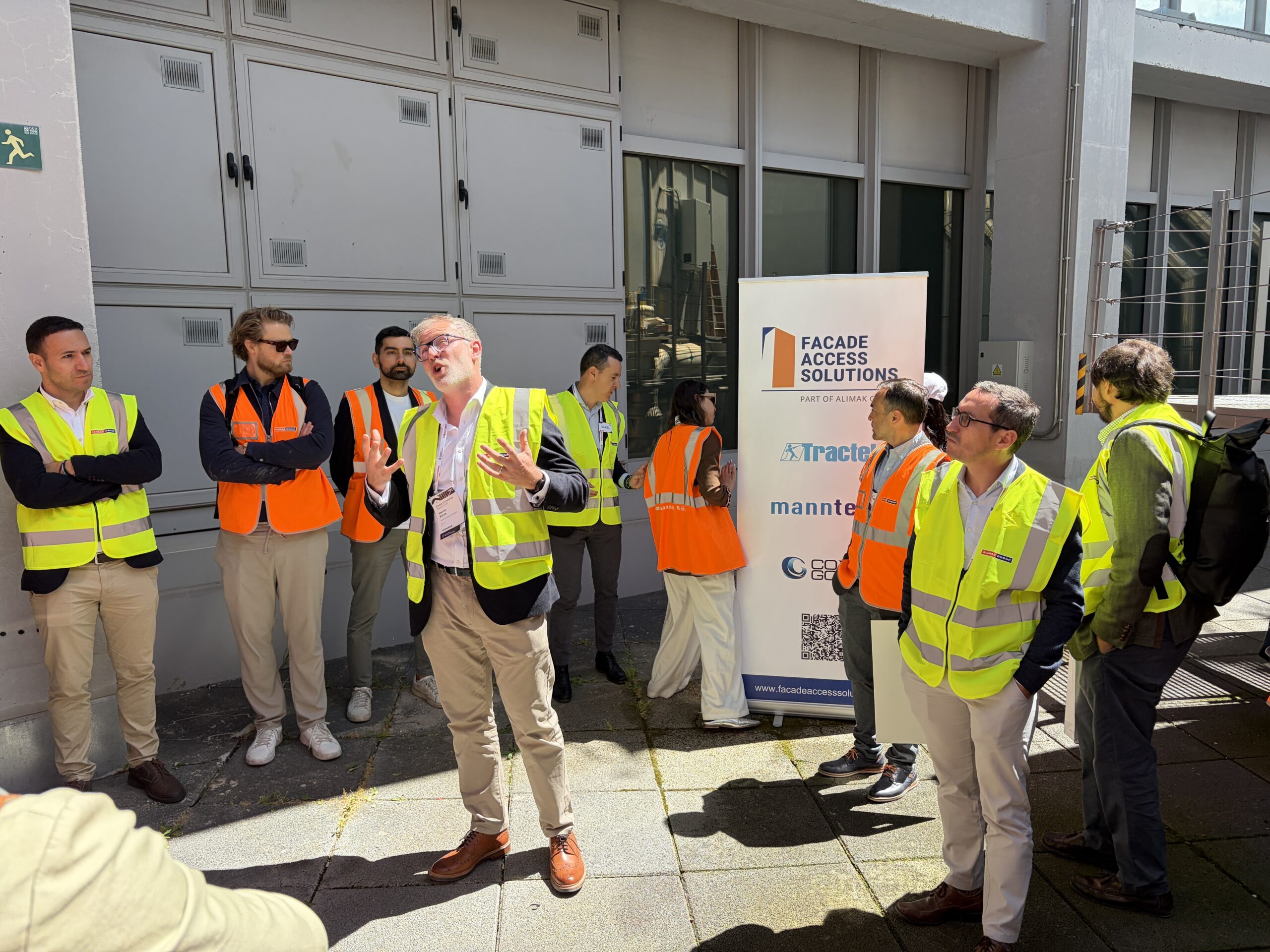
This tour explored façade access strategies across three of Madrid’s most iconic high-rise towers—Torre Foster, Torre Espacio, and Torre de Cristal—with a particular focus on the design and operation of Building Maintenance Units (BMUs). Led by façade access specialists, the visit provided insight into how BMU systems are integrated within complex tower geometries to support both architectural intent and long-term maintenance. This included getting a deeper understanding of how challenges such as height, wind conditions, and façade variation were addressed while ensuring safe and efficient access for cleaning and repair.
Opening Networking Reception
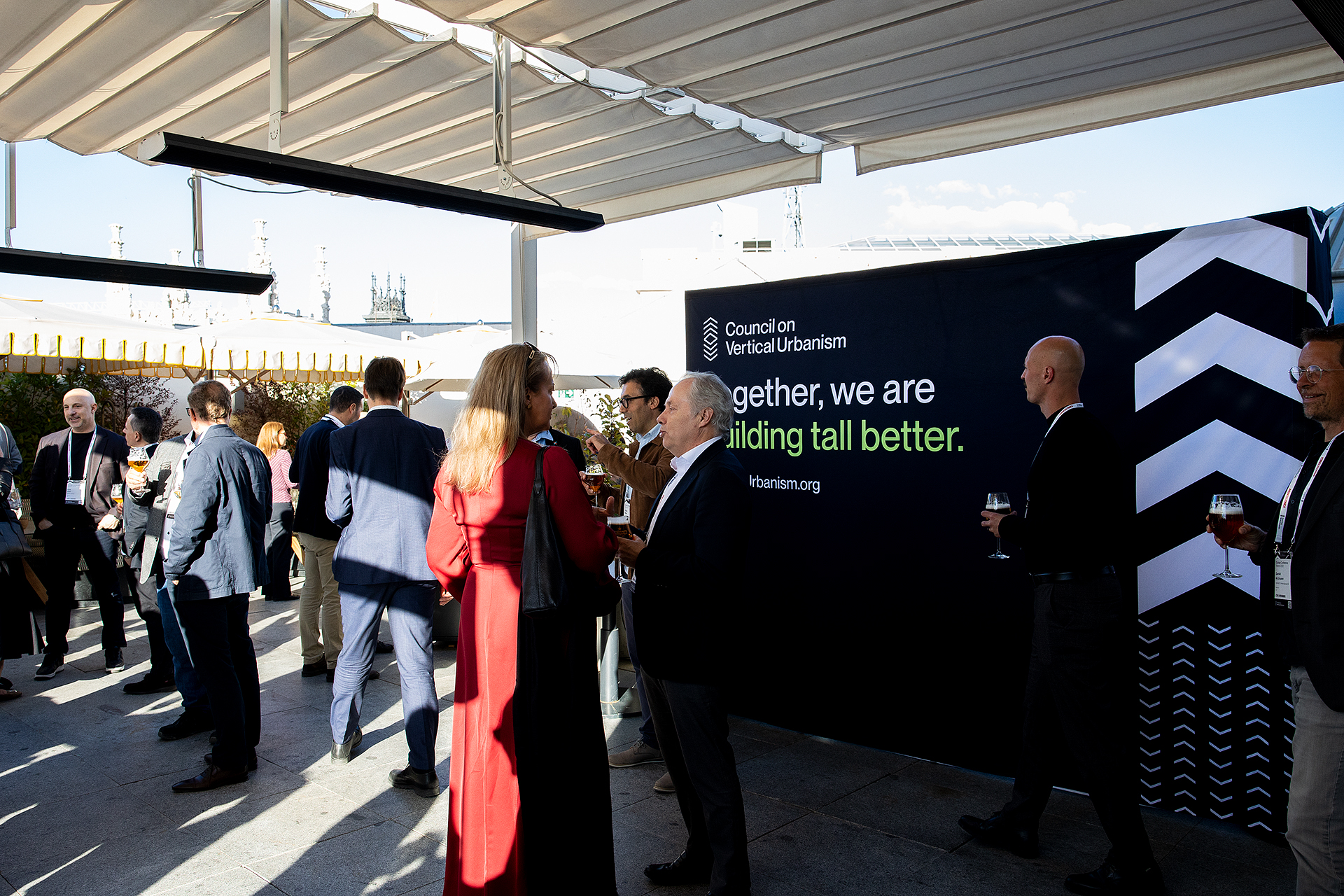
The networking reception in the evening was held atop the historic Palacio de Cibeles, providing stunning views of the famed Cibeles Fountain and Madrid’s expansive boulevards and skyline. It was a distinctive setting for connecting and conversing on the day’s events.
Friday, 7 May | Core Conference, 9am to 1:30pm at Espacio Caleido
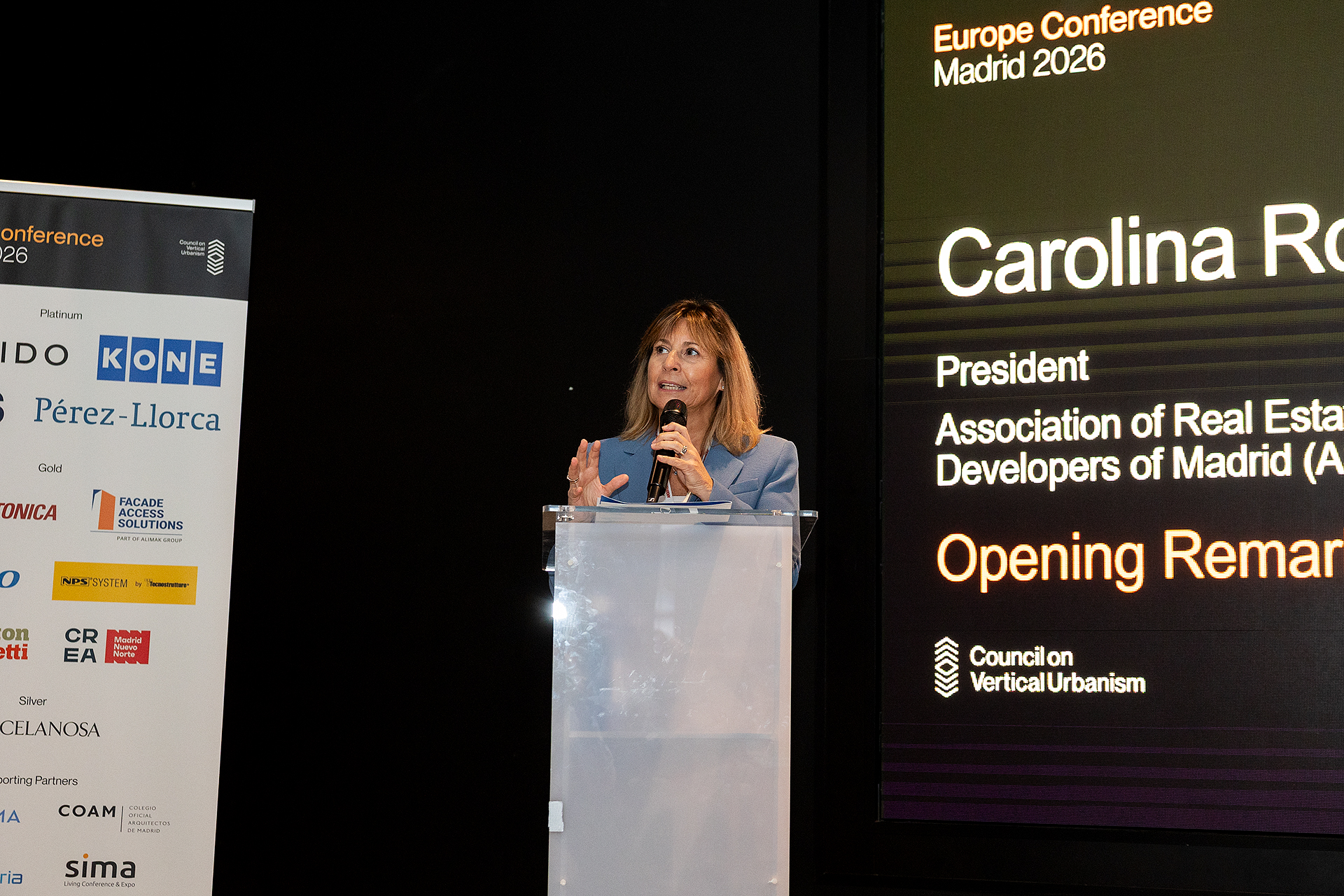
Gathering at Espacio Caleido for the second day of the conference, attendees were welcomed by CVU Europe Regional Director Dario Trabucco, who reflected on the discussions of the previous day and the sense of connection, collaboration, and shared purpose that had emerged among participants in Madrid. As cities across Europe confront growing pressures related to housing, sustainability, infrastructure, and growth, Carolina Rocha, President of ASPRIMA, offered remarks that acknowledged both the complexity of these challenges and the opportunities they present for creating more resilient and livable urban environments.
The day’s program opened with “Iberian Heights,” a session chaired by Ilyada Oner, Deputy County Manager at Turner Construction, highlighting notable projects from across the Iberian Peninsula. César Frías Enciso, Executive Director of Morph, began by tracing Lisbon’s historical evolution and its enduring relationship with the waterfront and the Tagus River, whose presence has shaped the city’s identity for centuries. This context provided the foundation for a presentation on Distrikt, a new residential high-rise in the Parque das Nações district. Drawing inspiration from the area’s network of waterways, the project has been carefully designed to maximize views, strengthen connections to the public realm, and optimize solar exposure, demonstrating how contemporary residential development can respond thoughtfully to both environmental conditions and urban context.
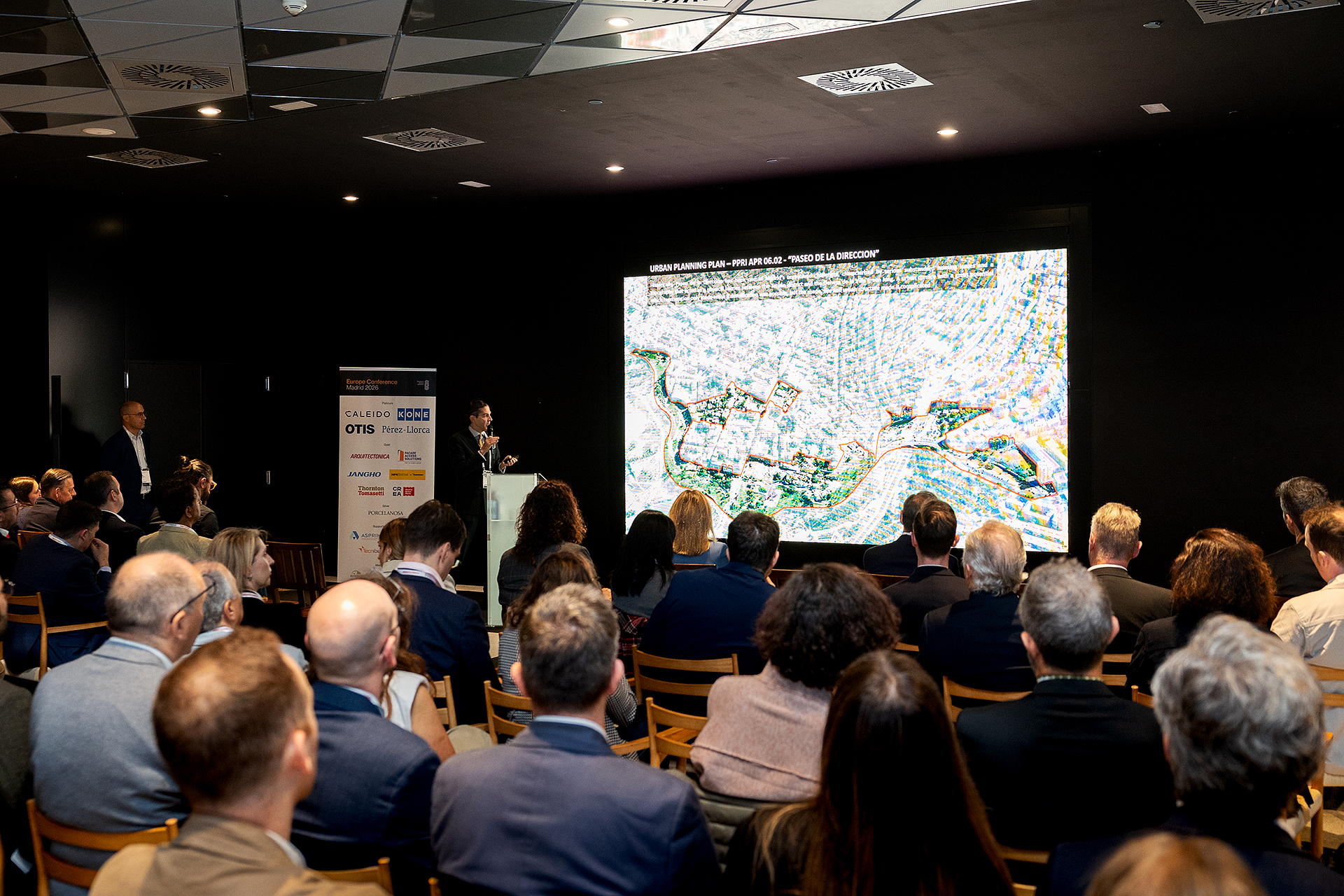
Continuing the exploration of the Iberian Peninsula, Julio Touza Sacristán, Partner and Co-Director of Touza Arquitectos, and Filipe Oliveira, New Equipment Sales Director for Iberia, Africa, and the Middle East at Otis, examined Madrid’s often complex relationship with tall buildings and urban density. Using the Paseo de la Dirección Masterplan as a case study, they described how thoughtful vertical urbanism can help bridge differing perspectives on growth and development and presented the Skyline Towers, located in this area. This next-generation housing will act as an economic driver for the area, with one tower as a build-to-rent, and the other a traditional residential tower, helping attract new residents, investment, and economic activity while supporting the broader regeneration of the district. Additionally, David Fernandez Feito, Founding Partner, luis vidal + arquitectos spoke about the refurbishment of the Colón Towers in Madrid.
Following this, the session “New Office Experiences,” chaired by Julia Köhler, Senior Structural Consultant, CREE GmbH, explored the ways in which offices and mixed-use developments embrace the future. Lorenzo Boddi, Partner, Bjarke Ingels Group (BIG) delighted the audience with a view and videos of the under construction CityWave in Milan. Set within the CityLife Masterplan, the swooped-roof structure is an example of innovative structural performance, efficiency, and architectural quality. Alessandro Baldo, Site Manager, Tecnostructure gave additional details of the New Performance Slim-System (NPS System) that made it possible to achieve this architectural expression.
Other presentations given came from Jesus Roman, Architect, Rafael de la-Hoz Arquitectos on the impressive mixed-use 250-meter Tour Mohammed VI in Salé, Morocco and from Carlos Castañón, Senior Partner & Structural Engineering Director, IDOM on the North Kirchberg Building, the new European Investment Bank headquarters in Luxembourg.
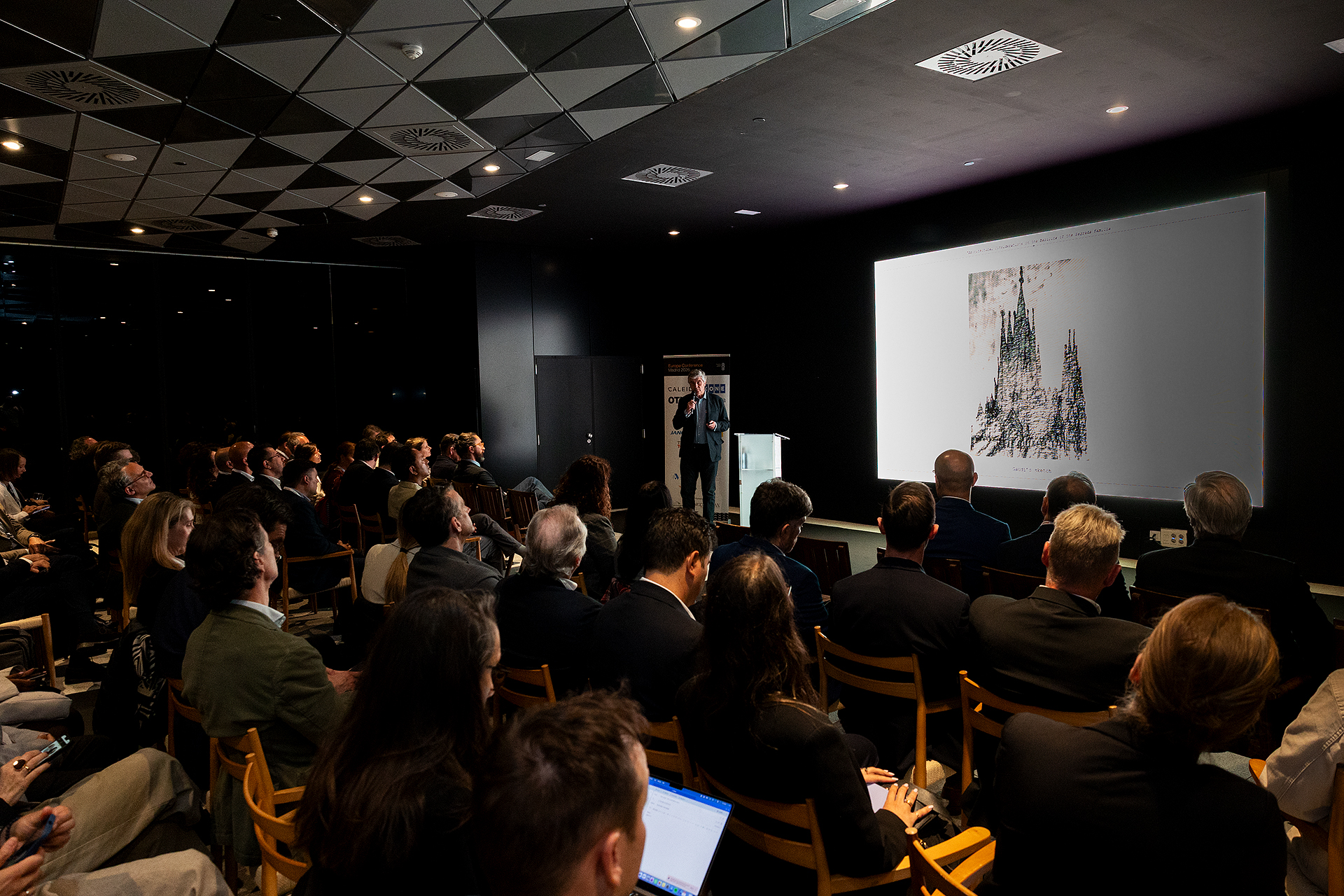
Breaking away from the new, the audience was treated to a special presentation of the “old” with Sagrada Família in Barcelona. Presented by Juan Trias de Bes, Founding Partner of TdB Architects and member of the basilica’s governing foundation, he drew on his close involvement and research on the project that has been one of the defining architectural structures of the last century inspiring structural innovation and architecture over its 100+ year construction. Recently topped out structurally, Juan shared the geometric principles shaping its iconic forms, revealing how geometry continued to guide its evolution towards completion.
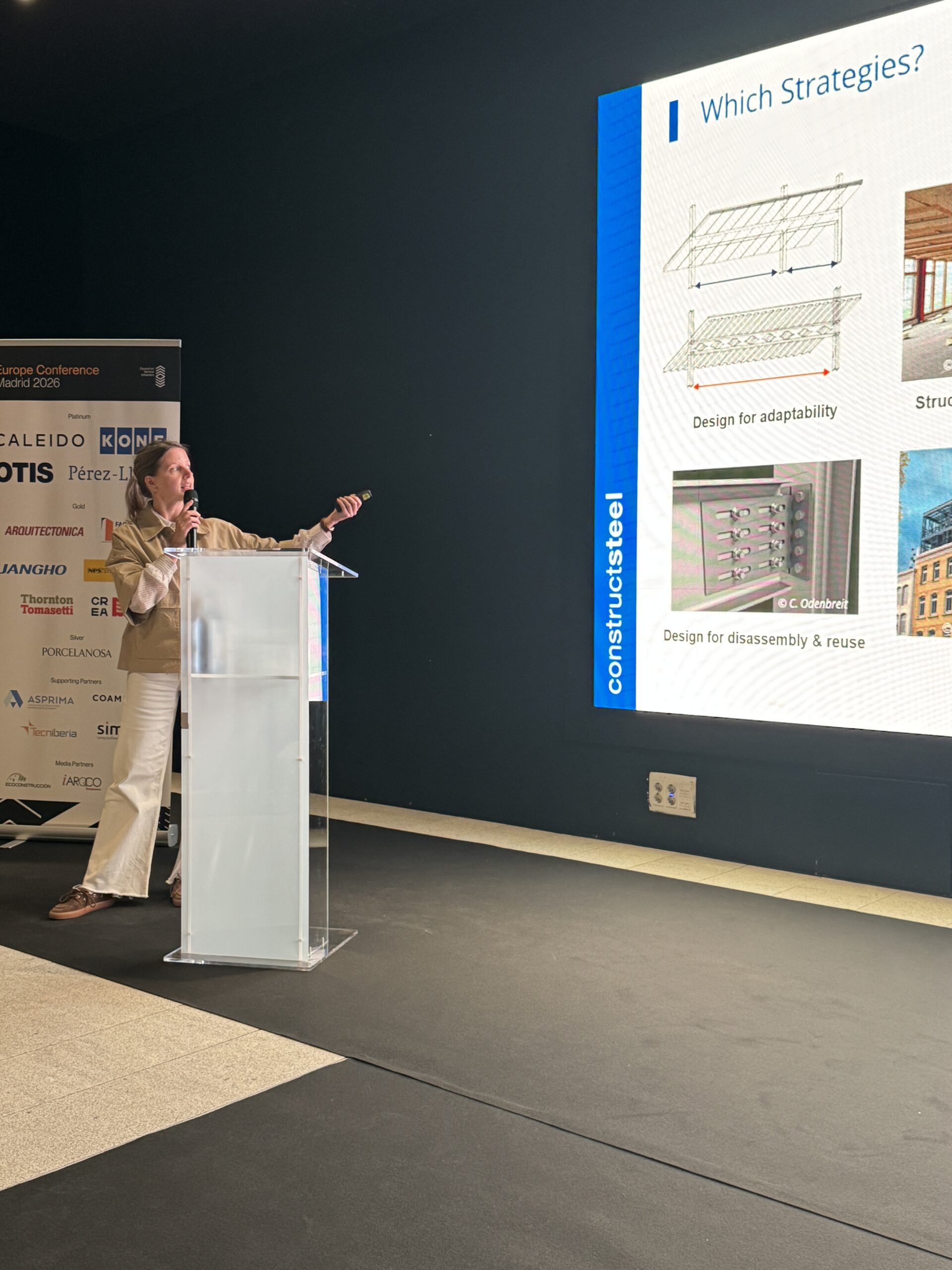
Marion Charlier, Central Engineering Lead at ArcelorMittal and a member with constructionsteel (CVU Program Partner) shared steel‑driven case studies for a decarbonized built environment. Following her, Sanne van der Burgh, Associate Director & Head of MVRDV NEXT at MVRDV gave a brief presentation on the CVU Carbon Commitment and their partnership with CVU in collecting carbon and material usage data from tall building projects to form a public-facing benchmarking dashboard.
This was an elegant segue into the last session chaired by Nayla Mecattaf, Architect, CEO and Co-Founder, Cro&Co Architecture, entitled “Interacting with the Pre-existing.” This group of four presentations shared how new projects can interact with the pre-existing urban context, especially in history-rich European cities, with solutions exploring historic preservation with the new, energy-efficiency, and looking holistically at the ground plane. James Taylor, Principal, Woods Bagot shared his involvement in 85 Gracechurch Street in London that has found Roman artifacts in its basement, and how it is has approached sitting next to the historic Leadenhall Market.
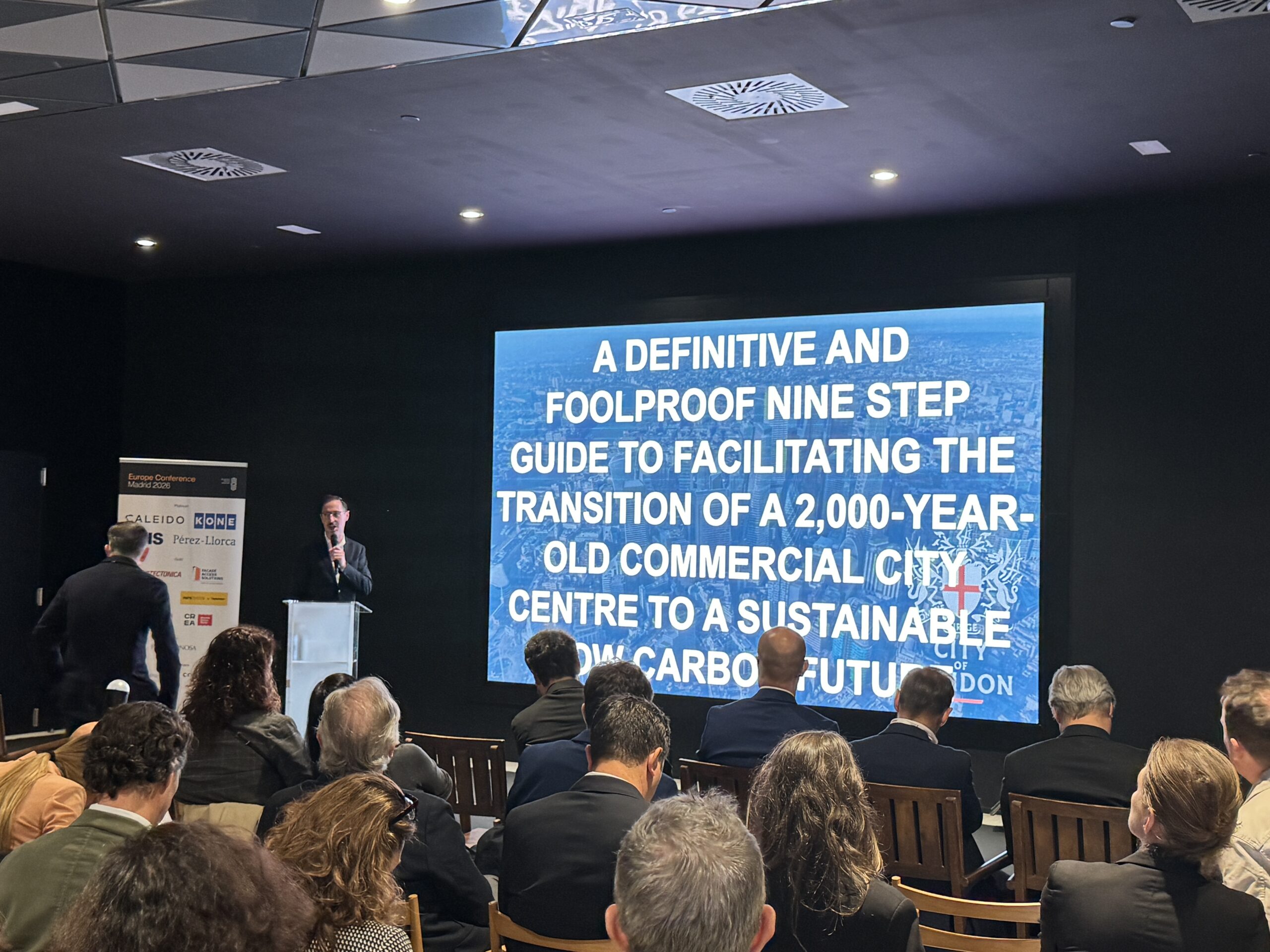
Peter Brannan, Managing Director – Asia Pacific and Middle East, Arquitectonica expanded on how vertical meets street level stating that great cities are “remembered by their public spaces where buildings meet the ground and people meet each other,” sharing three project examples of Brickell City Centre in Miami, the Infinity in Luxembourg, and GDH City in Shenzhen. Other presenters included Raphael de la Fontaine, Founder and Principal, De La Fontaine Architects, and Rob McNicol, Assistant Director, City of London Corporation.
As conversations continue on these subjects, there is a clear sense that progress comes from listening, learning, and working together. It was another day of meaningful dialogue and collective exploration about how to shape cities that are not only denser, but more livable, inclusive, and resilient.
For more images of the event, view the gallery here.