


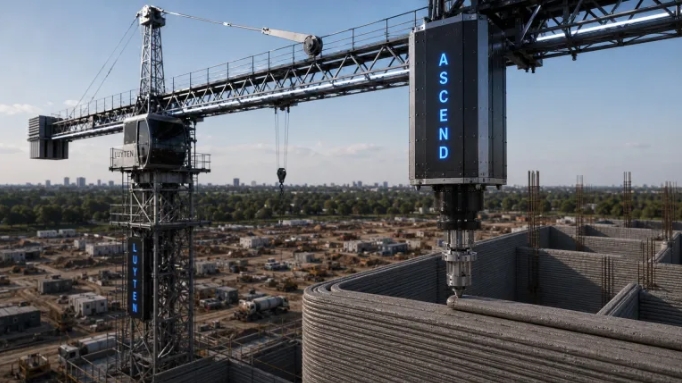
Australian construction technology company Luyten has introduced what it describes as the world’s first tower crane-based 3D concrete printing system, a platform designed to automate the construction of mid- and high-rise buildings using existing tower crane infrastructure.
Known as Ascend, the system combines robotic concrete printing, artificial intelligence, and digital construction workflows within a tower crane framework. Developed in Melbourne, the technology is capable of constructing buildings up to 100 meters (328 feet) tall within a working radius of approximately 45 meters (148 feet).
Rather than replacing conventional tower cranes, the system adapts one of the construction industry’s most familiar pieces of equipment into a robotic manufacturing platform. The approach reflects a growing industry focus on automation as developers and contractors contend with labor shortages, rising housing demand, productivity challenges, and pressure to reduce material waste. According to Luyten, Ascend can be installed and commissioned within one to two days, allowing it to be integrated into existing construction operations with minimal disruption. Using AI-driven tools to generate print paths, monitor progress, and optimize construction workflows in real time, the system is supported by the company’s proprietary printable concrete material, Ultimatecrete, which has been developed for large-scale additive manufacturing applications and is designed to provide the strength, flow characteristics, and layer bonding required for multi-story construction.
While being shared as a promising new technology, nearly every application would require demonstrating compliance, potentially requiring extensive testing and documentation for approvals that could increase project risk, as well as prove the case in its ability to shorten construction schedules and/or reduce labor costs to make it an attractive alternative.
The Council will be watching this recently announced tall building innovation and provide new reporting as new information comes out.
Read more at Interesting Engineering.com