


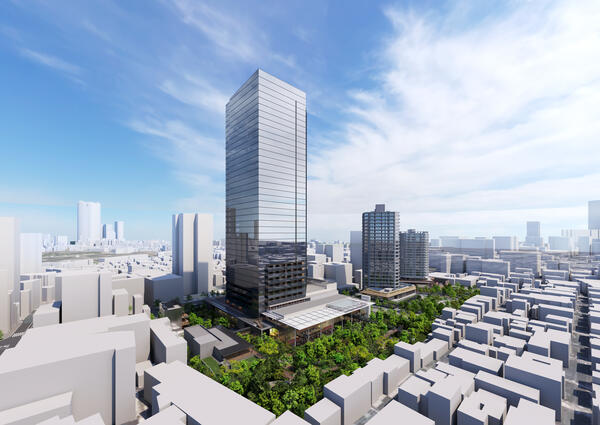
Construction has begun on the Kita-Aoyama 3-Chome District Type 1 Urban Redevelopment Project, a large-scale mixed-use development that will combine offices, hospitality, retail, public spaces, and extensive urban greening in one of Tokyo’s most prominent districts.
The project is being delivered by Tokyo Tatemono and Tokyu Land Corporation in partnership with the Urban Renaissance Agency (UR) as part of the broader Kita-Aoyama 3-Chome community development initiative. Located near Omotesando and Gaienmae stations, the redevelopment seeks to strengthen the district’s role as a center of culture, commerce, and public life while improving resilience and environmental performance.
At the center of the project is a 38-story mixed-use tower with approximately 178,000 square meters of floor area, making it the largest building in the Aoyama area. The development will combine office space, a luxury hotel, retail uses, cultural facilities, and public gathering spaces. A separate three-story commercial building will complement the main high-rise.
A defining feature of the redevelopment is the creation of a nearly one-hectare “forest belt” that will connect with surrounding green spaces and help reinforce biodiversity in central Tokyo. Developed through ecological studies and long-term environmental planning, the landscape strategy draws on native plant species and is intended to serve as both a public amenity and an ecological corridor linking larger green areas such as Meiji Shrine and the Akasaka Imperial grounds.
The project incorporates a range of public-facing uses designed to activate the district throughout the day. Retail and restaurant spaces will overlook the forest landscape, while cultural facilities, including an event plaza, gallery, multipurpose studio, and library lounge, are intended to support community activities and creative exchange.
Office floors will occupy much of the tower, with large floorplates designed to accommodate a range of workplace configurations. A small luxury hotel will occupy the lower levels, offering guest rooms with views of the landscaped grounds alongside hospitality and wellness amenities.
The project also emphasizes connections between architecture and landscape. The lower portions of the building, supervised by the late architect Yoshio Taniguchi’s design studio, feature a series of open passages, terraces, and atrium spaces that draw light, air, and greenery into the development while creating pedestrian connections through the site.
When completed, the redevelopment is expected to establish a new mixed-use landmark in Aoyama, combining high-density urban development with public space, cultural programming, and long-term environmental stewardship in the heart of Tokyo.
Read more at Tokyo Tatemono.