Resources
Research
Research Papers
Paper

Building Above Our Cities: Evaluating the Feasibility of Mass Timber Vertical Extensions 

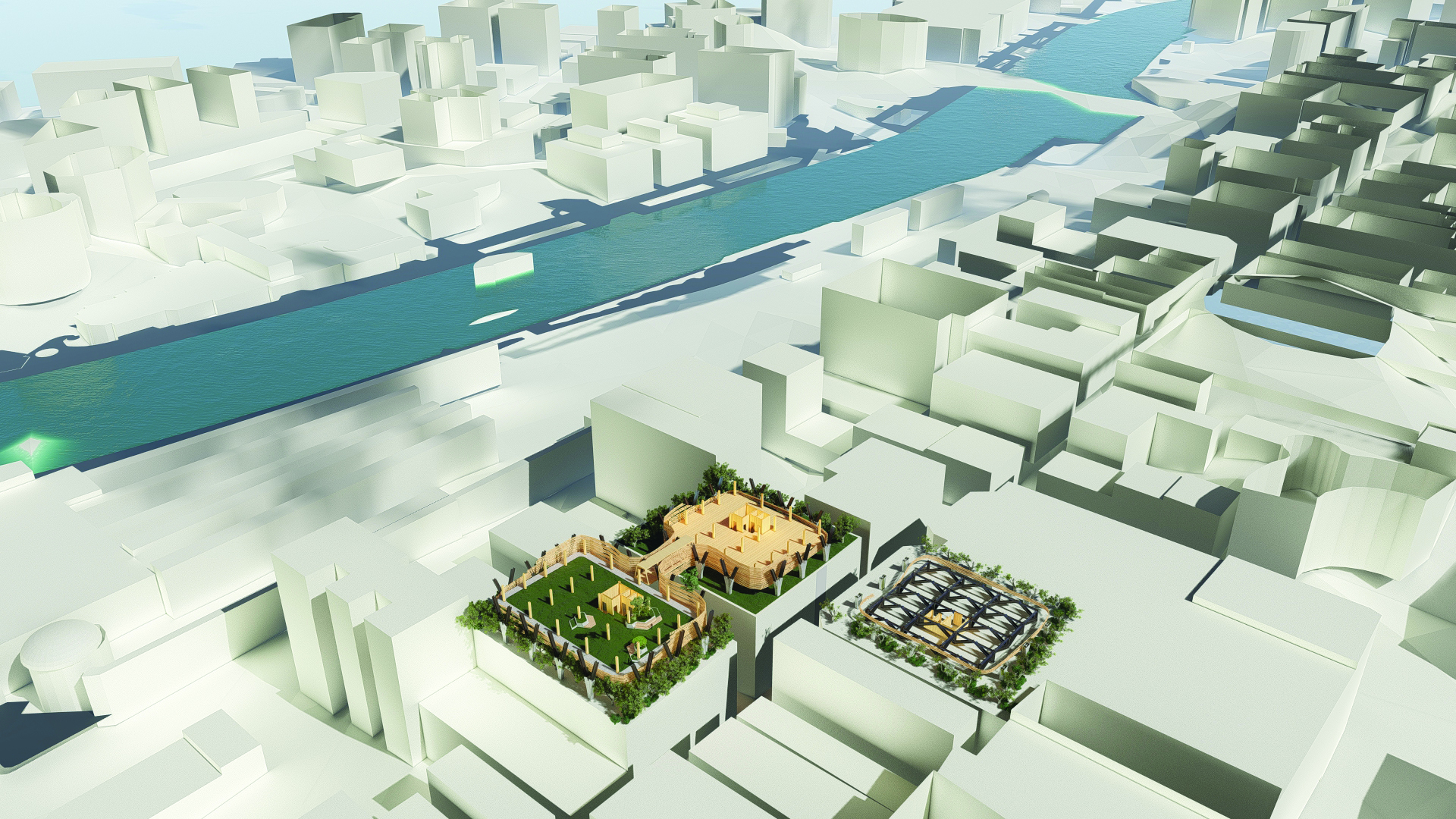
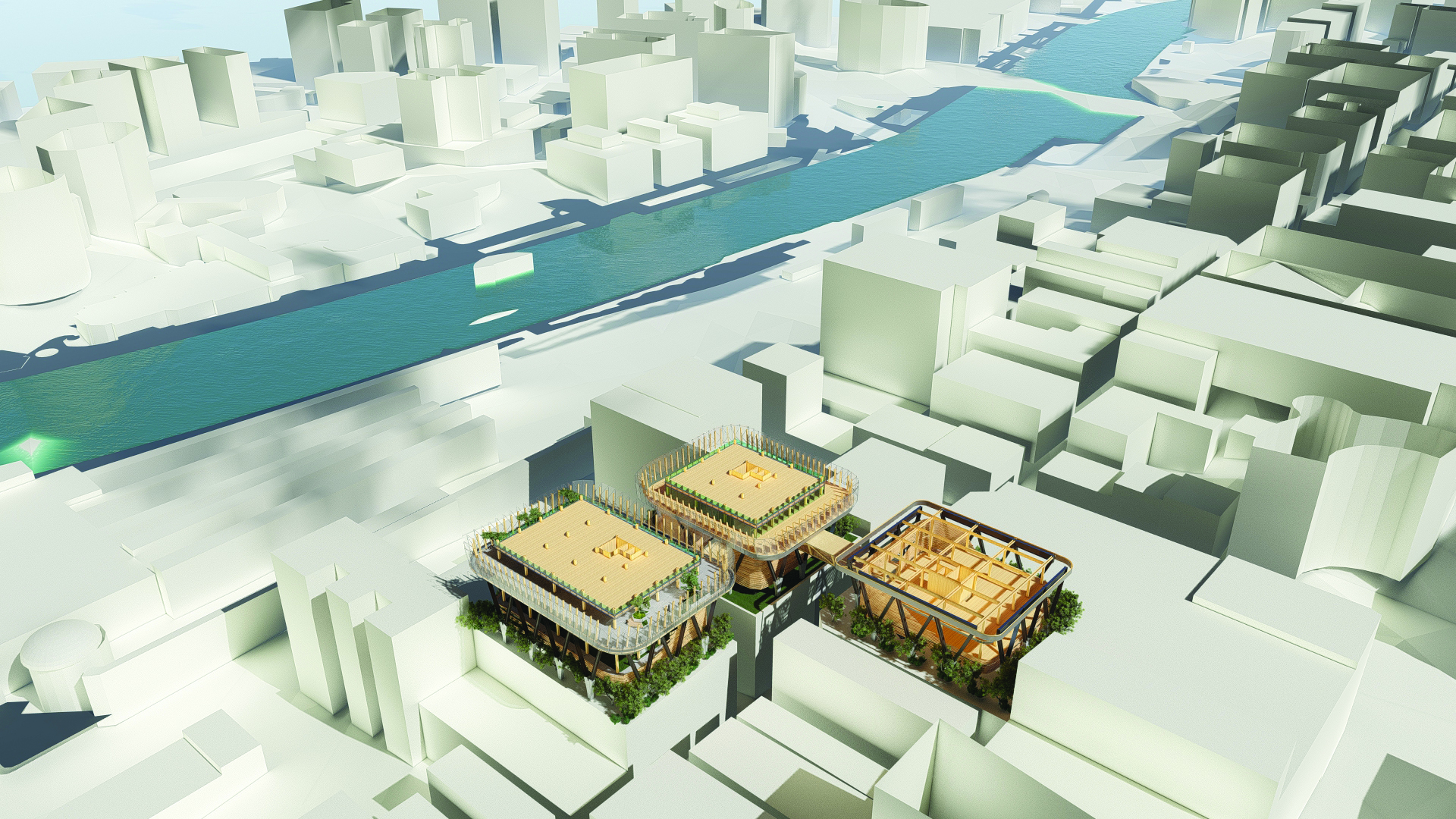
Figure 1. The authors studied the potential to raise extensions on three existing buildings in the Melbourne central business district. Three axonometric drawings, two involving sectional cuts, illustrate the composition of the structures. A V-shaped exoskeleton in steel envelops stacked mass timber floor plates. This is then encased in a timber-framed glass veil.

1 / 10

Abstract

This paper provides guidance about the methods of assessing existing buildings for vertical extensions using mass timber construction (MTC). Guidance is proposed herein to support the feasibility for potential projects, while a concept application called “The Melbourne Mallee” is presented, showcasing the potential for the suggested solution. The paper concludes with several considerations for those seeking to undertake MTC vertical extensions in the future.

Keywords: Central Business District, Mass Timber, Vertical Extensions

This paper summarizes the findings of the 2020 CTBUH International Research Seed Funding, kindly sponsored by: CITIC Heye Investment Co., Ltd.

Cities above Cities

To address concerns about urban densification and congestion in many modern industrialized cities while minimizing the effects on the environment, one of the feasible options is to build vertical extensions (Artés Pérez, Wadel Raina & Martí Audí 2016); in other words, to build “cities above our cities.” Vertical extensions are also known as rooftops, roof stacking, and/or roof retrofits, which involve constructing additional levels on top of an existing building to accommodate future demand. The concept has been successfully implemented in different building types, such as masonry-built heritage (Argenziano et al. 2021), steel, and concrete buildings (Soikkeli 2016). This article highlights one possible solution that is gaining currency and offering maximum benefits: the use of mass timber construction (MTC) as a lightweight, renewable, and flexible solution for vertical extensions.

Quote pattern

It was important to assess mass-timber extension feasibility at the macro level, including stability of the government in which cities are located, and the acceptance or adoption of sustainability or environmental paradigms.

The “Community on City” Concept

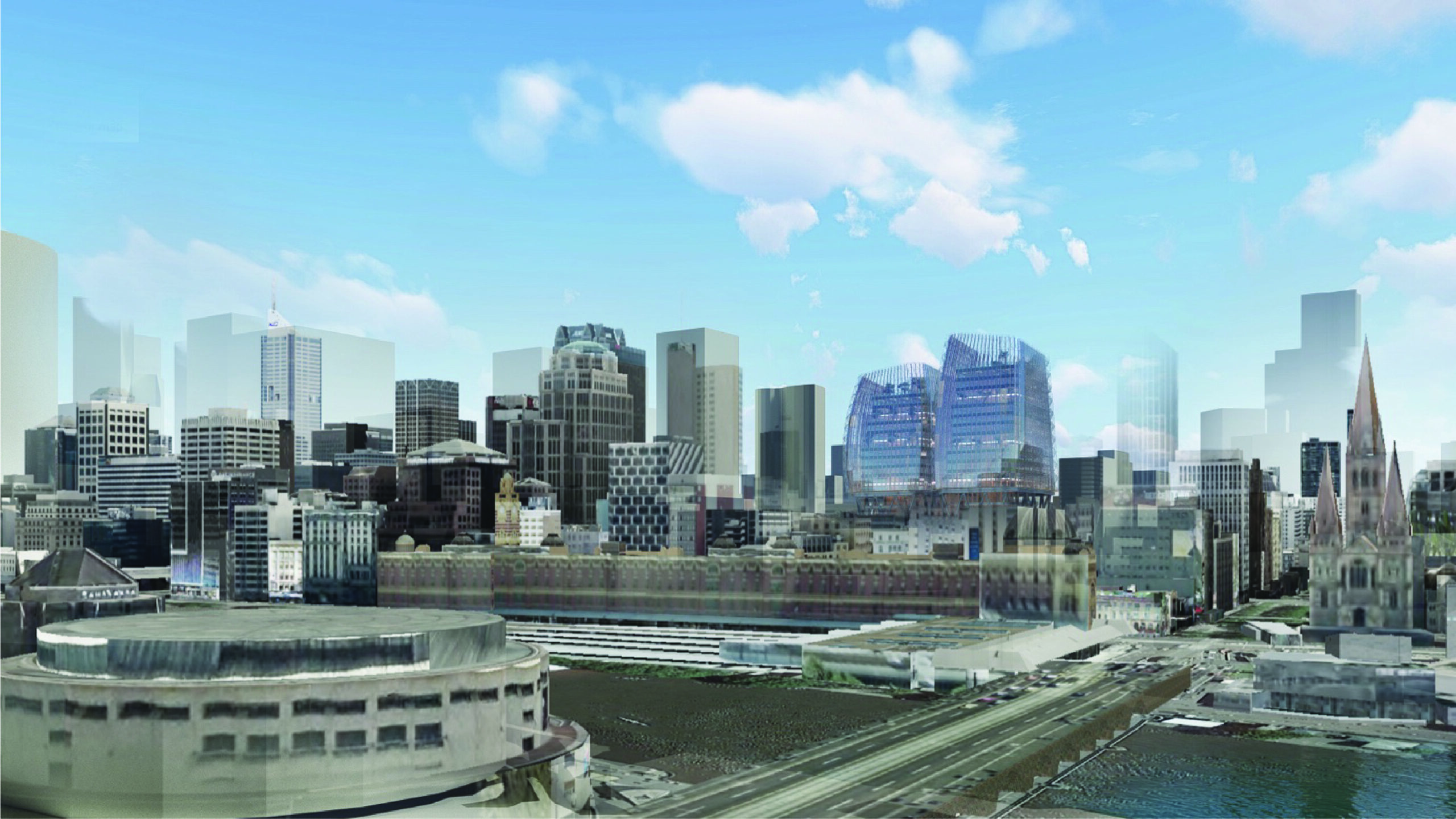
The design of the feasibility study to determine the various considerations for a potential “community above a city” included the analysis of the various implications, based on the limited historic assessment of several modern case studies. The current study sought to best understand the practical implications for the delivery of vertical extensions, using a site in Melbourne’s central business district (see Figure 1). The first objective was to define the criteria for the assessment of suitability for the adoption of a series of vertical extensions and connection skybridges. The important characteristics of feasibility include typical elements, like spanning capacity for skybridges, materials, wind loading, seismic conditions, etc. However, it was clear that the adoption of such progressive construction approaches would require a sense of “technology adoption” and an assessment of the “environmental” attitudes of the locations. Therefore, the following measures were created for calibration.

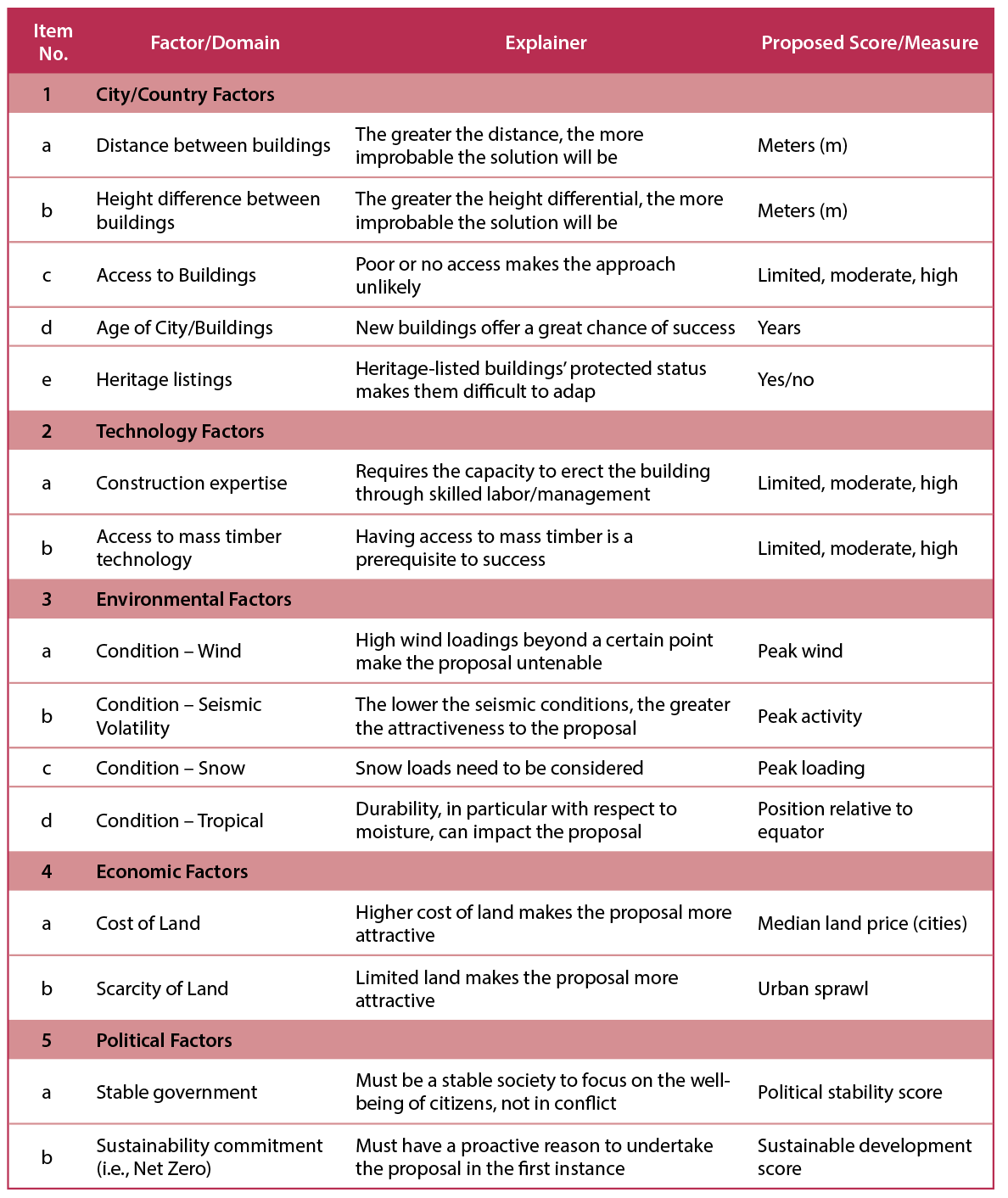
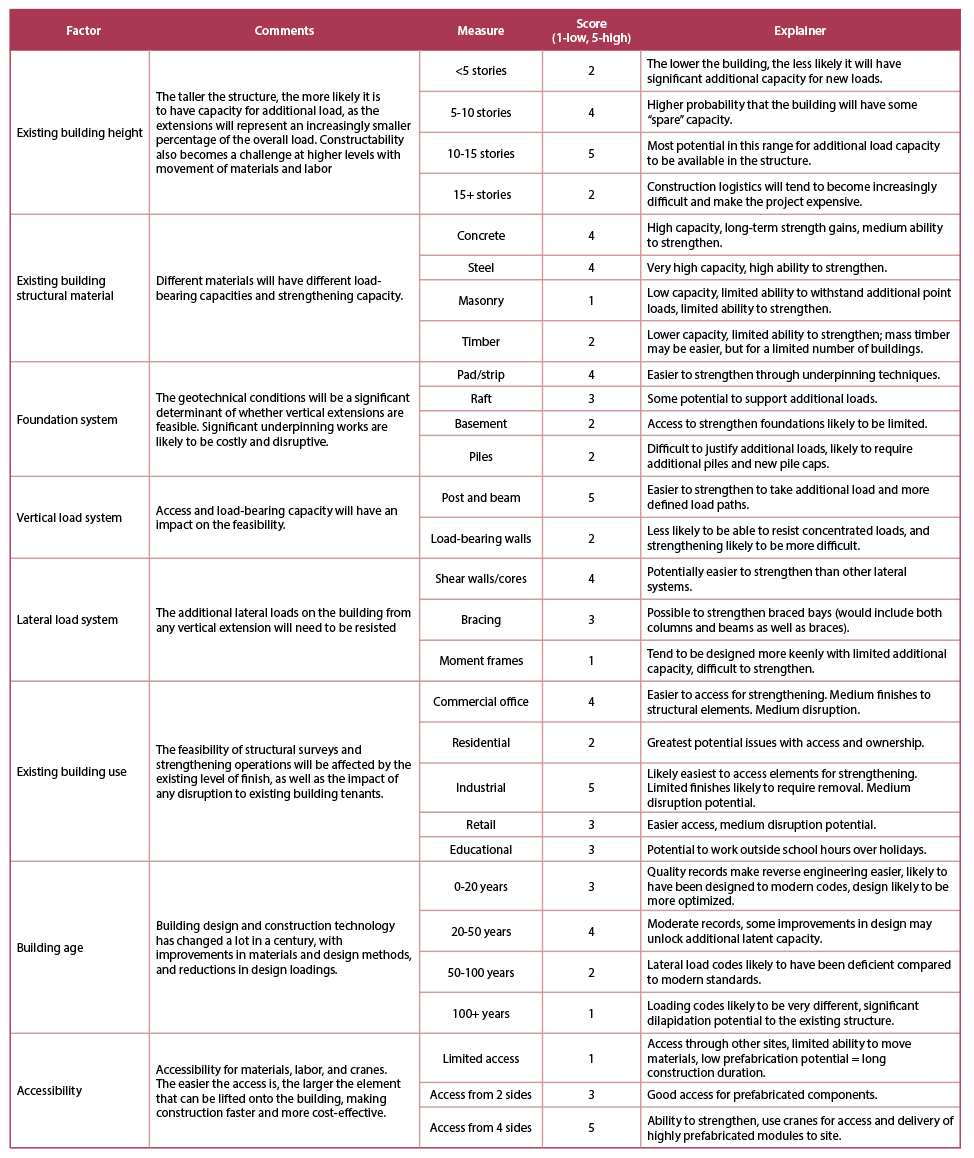
The research team, including architectural and engineering members, along with academics, reviewed all the important considerations for the assessment of a suitable site for massing a multi-building, interconnected solution that would be feasible to undertake in the selected location/s. Table 1 outlines the various factors taken into consideration for the assessment of the city’s suitability for the adoption of a “sky community.” The measures include practical aspects for the development of a city above a city, such as vertical and horizontal distances between buildings, seismic, wind and other loadings, the age of the buildings as well as the city overall. In addition, there is a requirement to understand certain economic factors, provide accessibility to existing building structures, identify the existence of any heritage overlay for planning, and importantly, provide access to advanced construction materials and building techniques.

The combination of these factors (the scores) culminates in a subtotal score. Each is assessed in terms of directionality for the factor, and a range is applied. For example: the distance between buildings in the cluster might not exceed, say, 20 meters. Important comparisons of the scores of targeted existing buildings for feasibility can be undertaken with this approach. However, not all cities around the world are suitable for the approach suggested in the present study. Importantly, the last major aspects for feasibility assessment exist at the macro level, including stability of the government in which cities are located, and the acceptance or adoption of sustainability or environmental paradigms. These were a prerequisite for the proposed approach, as it highly correlates with the uptake of advanced building technologies, including MTC and other modern methods of construction (MMC). The scores on these last two indices are assessed in concert to arrive at the final assessment.

A table of the various factors taken into consideration for the assessment of a city’s suitability for the adoption of a skybridge-level community.

Table 1. Factors taken into consideration for the assessment of a city’s suitability for the adoption of a skybridge-level community.

The Challenges of Vertical Extensions

The building of vertical extensions faces challenges beyond those inherent to a traditional construction project. The approach requires specific considerations regarding safety, service, and social functions that are related to both the existing building and future extension (Amer & Attia 2017), with safety being the top priority. The feasibility of adding a vertical extension relies completely on whether the existing building has the capacity of holding extra loads. It could be the load-bearing strength of inner structural components (e.g., beams and columns), the ability to resist additional wind or seismic loads, or the allowable bearing capacities of soil and foundations. Additionally, the structural capacity can be impacted by the form of construction, durability, and damage during the working life of the structure.

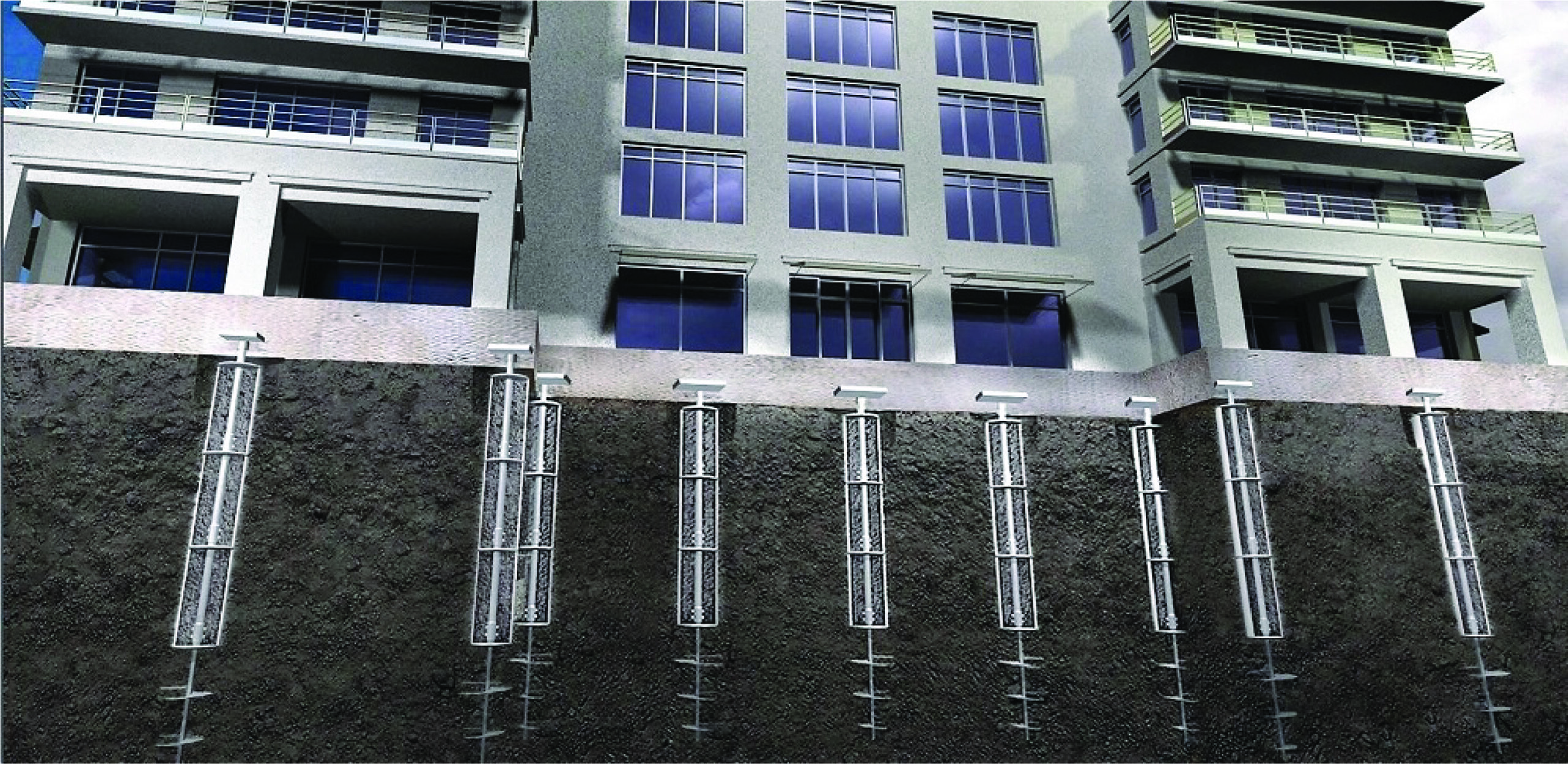
Figure 2. Additional piles may need to be added to accommodate a vertical extension on top of an existing building. The advantage of timber’s lighter weight relative to other structural materials means that piling or other strengthening works could potentially be reduced.

Figure 2. Additional piles may need to be added to accommodate a vertical extension on top of an existing building. The advantage of timber’s lighter weight relative to other structural materials means that piling or other strengthening works could potentially be reduced.

The keys to applying a vertical extension solution to an existing building require several important requirements to ensure success. Critical to the assessment of a vertical extension project is access to existing information relating to the existing building. Structural drawings—for example, around reinforcement and wall, column and floor details—are essential to the assessment and justification of the approach.

The capacity of the existing structure must be carefully assessed to see if any additional capacity exists, thus minimizing any additional strengthening requirements for columns, the stability system, pilings, and other substructure concerns. In addition to the capacity assessment, all viable options to install strengthening measures must be evaluated to find the optimum solution for the project.

Common Foundations and Strengthening Options

Such an assessment requires a review of different options and the likely consequences on the architecture of the building, the access required to install walls and larger footings or strengthen columns, and the extent to which demolition is required to enact the preferred solution.

Concrete Pad
In a building with a concrete pad as the base support, it should be kept in mind that these are reliant on spreading the load from the structure over a large enough area to avoid overloading the soil. Care needs to be taken to check the loading on individual pads relative to each other. If the vertical extension is only over part of the existing building footprint, then it is possible that adjacent footings could see very different loads, and this could lead to differential settlement and potential damage to the existing structure. To strengthen, existing pads or strips could be underpinned to increase capacity. This could take the form of traditional mass concrete underpinning down to soil of a higher capacity (see Figure 2). Alternatively, piling or micro-piling could be tied into the existing pads to increase capacities. Pad foundations represent one of the easier foundation types to strengthen.

Concrete Raft
Rafts represent a good option for extensions, as they tend to spread loads over larger areas. Overall stability loads for the building are likely to be the key factor, as the magnitude of overturning loads increases with height. Additional vertical loads are spread over a large area and may be able to be justified without strengthening. Larger overturning loads may require strengthening through underpinning around the perimeter.

Basement
Basements may behave more like a raft and spread additional load over a wide area. Strengthening or underpinning of a deep basement is likely to be complex and costly. Strengthening would be limited by available equipment. Micro-piling rigs may be able to access lower levels, and could be used to add additional capacity.

Piles
The design of piles is very dependent on the soil conditions, and they could be based on skin friction or end-bearing. They could accommodate additional load, but it would be very difficult to justify without extensive installation records. Strengthening of piles is likely to include the installation of additional piles adjacent to existing ones and tying them together with a new pile cap.

Superstructure Options
The superstructure refers to all the structural elements above ground floor, although for the purposes of this paper, the stability systems have been separated out. The ability for an existing structure to support additional load is very dependent on the material used, with the higher capacity materials (concrete and steel) being far more likely to be able to support additional loads, as these are more likely to be used in taller buildings.

Steel structures tend to make good candidates for vertical extensions. Depending on the design codes applicable at the time of construction, there may be additional vertical capacity that could be demonstrated through a more sophisticated understanding of the material. Steel structures can often be easier to strengthen. Typically this is done by either: welding additional vertical load-bearing elements to the structure, encasing with reinforced concrete to share the load, or reducing the tendency for buckling by providing restraint to the columns.

Stability System Strengthening Options
Stability elements are the structural components of a building which allow it to resist horizontal loading, typically mainly due to wind or earthquake loads. They must resist the horizontal loads at each level and transfer these down to a suitable foundation system. Several types of systems and options for strengthening were considered.

Shear Walls/Cores
Typically, these will be constructed from reinforced concrete. Lateral loading is resisted through walls running parallel to the direction of load, and the walls behave like a vertical cantilever from ground. These could be strengthened through the thickening of walls, or by adding in other tensioning elements to resist additional overturning.

Bracing
Commonly used in steel structures, bracing is often placed in strategic locations around the building to provide resistance to lateral loads. Diagonal bracing elements join between column/beam nodes and resist the loads through tension or compression. It is possible to strengthen braced bays through welding additional strengthening members or reinforcing connections. However, it may be simpler to add braced bays across the floor plate, should the building layout permit.

Moment Frames
Used in either concrete or steel buildings, moment frames resist the lateral loads by spreading the load across multiple columns and beams and designing the connections between them to behave rigidly. Moment frames are typically less stiff than shear walls or braced bays, and can increase the size and expense of the frame. They are not often used in taller buildings for these reasons. They are likely to offer limited additional capacity for load without significant modification. Strengthening would be more likely to be cost-effective through adding in bracing or shear walls to take additional loads, rather than trying to strengthen the moment capacity of the connections.

The “Melbourne Mallee” Concept Design

Reviewing existing case studies against the above considerations, the requirement was developed for a steel transfer deck, thus creating the platform for the MTC building. Table 2 provides several considerations that project teams need to resolve for a successful vertical extension project. Given the totality of the feasibility approach considered within the present study, the authors decided to apply a mass timber vertical extension on three hypothetical target sites in Melbourne, Australia.

“Mallee” is an Aboriginal name for a group of eucalyptus that grow to a height of 2 to 9 meters and have many stems, arising from a swollen woody base known as a “lignotuber.” They have an umbrella-like leaf canopy and can shade 30–70 percent of the ground.

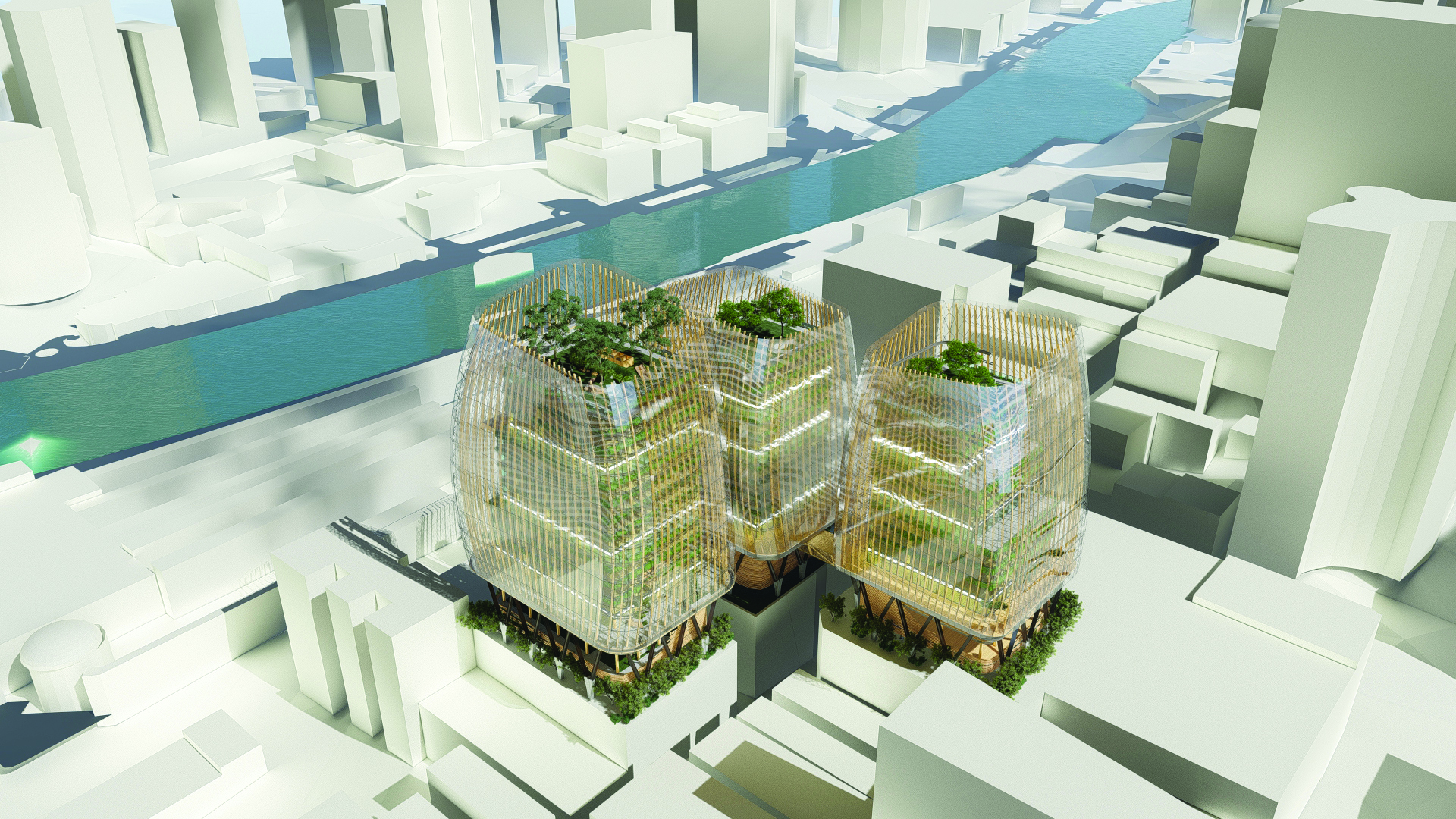
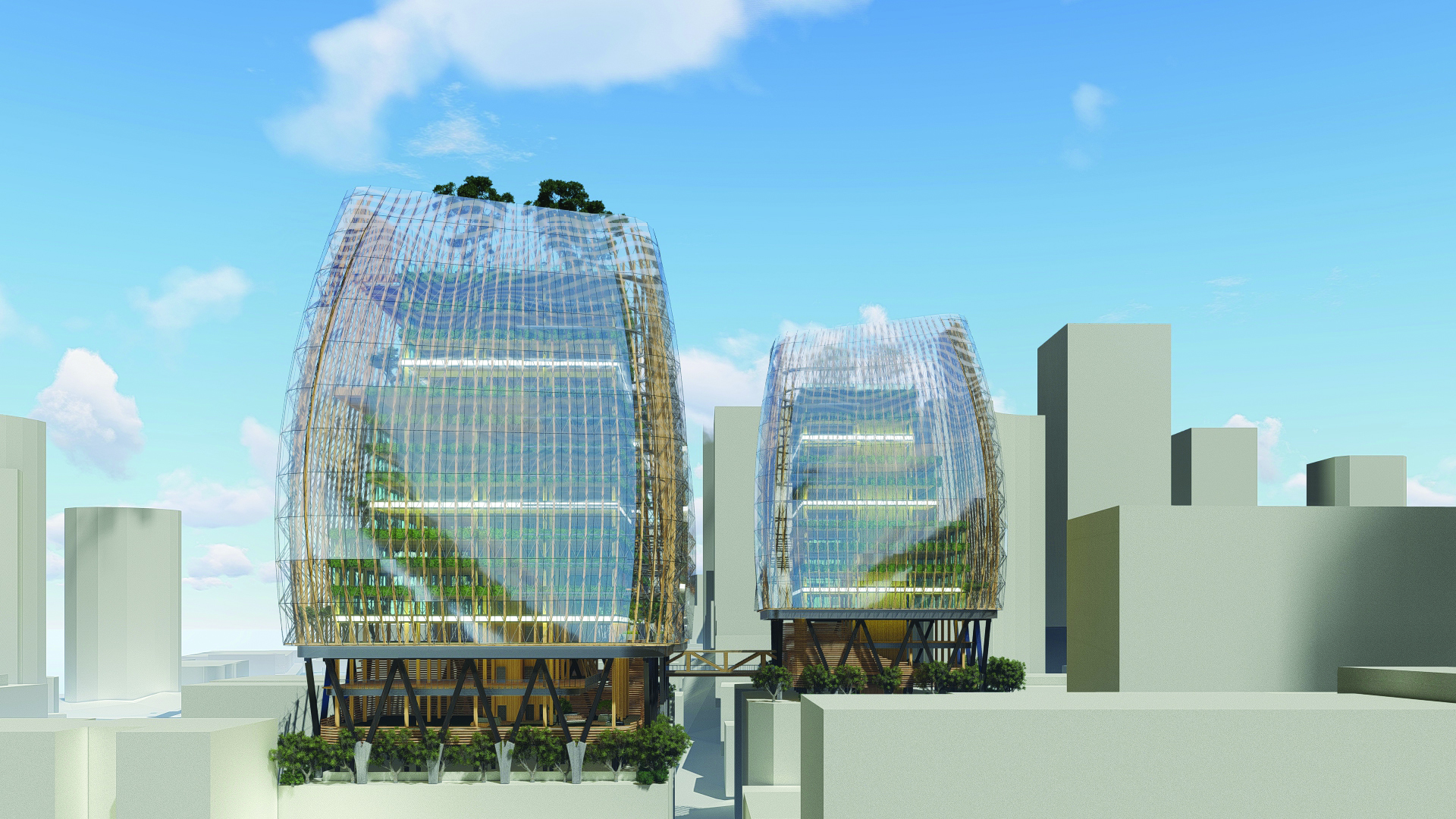
Like a mallee, the construction of a cluster of vertical extensions creates dense districts and an ecosystem high above our cities, facilitating low-carbon communities. These mallee districts will sustainably increase the density of our cities and support vibrant communities. The prototype design for a cluster of three 10-to-14-story vertical additions on top of existing buildings in the Melbourne CBD provides an example of a new city district at height (see Figure 3).

Quote pattern

‘Mallee’ is an Aboriginal name for a group of eucalyptus that grow to a height of 2 to 9 meters and have many stems, arising from a swollen woody base known as a ‘lignotuber.’ They have an umbrella-like leaf canopy and can shade 30–70 percent of the ground.

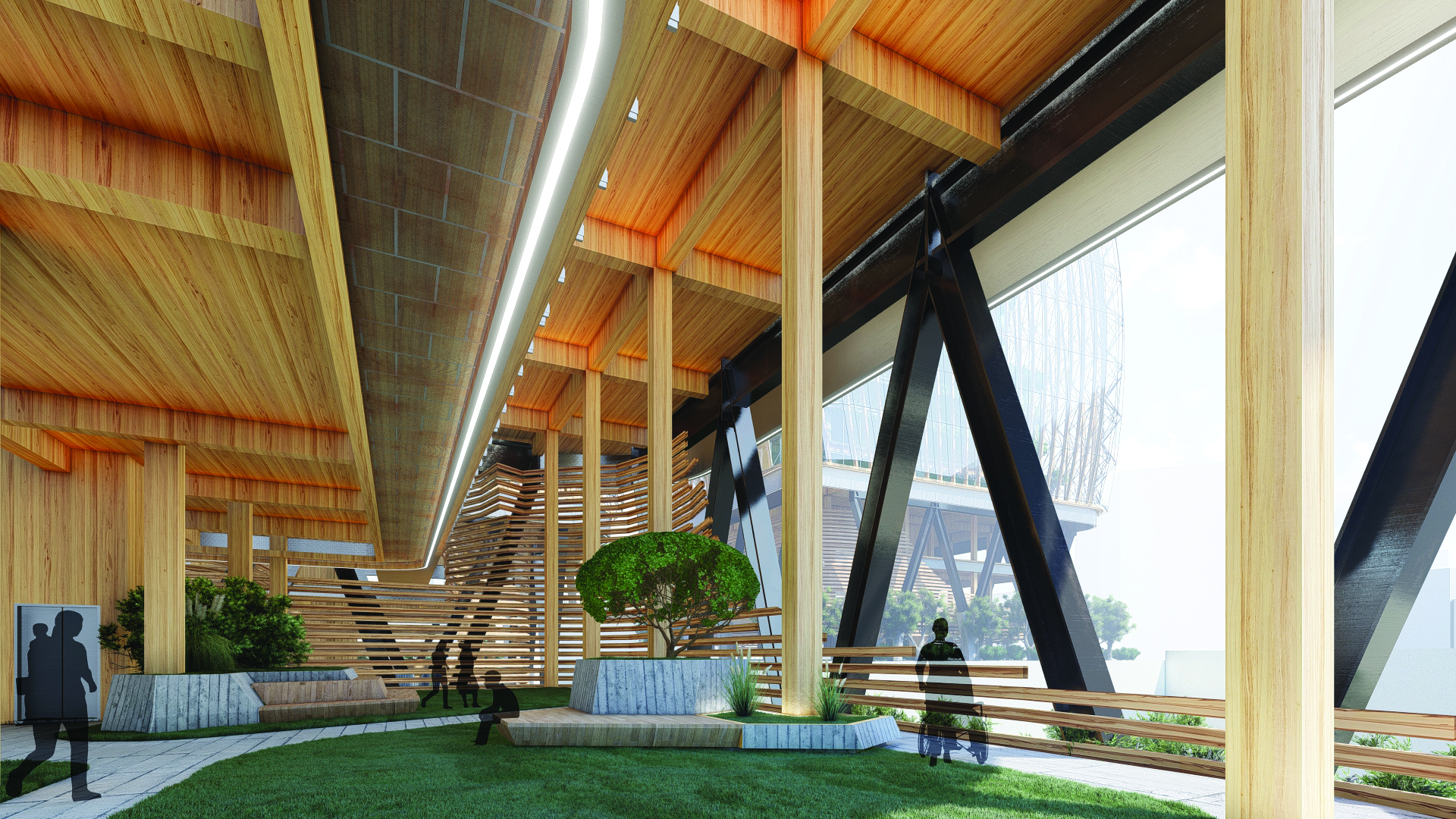
The vertical extensions can connect different building types and occupancies, including residential, hotel and commercial. The use of a building has an impact on the structural capacity, and this will influence the scope and occupancy of the extension. This project utilizes a mixed-use approach of different building occupancies to provide a dynamic community mix of residential and workplace. Once the transfers are established, the mass timber structures begin to take shape. The height differentials of existing buildings were taken into consideration and informed the design of skybridges joining the extensions. The vertical extension sits on a transfer structure that is elevated above the roof of the existing building. The space used for the transfer structure sits under the skylobby and provides an area for mechanical equipment, sitting between the old and new structure. The location of a double-height skylobby above the neighboring rooftops expresses the structural transition between the lower building and the upper building, using V-shaped columns to allow for structural alignment vertically between buildings (see Figure 5).

Table 2. Considerations that project teams need to resolve to plan and deliver a successful vertical extension project.

Table 2. Considerations that project teams need to resolve to plan and deliver a successful vertical extension project.

The skylobby creates a space of arrival at the rooftop that visually connects across the city and provides access to skybridges to connect to the other vertical extensions nearby. The skylobby level also provides public, café, and retail spaces, promoting the horizontal extension of public space across the rooftops (see Figure 6). Skybridges, at the skylobby level, allow people to circulate between the neighboring vertical extensions and create a new urban experience connecting different buildings across the sky-community. This translates street-level encounters of the city below to the new streets in the sky. Here people can meet, talk, and enjoy the inspiring rooftop ambiance. Vibrant interaction evolves, fostering a feeling of togetherness among the occupants. The translation of the ground plane to the rooftop city creates public spaces, offering a new urban adventure. Access to the rooftops can radically change the typical urban experience of being at the ground level, which typically receives limited sunlight and is affected by crowding, air pollution and environmental noise.

Figure 3. The “Melbourne Mallee” is a prototype cluster of three 10-to-14-story, steel-timber hybrid extensions on top of existing buildings in Melbourne. Their interconnections and planted skygardens begin to form a new city district, at height.

Figure 3. The “Melbourne Mallee” is a prototype cluster of three 10-to-14-story, steel-timber hybrid extensions on top of existing buildings in Melbourne. Their interconnections and planted skygardens begin to form a new city district, at height.

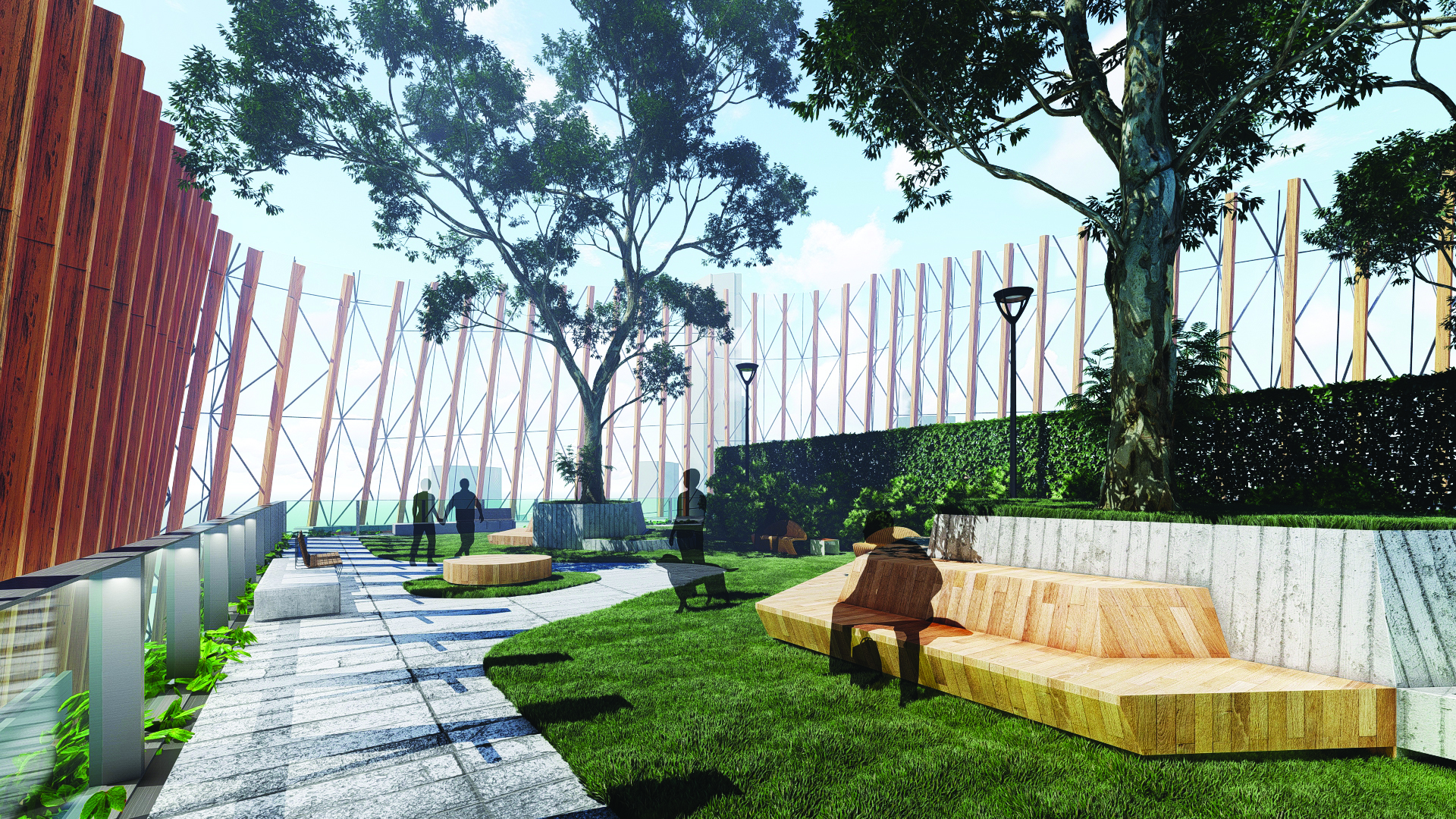
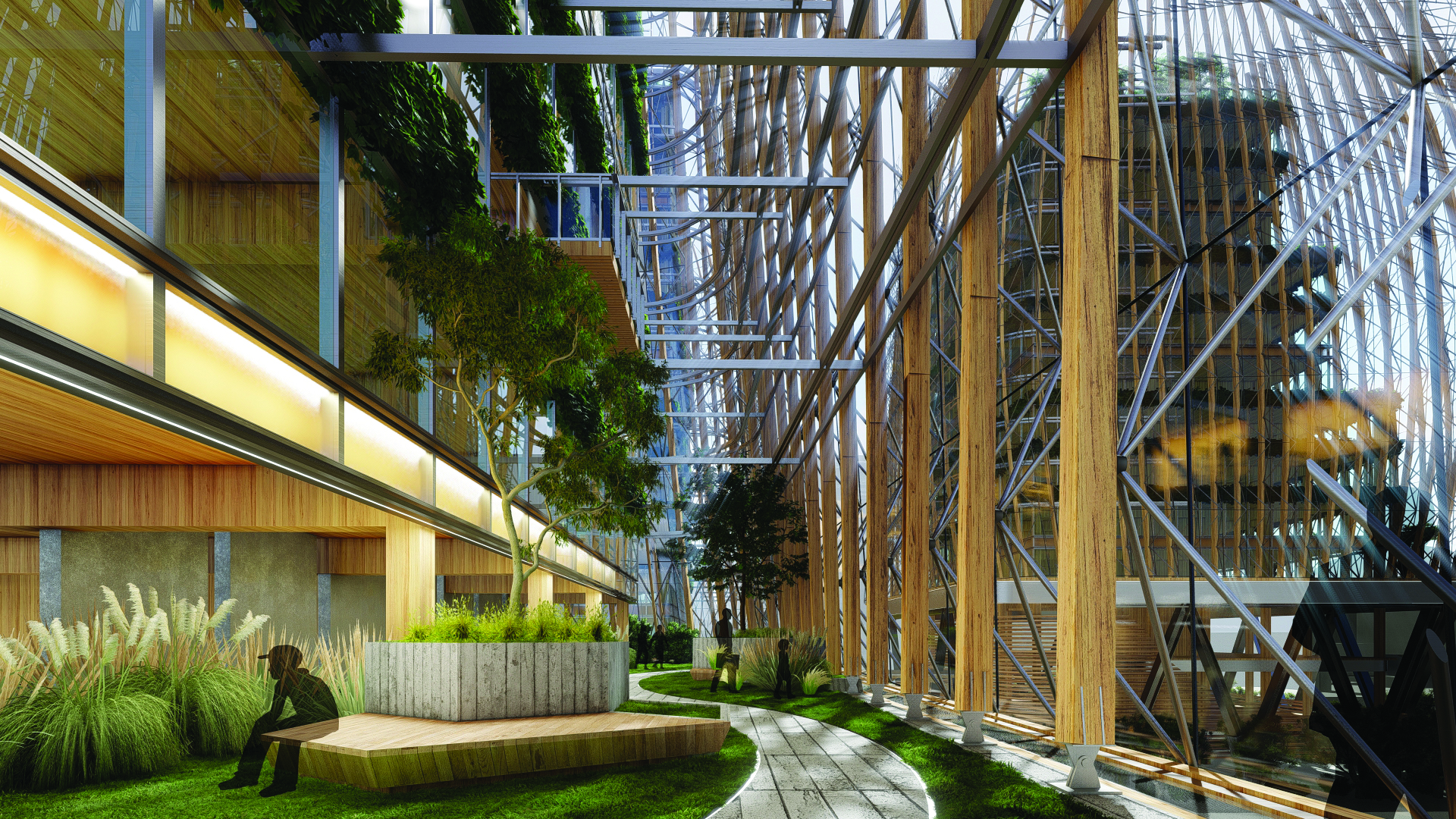
Figure 4. A key goal of the project was to include connected and livable rooftop communities. A rooftop terrace is shown here.

Figure 4. A key goal of the project was to include connected and livable rooftop communities. A rooftop terrace is shown here.

Figure 5. A double-height skylobby expresses the structural transition between the lower building and the upper building, using V-shaped columns to allow for structural alignment vertically between buildings.

Figure 5. A double-height skylobby expresses the structural transition between the lower building and the upper building, using V-shaped columns to allow for structural alignment vertically between buildings.

The new circulation paths that travel from building to building provide more opportunities for exposure to light, fresh air and healthy environments. The rooftop environment and the new communal skygarden spaces create new public park spaces at the skylobby level, creating a series of skygardens that are integrated into each of the buildings, based upon the occupancy, orientation, and massing. Skygardens are provided at multiple levels throughout the new buildings. The garden spaces improve air quality, increase daylighting, provide ventilation, increase energy efficiency, and reduce the heat island effect. They provide protected outdoor spaces behind the outer façade that will be comfortable year-round. Incorporating biophilic principles into the buildings through the gardens provides environments that bring people closer to nature in central urban locations. These spaces are a natural social focus—places for refreshment points and meeting areas—and function as the building’s “lungs,” distributing fresh air drawn in through opening panels in the façade.

The system reduces the building’s reliance on air conditioning, and together with other sustainable measures, means that it uses less energy than that of a conventionally air-conditioned office tower. The natural materials of mass timber and the skygardens combine to become biophilic elements that promote connections to nature and enhance a healthy environment for the occupants. The buildings are designed with a high-performance double-skin façade. The outer skin structure is a forest of timber verticals at the perimeter of the building, supporting a protective glass veil (see Figure 7). The verticals disappear into the sky. The shape of the outer skin of each building is unique, based upon the massing and provision of skygardens in the building. Thus, outer skins give each building a distinct character.

The rounded shape reduces wind deflections and creates external wind pressure differentials that aid ventilation. The vertical extension of the second skin above the roof level helps to protect the roof from the higher winds at these heights, thus making it more habitable in many weather conditions.

The low-e glass on the outer skin has white ceramic frits of varying density. The fritting reduces the transparency of the glass and helps to reflect solar energy. The fritted pattern is tuned to the orientation of the building, with the appropriate density of frit protecting the more exposed sides of the building. Typically, the side oriented to the sun will have a denser frit pattern, with less-dense patterns on the east and west sides, and non-fritted glass facing south.

Figure 6. The skylobby would contain public recreation, café, and retail spaces, with a view to the exposed timber structure and a sense of volume.

Figure 6. The skylobby would contain public recreation, café, and retail spaces, with a view to the exposed timber structure and a sense of volume.

Figure 7. The towers’ outer skin places a veil of glass along bent timber mullions. The angle and orientation of each skin is unique to the building’s sunlight and ventilation requirements.

Figure 7. The towers’ outer skin places a veil of glass along bent timber mullions. The angle and orientation of each skin is unique to the building’s sunlight and ventilation requirements.

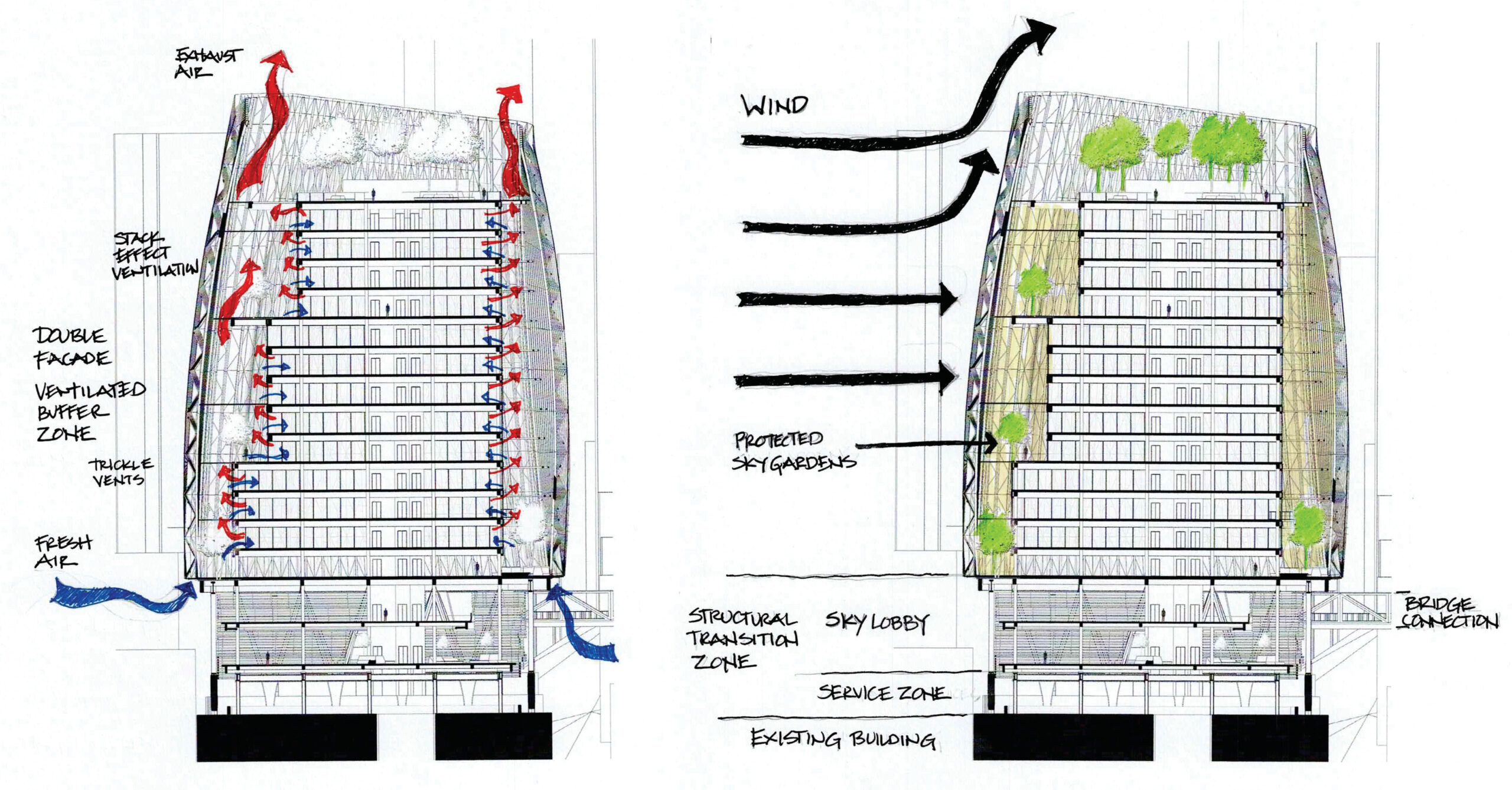
The air flows between the two skins of the façade bring fresh air to the skygardens. This space acts as a buffer zone against extreme temperatures, winds, and sound, improving the building’s thermal efficiency for both high and low temperatures. It simultaneously offers a transparent façade, providing thermal and auditory comfort, as well as ventilation that reduces air conditioning costs, and protection from the wind at height (see Figure 8).

The green roof on top of the vertical extension brings additional benefits beyond providing a green park in the sky. It is an important sustainable component of the building and district design. The green roof helps with stormwater management, moderates the heat island effect, improves air quality, offers greater insulation, and promotes biodiversity. These benefits contribute to improved health and well-being and provide a sense of community for the building and the district.

Figure 8. The buildings’ double skins are more than aesthetic in purpose. They actively guide fresh air through the building using the stack effect.

Figure 8. The buildings’ double skins are more than aesthetic in purpose. They actively guide fresh air through the building using the stack effect.

Conclusion

The design of mass timber vertical extensions of existing buildings generates a new city district at the rooftops and increases the density of the city, while reducing embodied carbon, energy consumption, and heat gain, while increasing access to light and air, reducing heat gain, and providing a healthy environment.

This “city above a city” encourages further development of underutilized air space above buildings to grow new, improved city environments that are a pleasure to live in. The approach to developing vertical extensions on existing buildings and creating sustainable districts should consider a complete systems approach that includes the requirements of the individual vertical extension, but should also consider how these new developments can create positive urban environments in our cities. The project team hopes that the concept designs and the approach taken will ignite a “next generation” of architectural imagination in addressing the urban densification issues facing many modern societies around the world today.

Acknowledgements

The present article forms part of the CTBUH the 2020 International Research Seed Funding project, titled “Building Above Our Cities: Mass Timber Construction Creating Sustainable and Socially-Connected Communities.” The aim of the research is to explore how mass timber vertical extensions can work with bridging connections, at height, to form interconnected communities. The multi-disciplinary research team who contributed to this submission comprised engineers, architects, academics, and industry representatives. The research team would like to sincerely thank the Council on Tall Buildings and Urban Habitat for supporting this important project.

Unless otherwise noted, all photography credits in this paper are to the authors.

References

Amer, M. & Attia, S. (2017). Roof Stacking: Learned Lessons from Architects. Liège: SBD Lab.

Argenziano, M., Faiella, D., Bruni, F., De Angelis, C., Fraldi, M. & Mele, E. (2021). “Upwards-Vertical Extensions of Masonry Built Heritage for Sustainable and Antifragile Urban Densification.” Journal of Building Engineering 44. https://doi.org/10.1016/j.jobe.2021.102885.

Artés Pérez, J., Wadel Raina, G. & Martí Audí, N. (2016). “Vertical Extension and Improving Existing Buildings.” The Open Construction and Building Technology Journal 11: 83–94. https://doi.org/10.2174/1874836801711010083.

Soikkeli, A. (2016). “Additional Floors in Old Apartment Blocks.” Energy Procedia 96: 815–23. https://doi.org/10.1016/j.egypro.2016.09.143

Author

Paul Kremer, Adjunct Associate Professor
Deakin University 221 Burwood Highway Burwood, Victoria 3125 Australia
t: +61 3 9244 6333
e: [email protected]
deakin.edu.au/engineering

CITIC HEYE Investment CO., LTD. Logo

CITIC HEYE Investment CO., LTD.

More

Unlock new levels of knowledge.

Explore our entire research archive and its vast collection of documents, reports, and multimedia resources. Hosted on the Engage platform, it is a treasure trove of new ideas and proven best practices.

Go to Engage

You have added this page to your collection.

You can view or share your full collection.