


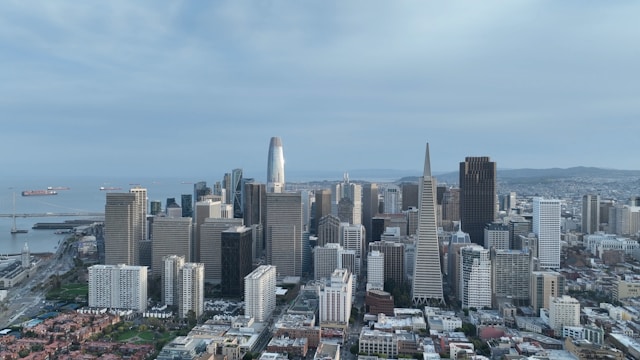
As San Francisco grapples with persistently high office vacancy rates in the wake of remote work, a team at HOK has envisioned an alternative to traditional residential conversions: transforming underused high-rises into next-generation tech hubs that combine advanced computing, sustainable systems, and flexible workspace.
The speculative design study proposes converting downtown office buildings into mixed-use innovation centers anchored by on-site edge data centers. These centers, featuring space-efficient direct liquid cooling (DLC) servers, would bring ultra-low-latency computing power directly into the urban core—offering fintech, gaming, and AI companies faster processing and improved security compared to regional cloud facilities.
The residual heat and condensate from these servers could be repurposed for vertical hydroponic farms within the building, creating a symbiotic system that supports urban agriculture while reducing waste and energy consumption. Updated MEP systems, including cooling towers and heat recovery chillers, would manage the energy flow throughout the structure.
To accommodate these new uses, buildings would require structural upgrades, including the addition of a diagrid exoskeleton and reinforcement of existing columns and beams. This not only supports server infrastructure but also addresses mandatory seismic improvements.
The concept also calls for a more adaptable leasing model, including live-work units modeled after “officetels,” and smaller, customizable office floorplates. Tenants could rent or own server access alongside workspace, encouraging a new kind of digitally integrated work environment. Communal sky gardens would connect floors and foster collaboration.
While speculative, HOK’s proposal illustrates how cities like San Francisco can reimagine aging commercial infrastructure to support AI, sustainability, and post-pandemic urban life.
Read the full essay at HOK Ideas.