


One of the perks of being the director of CVU’s Research and Thought Leadership team, and Editor-in-Chief of Vertical Urbanism Magazine, is the occasional opportunity to share our work with external organizations and their communities. It is somewhat rare that these opportunities fall within a week of each other, but that was the case earlier in March, when I was invited to present at the concluding event of the Tall Timber exhibition staged by Michigan State University in downtown Detroit, and at the Construction Lender Risk Management (CLRM) Forum in Washington, DC, the following week.
“New Heights, New Horizons: Celebrating the Tall Timber Revolution” in Detroit
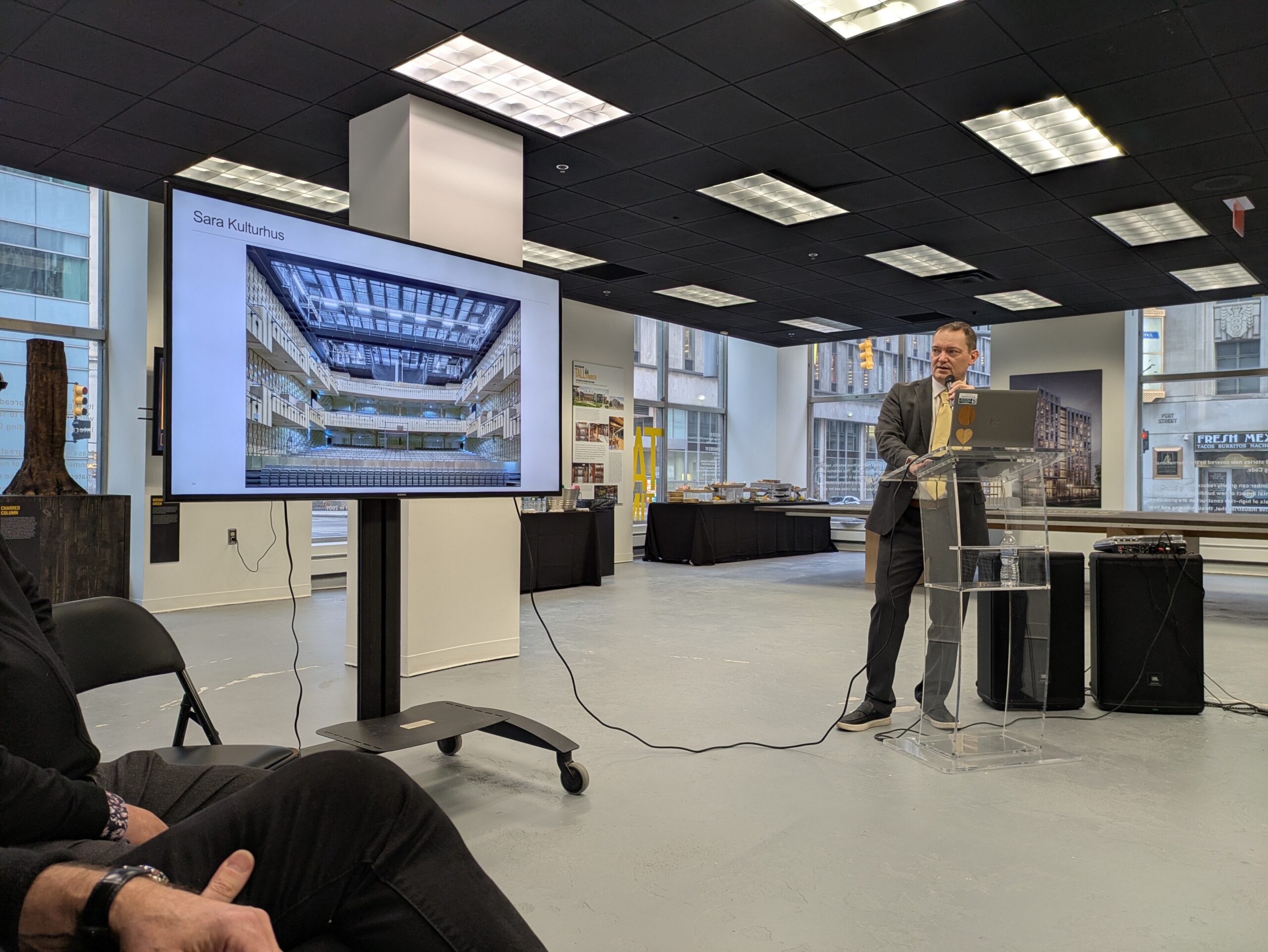
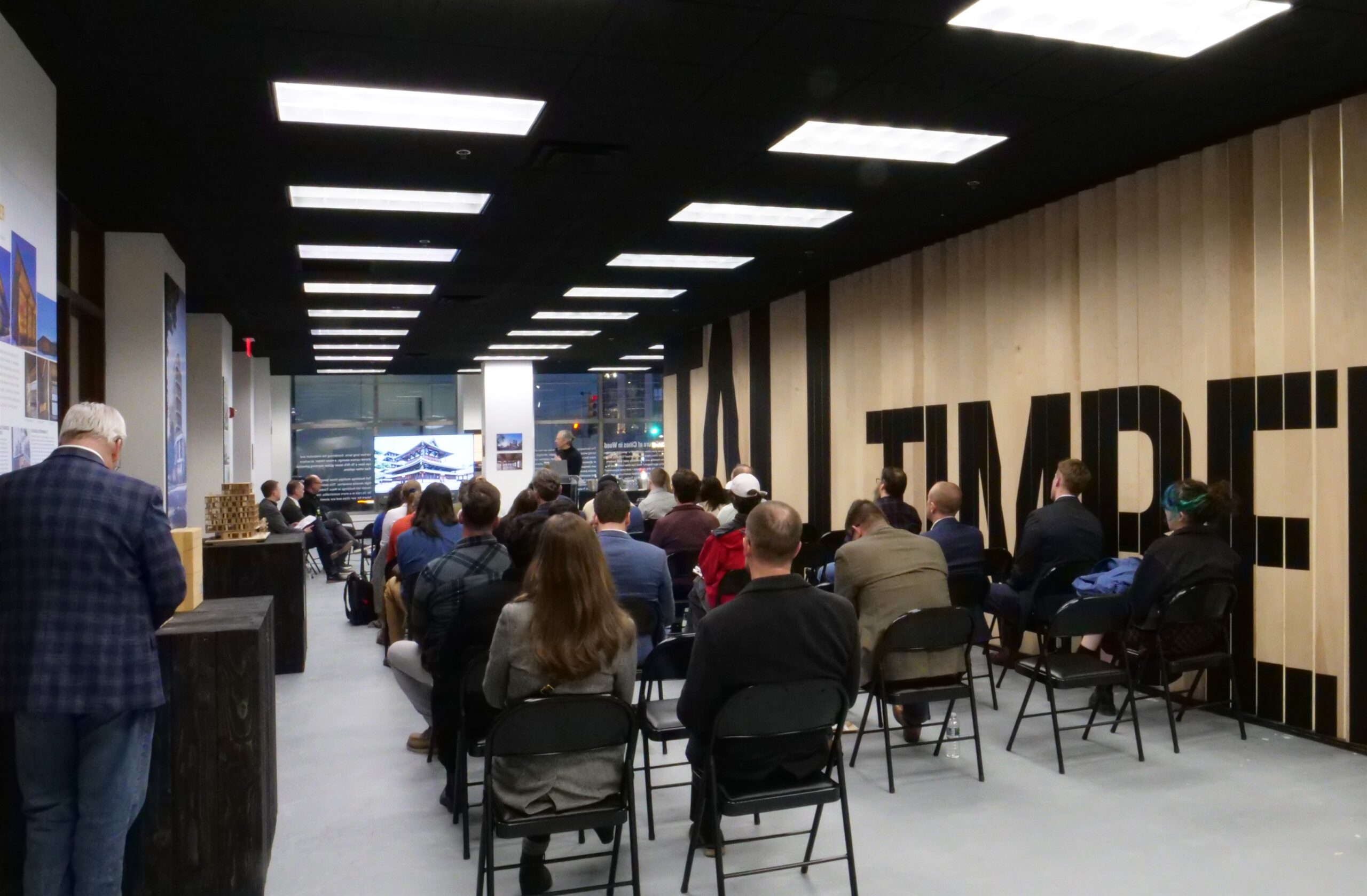
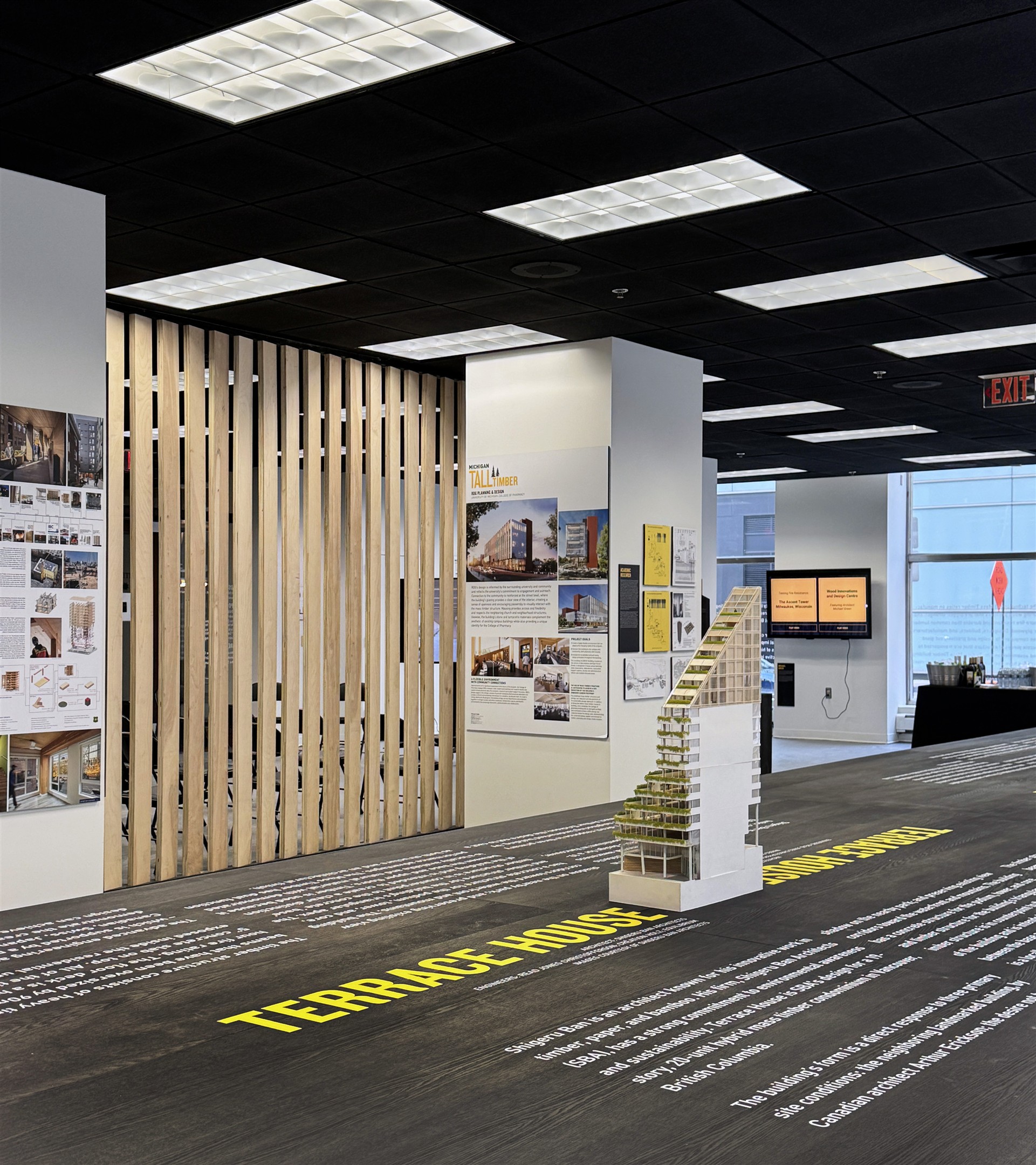
The Tall Timber event in Detroit on 4 March, “New Heights, New Horizons: Celebrating the Tall Timber Revolution,” was really a culmination of several years’ work that began with a Wood Innovations Grant from the US Forest Service to what was then CTBUH, back in 2020. The research project “Future Timber City” had many outcomes, including the definitive technical guide for tall timber design and construction, “Tall Timber: Mass Timber for High-Rise Buildings.”
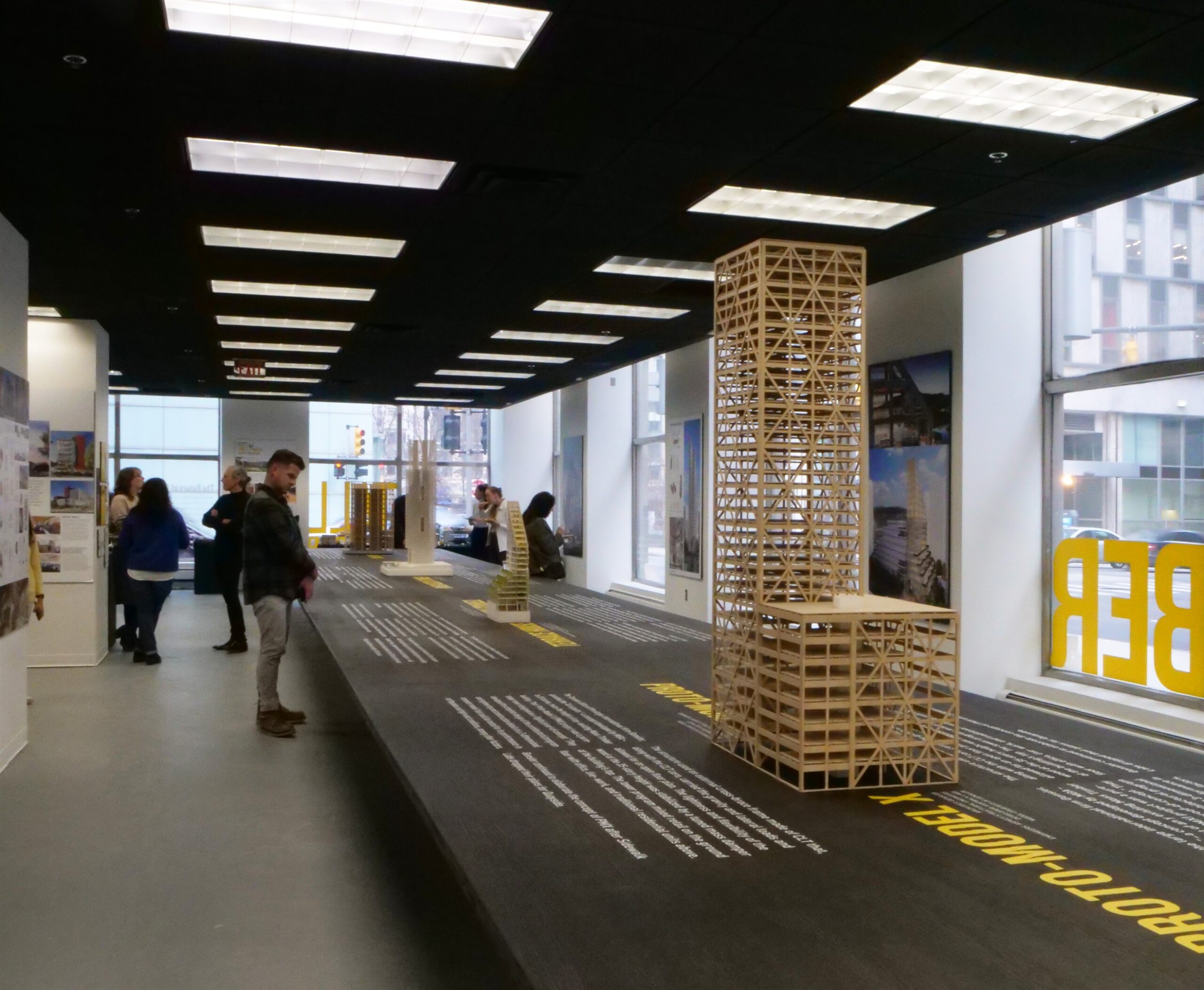
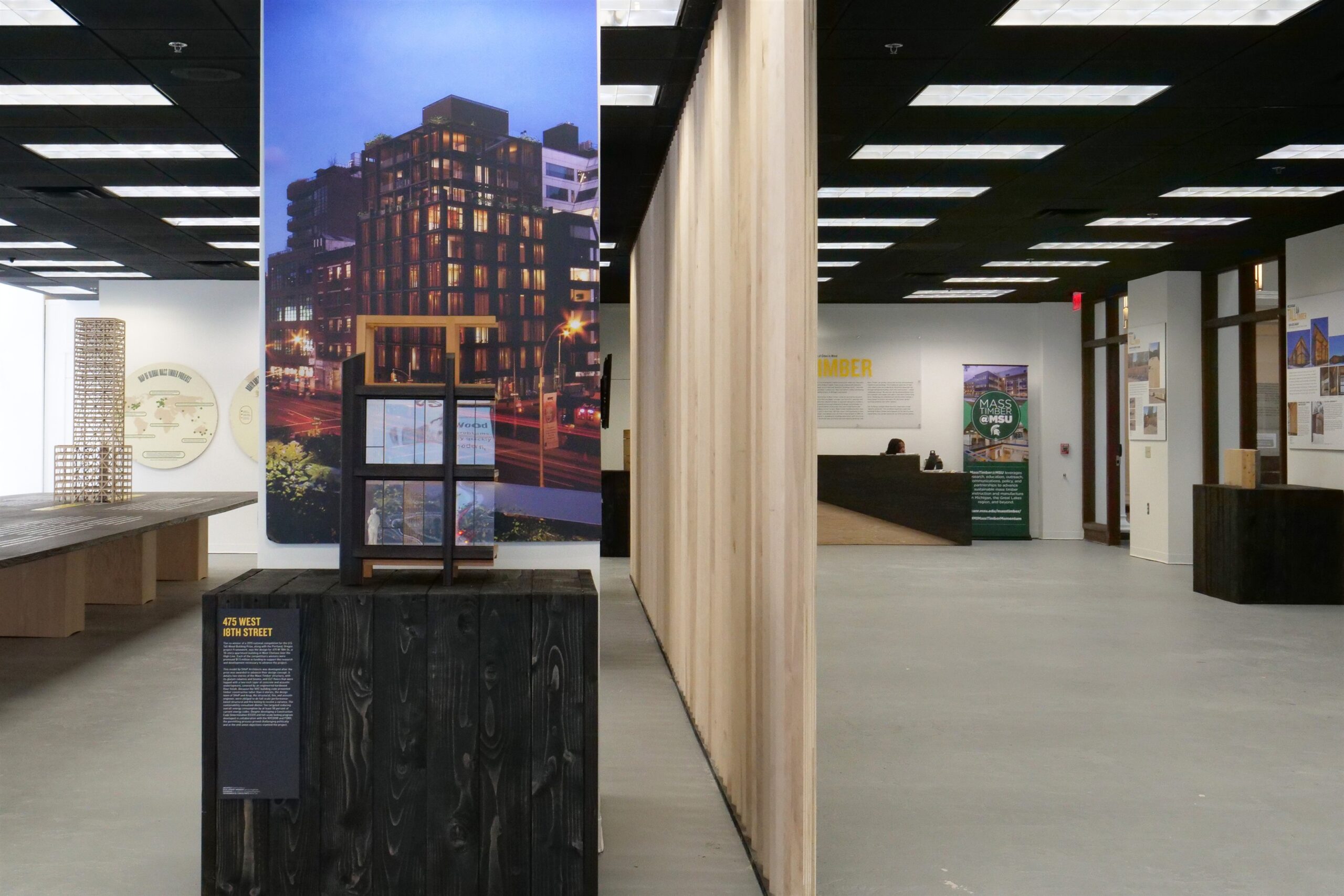
One of the most exciting developments was the initiation of an exhibition at, and in collaboration with, the Chicago Architecture Center (CAC) from 26 April 2023 to 7 January 2024: “Reframed: The Future of Cities in Wood.” This opened the discussion to a much bigger audience – the general public. Inasmuch as the tall-building industry is gradually adopting mass timber into more projects worldwide, the general public, especially three years ago, would have likely been wholly unfamiliar with the concept of mass timber. It was a huge advantage to have the CAC’s extraordinary cultural and touristic clout deliver high-quality educational programming on this critical pathway towards a more sustainable built environment.
It was especially gratifying to see the tall timber exhibit progress to three more locations – the Skyscraper Museum in New York City, as “Tall Timber: The Future of Cities in Wood,” (21 February 2024 to 11 January 2025); to the University of Arkansas with the same title (7 February to 24 March 2025), and finally to downtown Detroit’s former Chrysler Corporation headquarters, in a prominent storefront, once again as Tall Timber: The Future of Cities in Wood, (10 December 2025 to 4 March 2026). Each curatorial team adapted the exhibition to their own specifications and pedagogical objectives, providing locally specific project examples, almost like musicians adding or subtracting instrumentation to bring new life to an established score. The MSU iteration also featured an intensive course of training modules for local architects, contractors and carpenters.
At the speaking event in Detroit, I provided key updates on the projects we had been following closely as part of our continued research into tall timber: Most significantly, co-presenter Dean Maltz of Shigeru Ban Architects relayed that Vancouver’s Terrace House, stalled at one point and purchased out of foreclosure, has been acquired by a new owner who will divide some of the larger units in the concrete base of the hybrid timber tower into smaller units, but essentially keep the original design. I also learned that Michigan alone has more than 65 mass timber projects, most of which are not “tall,” but it is clear the practice is becoming increasingly well-accepted.
“Risk Management and the Vertical City” at the CLRM Roundtable in Washington D.C.
If an audience assembled specifically to hear about tall timber could be expected to be receptive, one might assume that a group devoted to managing investment risk for construction loans might be a tougher crowd. But I found the opposite to be true. The CLRM Roundtable is a space for commercial real estate (CRE) professionals to meet and collaborate in the field of construction risk management.
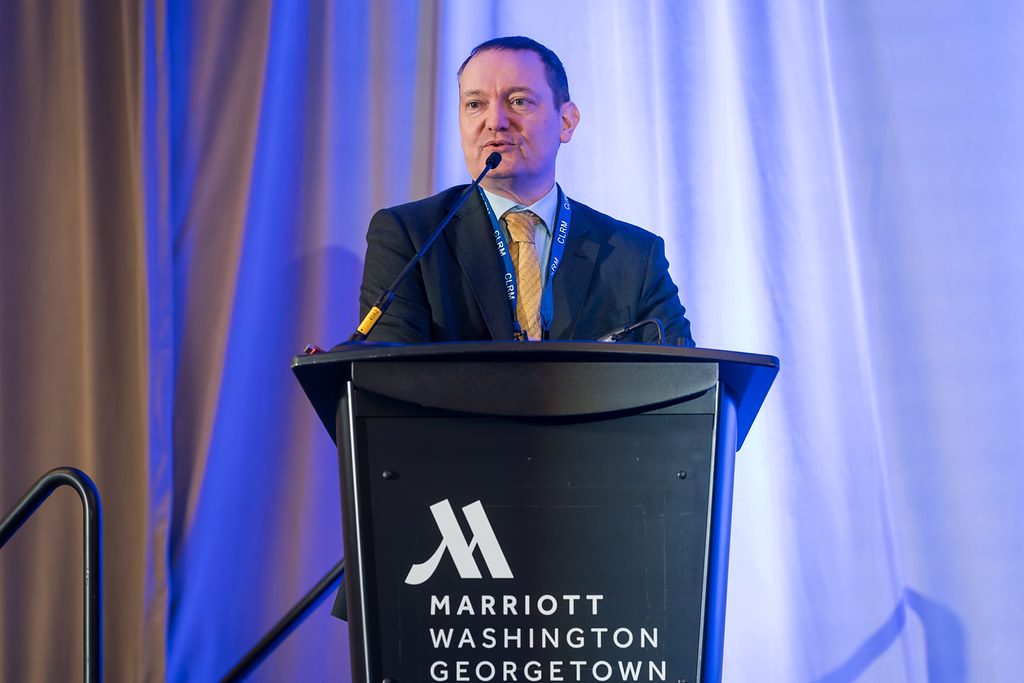
My presentation, delivered on 10 March as part of a session called “Risk Management and the Vertical City,” focused on the fundamentals of tall building construction – why have we built tall historically, where have we built, and how can we improve the performance of these structures, environmentally, functionally and financially, thereby improving outcomes for the cities they inhabit? This covered the global scope that is typically reflected in our public Trends and Forecasts and Vertical Urbanism Index reports, but I was asked to zoom in on timber as a focus area, as this would be a novel topic for the audience of around 180 risk management professionals.
Although the audience was keen to see the de-risking potential of faster construction times offered by prefabricated off-site assembly, the discussion on tall timber naturally needed to address fire safety and insurability. Within the North American context, the latter has been bolstered by changes to the International Building Code (IBC) in 2021, which allows for varying degrees of timber exposure on the interior and exterior of tall buildings of up to 18 stories. Many of the people who were figural in advancing that code to acceptance were featured contributors of CVU’s Tall Timber research and were featured in my presentation – including Tim Gokhman’s Ascent in Milwaukee, the world’s tallest timber building at 284 feet (86.6 meters) who went the extra distance to prove their projects would meet performance-based fire ratings before the IBC 2021 went into force.
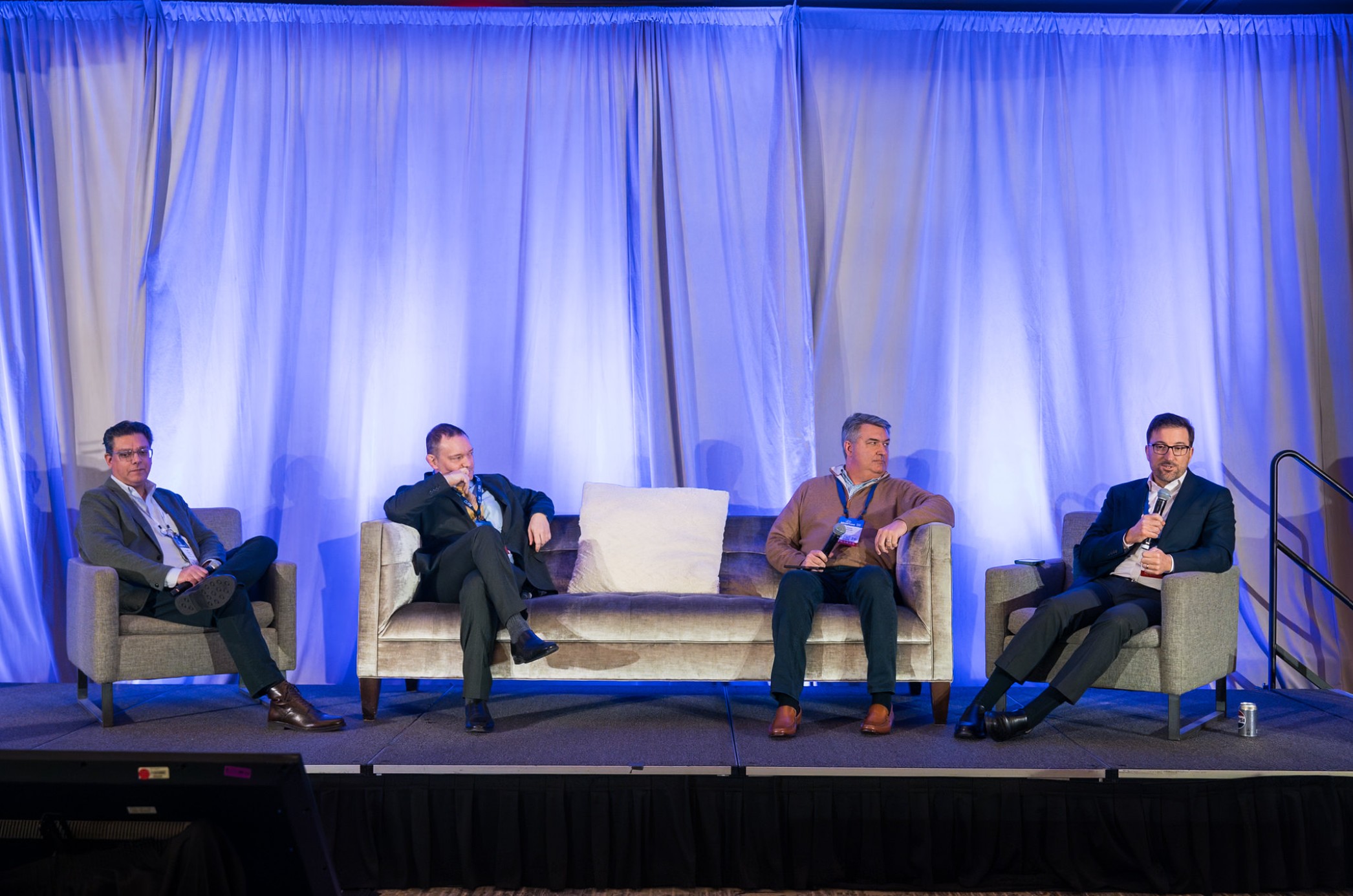
While my presentation’s emphasis was on providing an overview of the massive burst of tall building construction since 2000 and pointing to new innovations, my co-presenters, Chris Maxwell, Executive Director, Construction Management, JPMorgan Chase and James Kennedy, Managing Director, J.P. Morgan Asset Management, provided a comparatively cold shower of reality, sharing war stories about tall building projects that had gone spectacularly sideways, and how they were corrected. Most of the projects discussed were already well-known in CVU circles, but the perspective of lenders and risk managers gave them a new dimension.
While there is some overlap between the CVU’s broad constituency of developers and downstream consultants and that of the CLRM Roundtable, it was instructive to see how nominally similar facts and project execution profiles are presented to a community that is charged with determining whether or not projects go forward, and how much contingency to budget for once they do.
The most common mantra heard during any presentation I have seen on a construction project, often amplified louder in proportion to the scale of that project, is “early coordination is key.” What this experience taught me was that the spectrum of who should be included in early coordination is even broader than what we typically see. It is therefore important that organizations like CLRM and CVU collaborate further and cross-pollinate memberships.
Conclusion
One of the key reasons the Council rebranded and changed names to the Council on Vertical Urbanism is to further open up to industry partners and participants who play important roles in the future of our cities and their vertical development. Thus I hope to continue the important research we do in tall timber and other tall building technologies and see many of my new CLRM friends at CVU events and in our publications soon, and vice versa!