


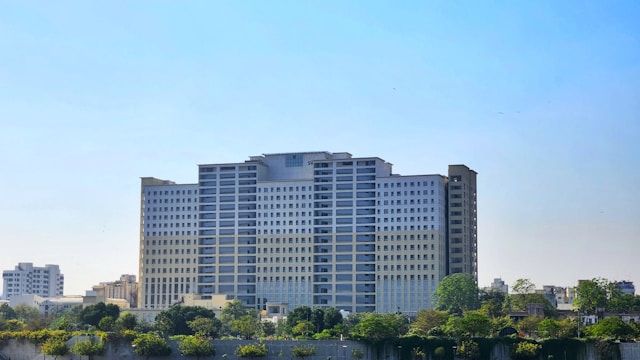
India recently released the revised National Building Construction Standards (NBCS) 2026, opening the door for taller hospitals in rapidly densifying urban centers while reigniting debate around fire safety, operational readiness, and long-term urban resilience.
The updated standards, released by the Bureau of Indian Standards (BIS) on April 30, remove the longstanding 45-meter height cap previously applied to hospitals under the 2016 code. The earlier framework generally limited healthcare buildings to approximately 12 to 15 floors and required intensive care units to remain below 30 meters. Under NBCS 2026, those restrictions have been relaxed, with ICUs now “preferred” to remain within 45 meters, subject to enhanced fire and life safety provisions.
The changes follow sustained advocacy from healthcare industry organizations, including the NATHEALTH, which argued that vertical expansion is increasingly necessary in India’s largest metropolitan areas, where some of the world’s highest urban land values continue to constrain healthcare delivery.
Just days after the revised standards were announced, India’s Ministry of Health and Family Welfare released new National Guidelines on Fire and Life Safety in Healthcare Facilities (2026), placing greater emphasis on emergency preparedness, evacuation procedures, and protection of high-risk medical areas such as ICUs, neonatal intensive care units, and operating theatres.
The parallel release of both policies reflects the growing complexity of vertical healthcare infrastructure. While taller hospitals may improve land-use efficiency and allow healthcare providers to consolidate services within urban cores, experts continue to warn that high-rise medical facilities require far more sophisticated life-safety systems than conventional commercial or residential buildings.
Designers have commented that hospitals rising beyond 45 meters demand integrated fire and evacuation strategies, including dedicated fire lifts, pressurized staircases, refuge areas, compartmentalization systems, emergency power infrastructure, and carefully segregated circulation for patients, staff, visitors, and services.
The discussion also highlights a broader tension emerging across rapidly urbanizing regions: how to reconcile vertical density with operational resilience in buildings where evacuation is inherently more difficult and where occupants may be unable to move independently during emergencies.
Read more at Express Health.