Future Timber City: Designing a Climate-Resilient Megacity
MTBVU Studio, Fall 2022 – Spring 2023
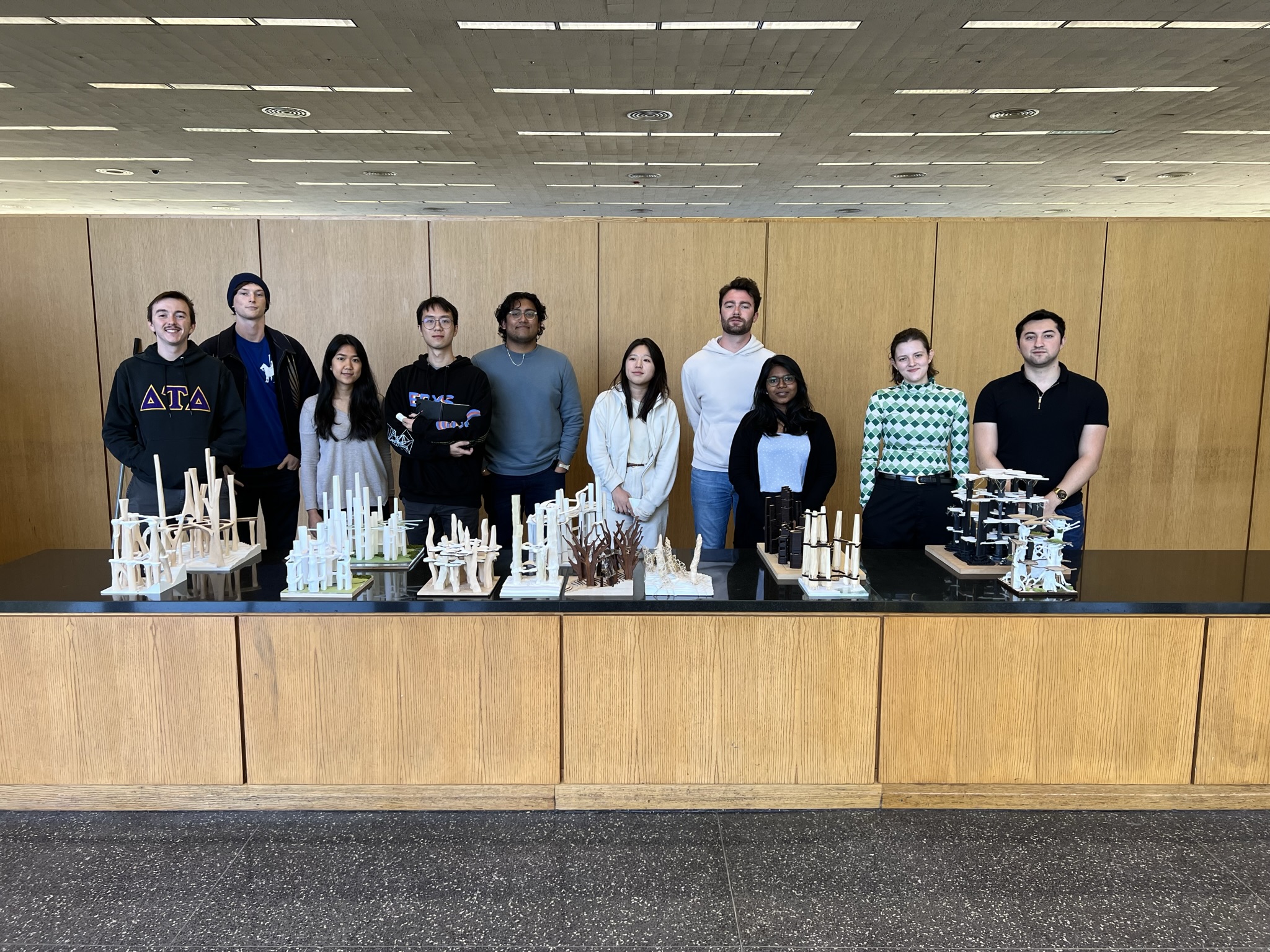
The Future Timber City studio was a year-long project in the Illinois Institute of Technology’s Master of Tall Buildings and Vertical Urbanism (MTBVU) program, running from Fall 2022 through Spring 2023. Led by Dr. Antony Wood and Dr. Yohan Kim, the studio challenged students to imagine how cities might be designed in response to the escalating impacts of climate change.
Set in the speculative year 2070, the studio began with a scenario in which many of the world’s existing cities have become increasingly uninhabitable due to rising sea levels, extreme weather, desertification, and resource scarcity. As climate-related disasters intensify, the long-term viability of urban environments becomes tied not only to resilience strategies, but also to the fundamental sustainability of their geographic location and access to natural resources.
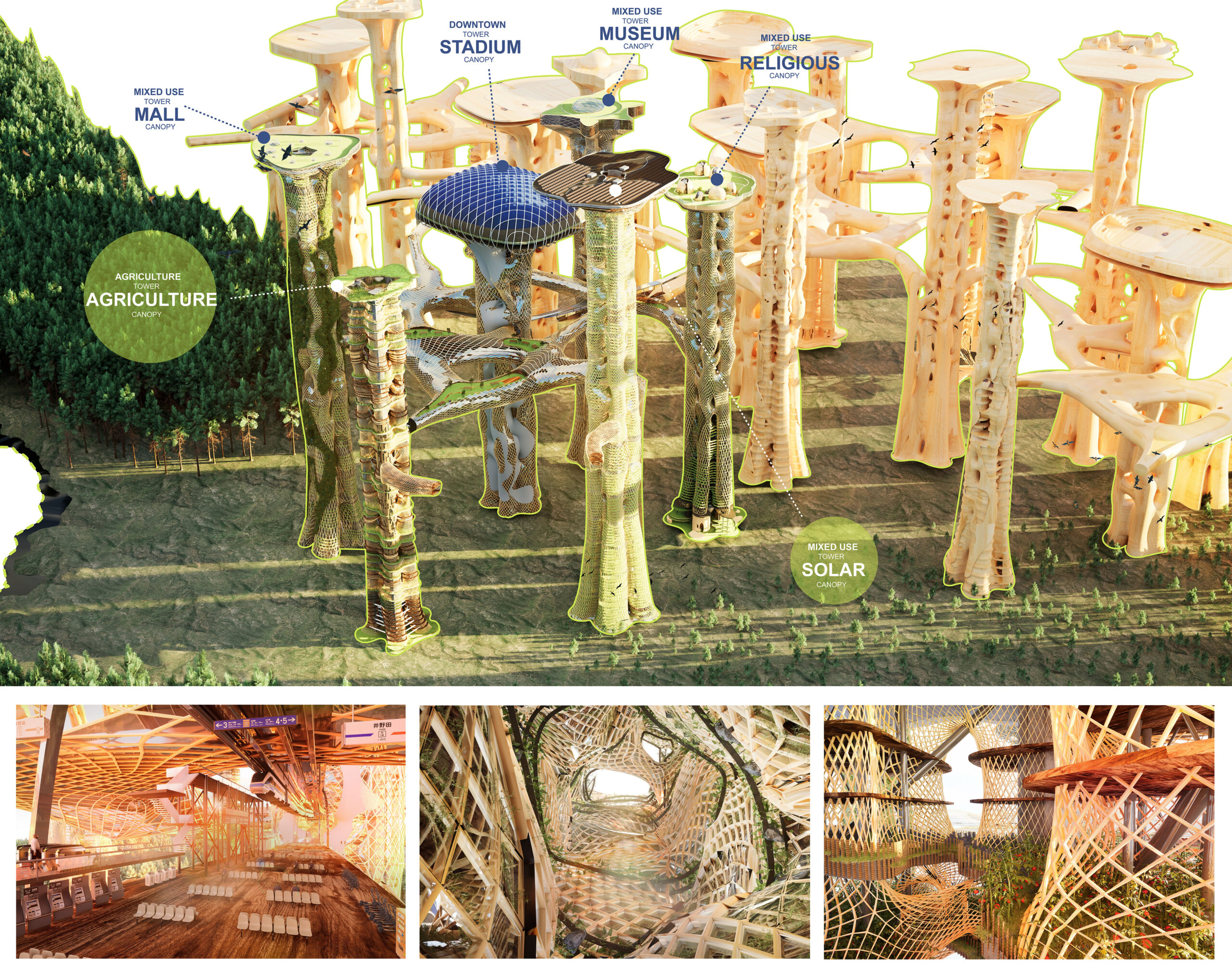
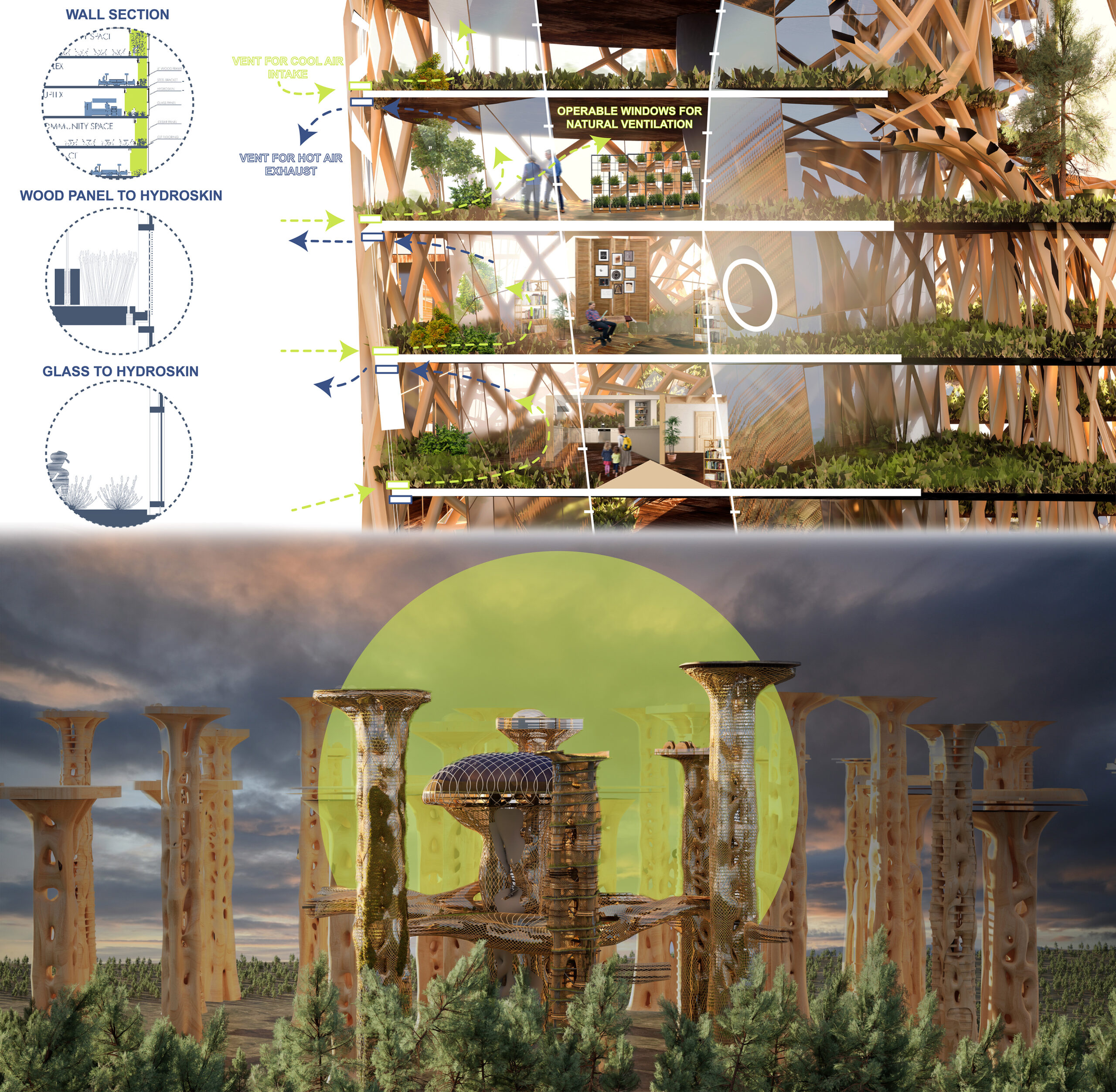
Within this context, students were tasked with envisioning a new generation of ultra-dense megacities designed to support large populations while minimizing environmental impact. The studio explored the concept of the Future Timber City, a proposed settlement located in a region experiencing increasing heat and desertification. Rather than attempting to retrofit existing urban centers, the project focused on designing a new city from the ground up—one that could support sustainable living at an unprecedented scale.
Working collectively as a studio, students developed proposals for Phase I of a future megacity, initially designed to house one million residents. The studio investigated how advanced construction technologies, particularly mass timber, could play a central role in shaping a new model for vertical urbanism. Projects considered the integration of urban planning, architecture, infrastructure, and resource systems to create a city that could operate symbiotically with its surrounding environment.
Through this speculative framework, the studio encouraged students to explore the long-term future of urbanization, asking how cities might evolve to support human life in a dramatically changing climate while maintaining social, environmental, and economic sustainability.