


Nova Pro Forma Adapt: Reimagining the Future of Existing Tall Buildings
ARCH 546: MTBVU Studio, Spring 2024 (SOM)
The Spring 2024 studio in the Illinois Institute of Technology’s Master of Tall Buildings and Vertical Urbanism (MTBVU) program focused on the transformation of existing high-rise buildings in major U.S. cities. Titled “Nova Pro Forma Adapt,” the studio was led by Professor Scott Duncan with collaborating architects Jason Fisher and Jorge Rovira of SOM.
In response to the changing conditions of downtown districts—accelerated by socio-economic shifts and the impact of the COVID-19 pandemic—the studio explored how underutilized tall buildings could be reimagined for new purposes. With many office towers facing declining occupancy and shifting market demands, students were challenged to rethink the role of these buildings within evolving urban environments.
Rather than designing new towers, students focused on adapting existing high-rise structures through comprehensive redevelopment strategies. Each project combined architectural proposals with detailed business and feasibility analyses, requiring students to develop a “Nova Pro Forma” plan that justified both the design and economic viability of the building’s transformation.
Projects explored a range of innovative programs, including carbon capture facilities, energy generation and storage systems, urban food production, server farming, tourism spaces, and multifamily housing, among others. Students selected specific buildings within New York, Chicago, and San Francisco, conducting research into building conditions, market dynamics, and urban context before proposing adaptive reuse strategies.
Throughout the semester, students engaged with professionals from SOM’s New York, Chicago, and San Francisco offices, who provided insights into the technical, economic, and design challenges involved in transforming large-scale urban structures. Regular critiques with architects, engineers, and specialists helped guide the development of each proposal.
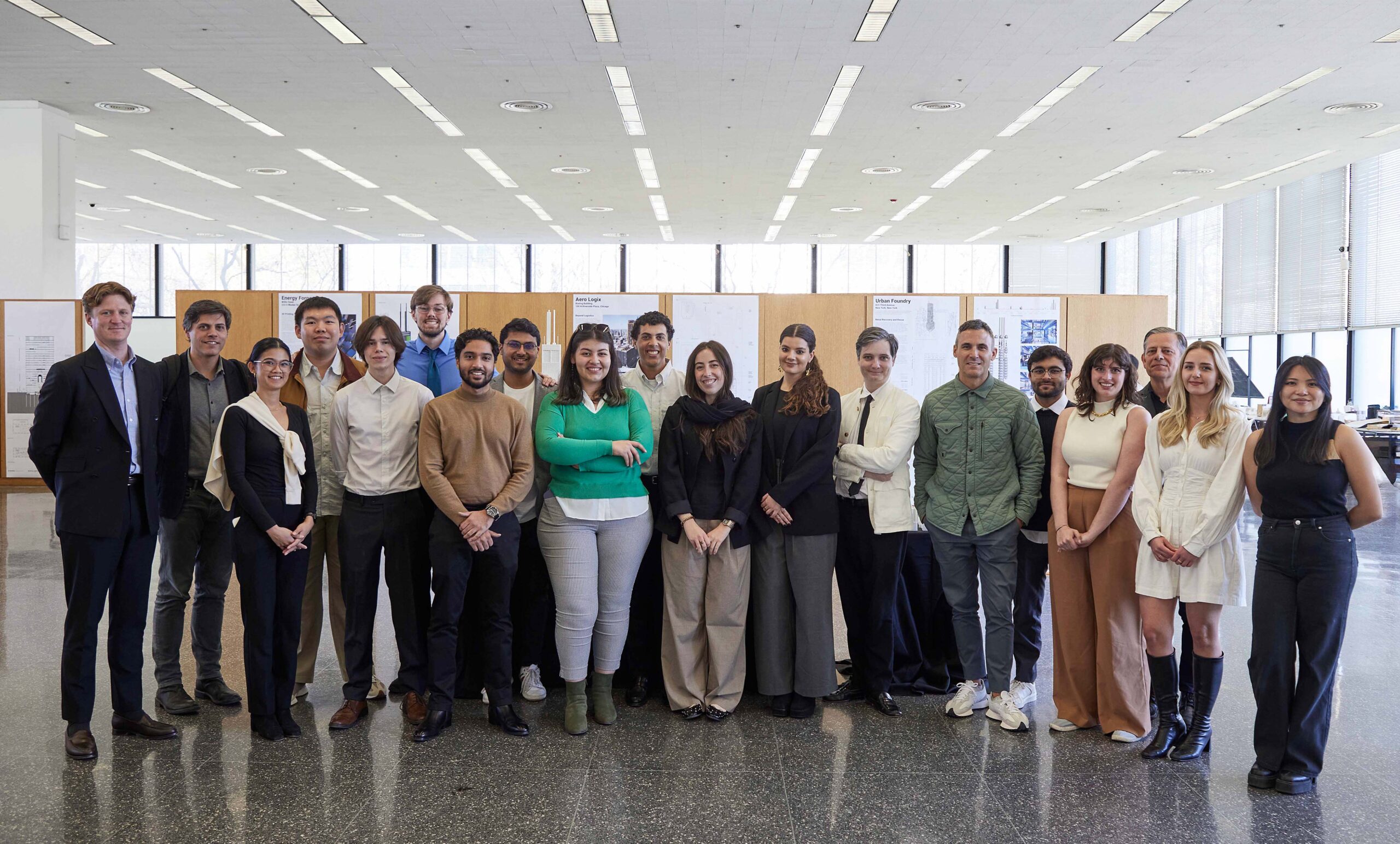
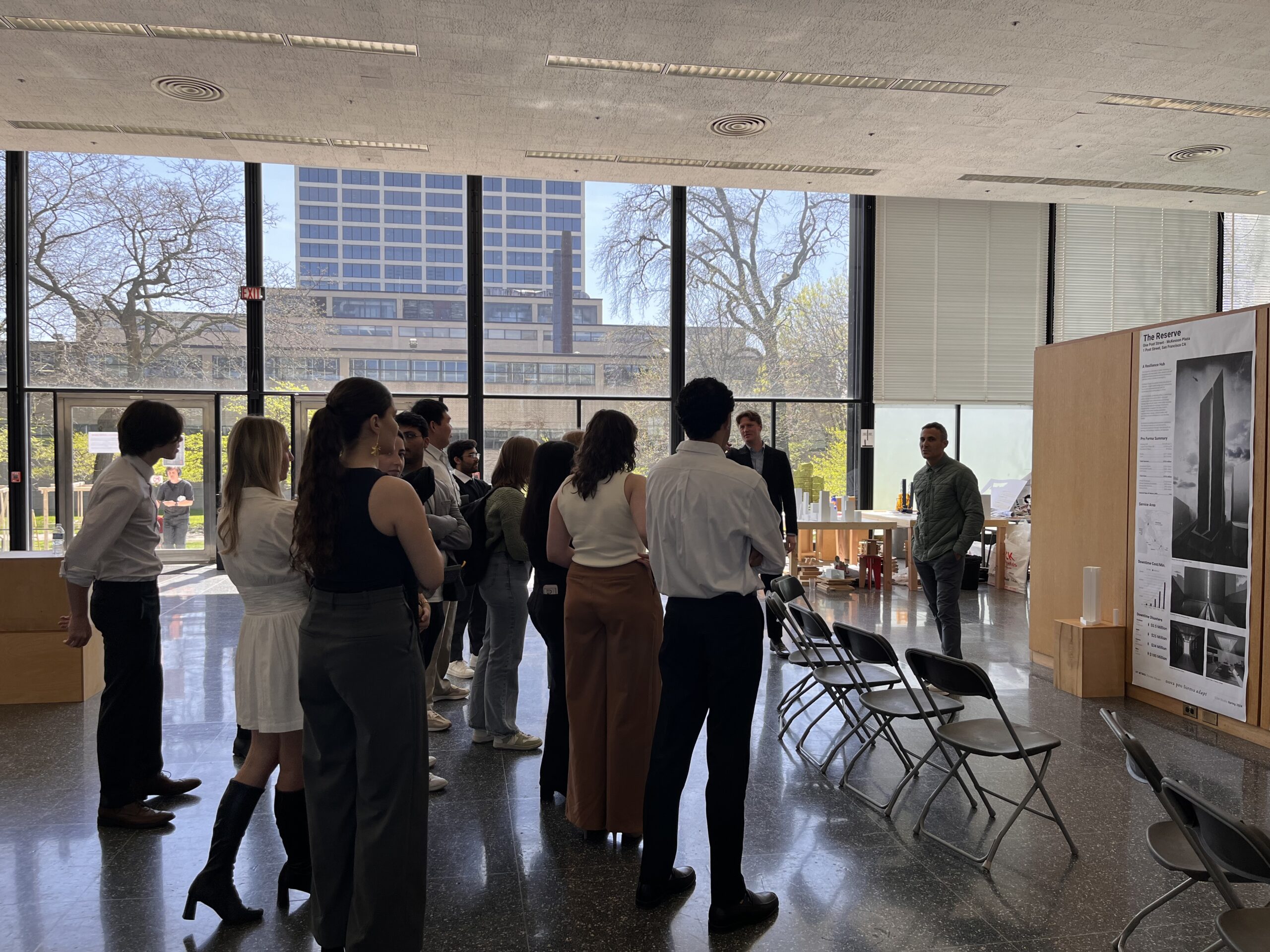
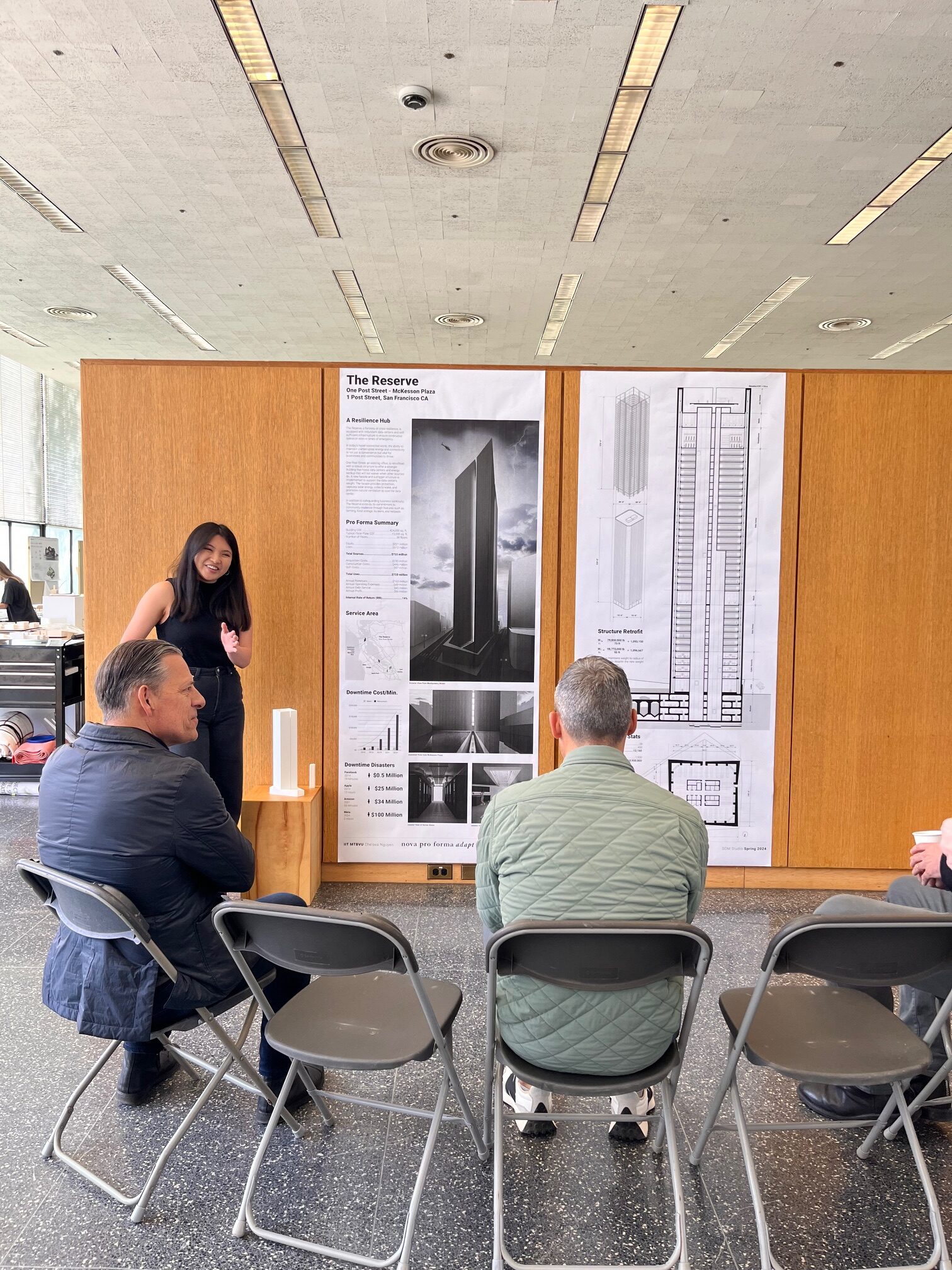
The studio concluded with a final exhibition at the SOM Chicago office, where students presented their work in the main gallery. The projects demonstrated new ways of thinking about the future of existing tall buildings, highlighting how adaptive reuse strategies can revitalize downtown districts while responding to changing economic and social conditions.
Featured Projects
Aero Logix (Boeing Building) by Jusang Lee redefines logistics, addressing current suburban system limitations. Leveraging metropolis settings, it dramatically reduces last- mile delivery costs, and optimizes efficiency. Chicago’s strategic rail infrastructure makes it an ideal testing ground for Aero Logix, allowing
direct access to 50% of all U.S. intermodal trains, streamlining freight distribution. The Boeing Building, for sale due to business shifts, offers a unique opportunity. Located on a rail track, its design facilitates direct freight access, maximizing efficiency. Aero Logix’s business model focuses on drone-based delivery and vertical optimization, offering a 92% cost advantage over traditional car-based services, revolutionizing logistics
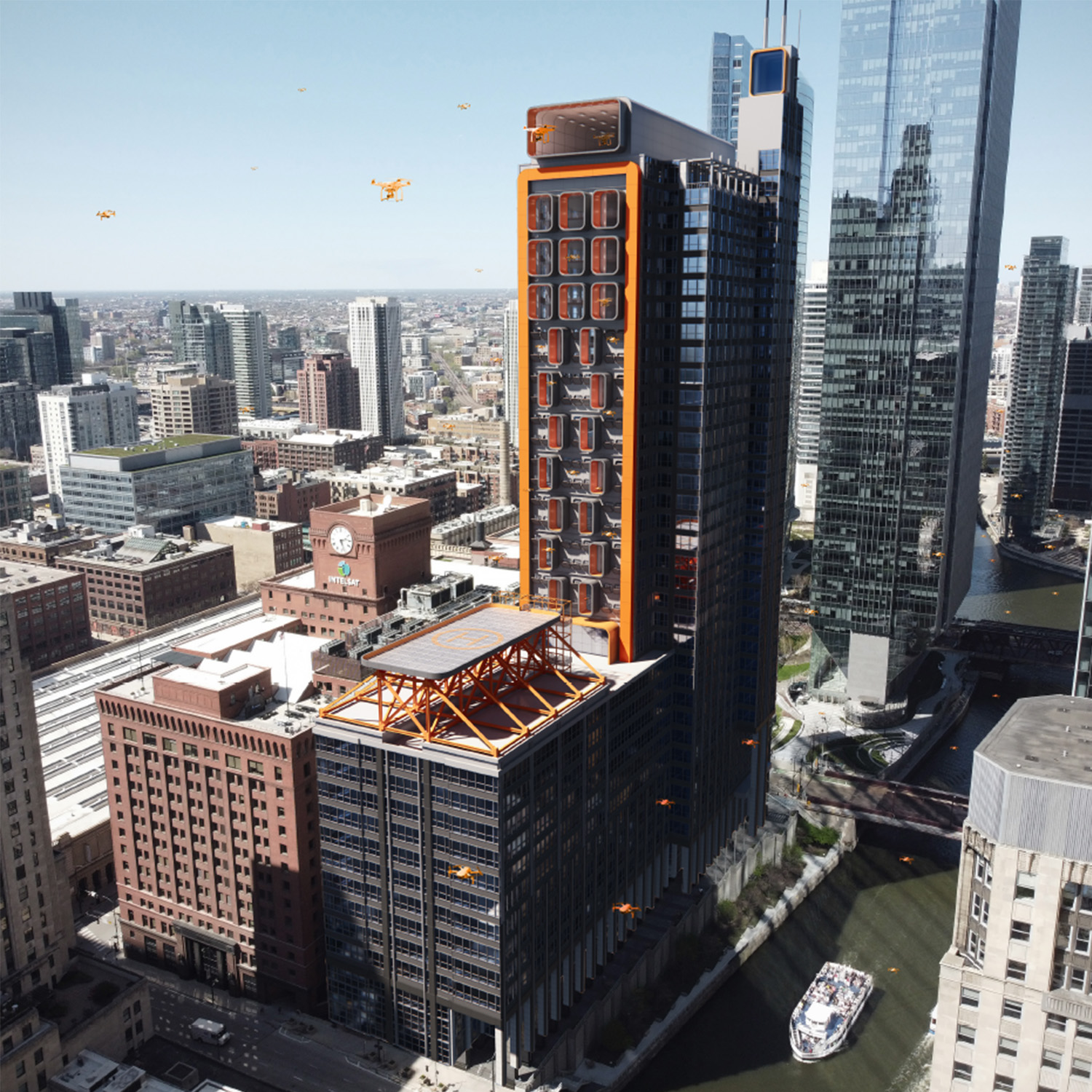
Aero Logix by Jusang Lee
The SkySki Resort (Aon Center) by Omair Godil provides not just skiing, but a year-round hub for outdoor enthusiasts, offering a diverse range of activities for all seasons. From skiing down snow-capped slopes in winter to hiking and biking trails in the summer, this resort celebrates Chicago’s four seasons. But it’s not just about adventure; sustainability is at its core. By filtering greywater to create snow, we not only ensure a consistent ski-ing experience but also contribute to the rejuvenation of Lake Michigan. Amidst the challenges faced by the ski industry and downtown vacancies, SkySki Resort stands out as a beacon of transformation by turning the AON Center, once an office tower struggling with vacancies and declining value, into a dynamic urban attraction, breathing new life and excitement into Chicago’s skyline
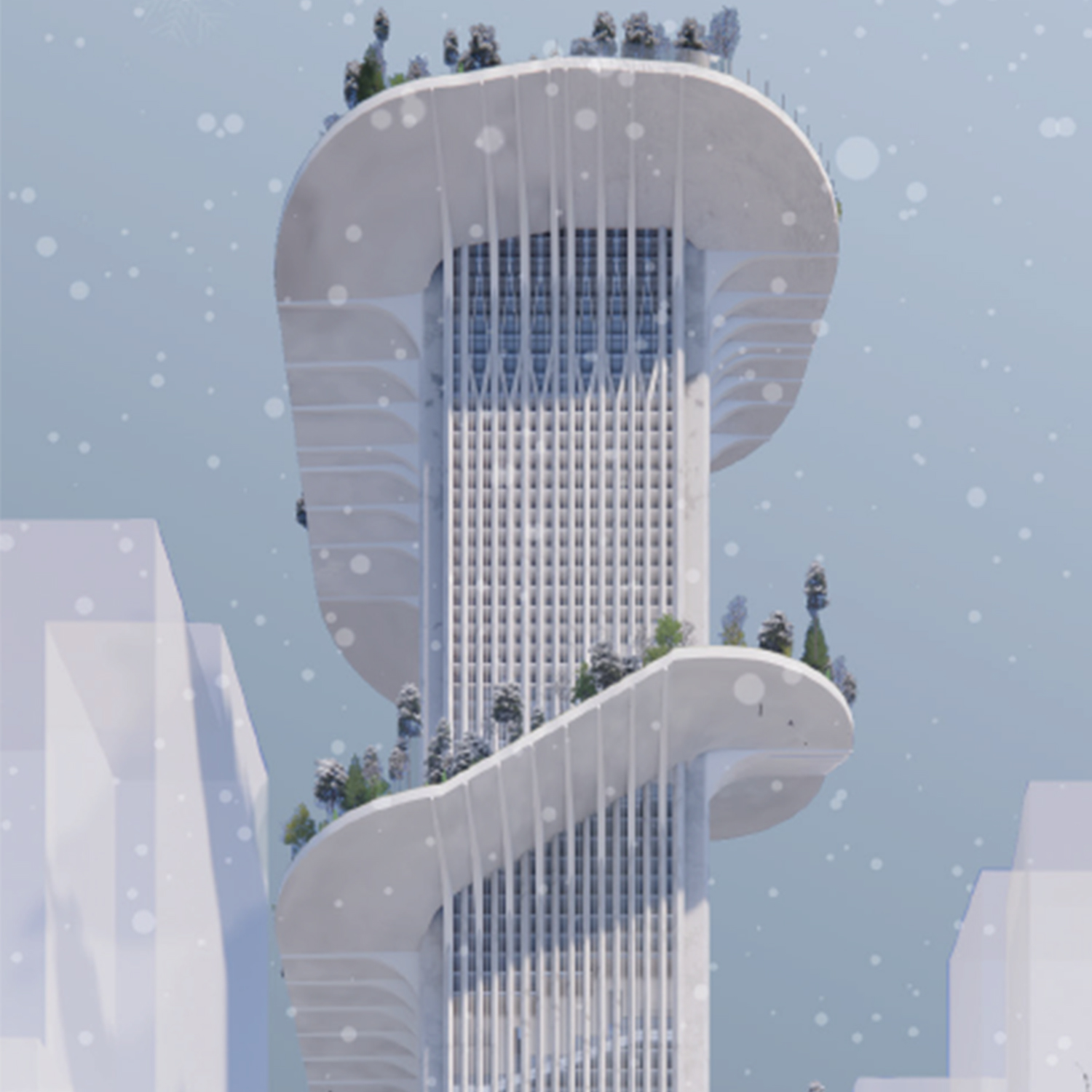
The SkySki Resort by Omair Godil