


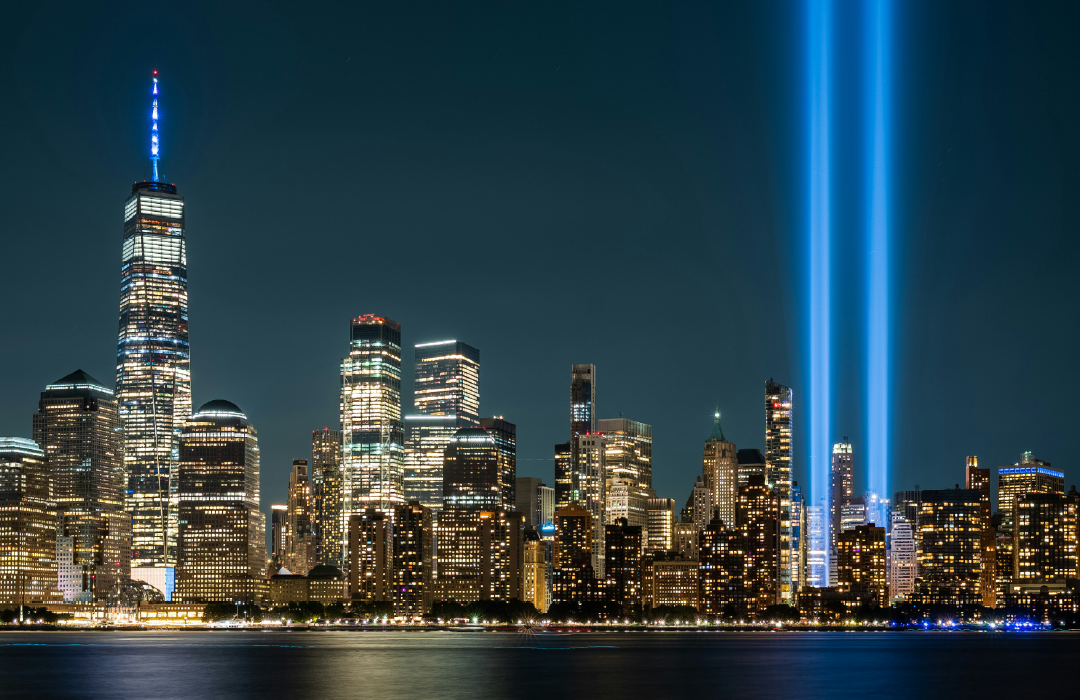
Today marks 25 years since the attacks on September 11, 2001, a day that changed the course of our field and our world.
Heralded as defining landmarks in the New York City skyline, the World Trade Center towers were, for a generation of engineers, architects, and urbanists, symbols of what tall buildings could represent: ambition, connection, and the shared work of building cities that reach upward together. Their loss, and the loss of nearly 3,000 lives that day, is one that CVU reflects on and holds with its members and extended community.
In the years since, the industry has carried forward hard-won lessons in structural resilience, fire safety, egress design, and emergency preparedness. It is work that has made tall buildings safer for everyone who lives, works, and gathers in them.
For CVU members who want to go deeper, our research library includes work spanning the 25 years of structural investigation, the evacuation studies that followed, and the decades of rebuilding at the site itself, including:
- What Does September 11th Mean for Building Structure Design (Magnusson, CTBUH Review, January-March, 2003)
- Evacuation of the World Trade Center: What Went Right (Fahy and Proulx. Proceedings of the CIP-CTBUH International Conference on Tall Buildings, 20-23 October 2003, Malaysia. CIB Publication No: 290)
- How World Trade Center Affected Tall Building Life Safety Design (Baldassara, Evenson, and Lay. CTBUH Journal, Issue III, 2011)
- Planning The World Trade Center: 40 Years Apart (Clerks, CTBUH Journal, Issue III, 2011)
- Rebuilding World Trade Center (Norman, Scanlan, and Silverstien. Vertical Urbanism magazine, Issue III Q1, 2025)
These and more are accessible to our members in CVU’s ENGAGE Research Library.
On this anniversary, we take pause and remember those who were lost, the first responders who ran toward danger, and the families who still carry that day with them.
With respect and remembrance, our thoughts remain with all who carry this loss.