


Over half a million people in the US are homeless, as per the 2022 Annual Homeless Assessment Report by the US Department of Housing and Urban Development. The number of homeless people is increasing faster than the new supportive transitional housing units being built for them. Communities’ regulatory patterns across the country have led to a lack of affordable housing, which is causing a rise in homelessness.
National design firm, KTGY has designed several communities that offer supportive housing for formerly homeless individuals. Supportive housing is a type of housing that serves individuals experiencing homelessness or at risk of homelessness by providing on-site services such as medical care and social services. Supportive housing raises the question of how to balance the need to provide as many homes as possible in a respectful and reasonable manner.
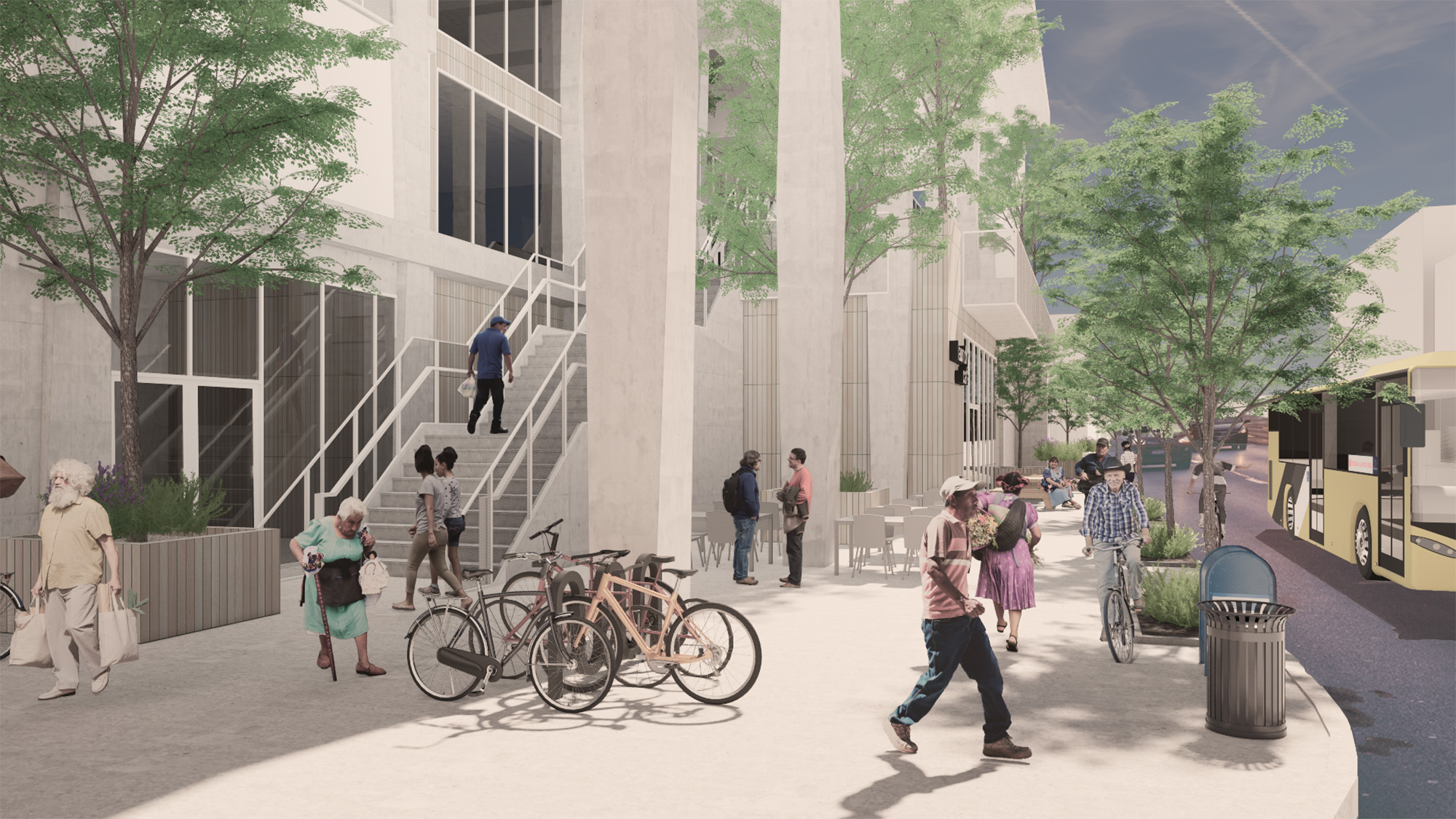 Concept by KTGY’s R+D Studio
KTGY’s Research and Development studio designed The Essential, a concept proposing a prototypical 12-story concrete building with steel modular units as a solution to providing housing and services to the unhoused. The Essential is designed to be standardized and replicable for up to 14 different underutilized sites within Los Angeles’ Skid Row neighborhood, housing 335 people and providing essential support services.
The Essential suggests a methodology that can generate a larger number of homes in a shorter period of time. Replication can minimize the number of details created, reduce the time spent reviewing drawings, and mitigate future negative feedback by incorporating lessons learned.
The Essential strives to be a support system and community resource. It offers a ground-level plaza, welcoming new residents, and providing job training and work opportunities for residents. The Essential also provides counseling, training, administrative services, recuperative care, and a sobering center. On each residential level, resident advocates are available for support, as needed.
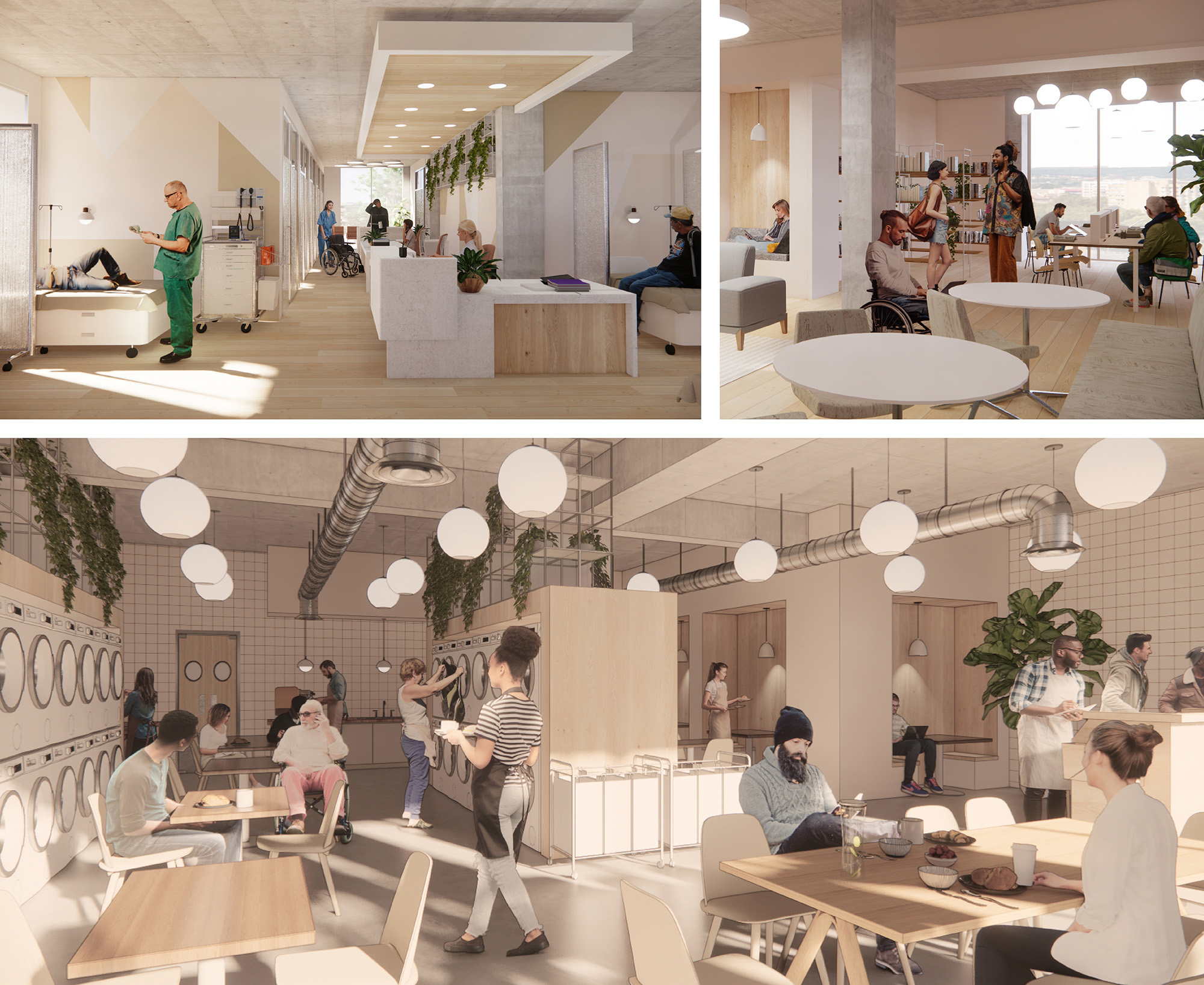 Concept by KTGY’s R+D Studio
Homelessness in America has a long and challenging history. Although the cost of housing America’s unhoused population may seem like an overwhelming drain on taxpayer money, the expense of emergency services for individuals living on the streets ultimately exceeds the cost of subsidized housing. When formerly unhoused individuals can settle into long-term housing, they experience improvements in their mental and physical health and increased employment opportunities, leading to future stability and success.
Read more about this story at BDC Network.