


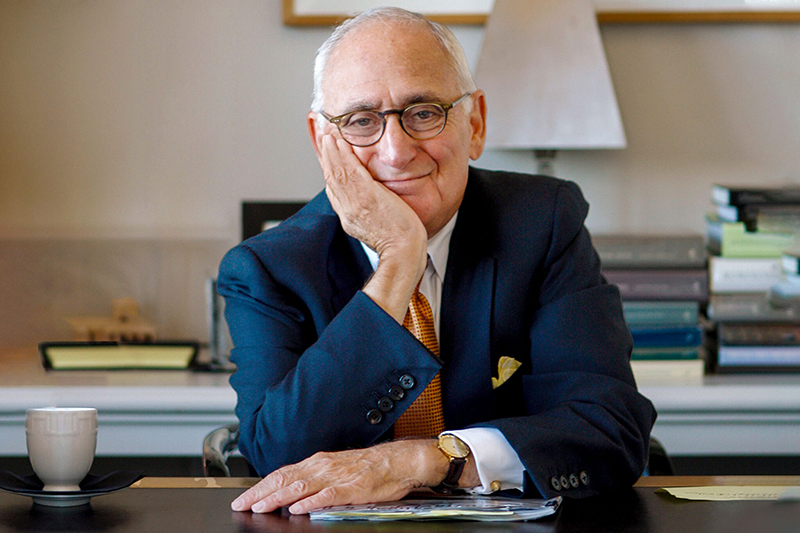
The Council remembers Robert A.M. Stern, the founder of Robert A. M. Stern Architects (RAMSA), a dedicated organizational member at CVU (previously CTBUH). Stern died on Thursday, 27 November 2025, at his home in Manhattan at the age of 86. He was an incredibly influential American architect of the past half-century—a designer, historian, educator, and urban advocate whose work fundamentally shaped the contemporary language of urban design and skyscrapers in New York and beyond.
Throughout his long-spanning career, Stern championed an approach to architecture grounded in history, contextual sensitivity, and the enduring value of craftsmanship. While his early work focused largely on institutional and cultural projects, his practice, founded in 1977, would later become a defining force in the rebirth of the classic Manhattan residential high-rise. Drawing from the materials, proportions, and urban rhythms of the city’s prewar masonry towers, Stern reintroduced a tradition of dignified vertical living at a moment when glass-clad Modernism dominated the skyline.
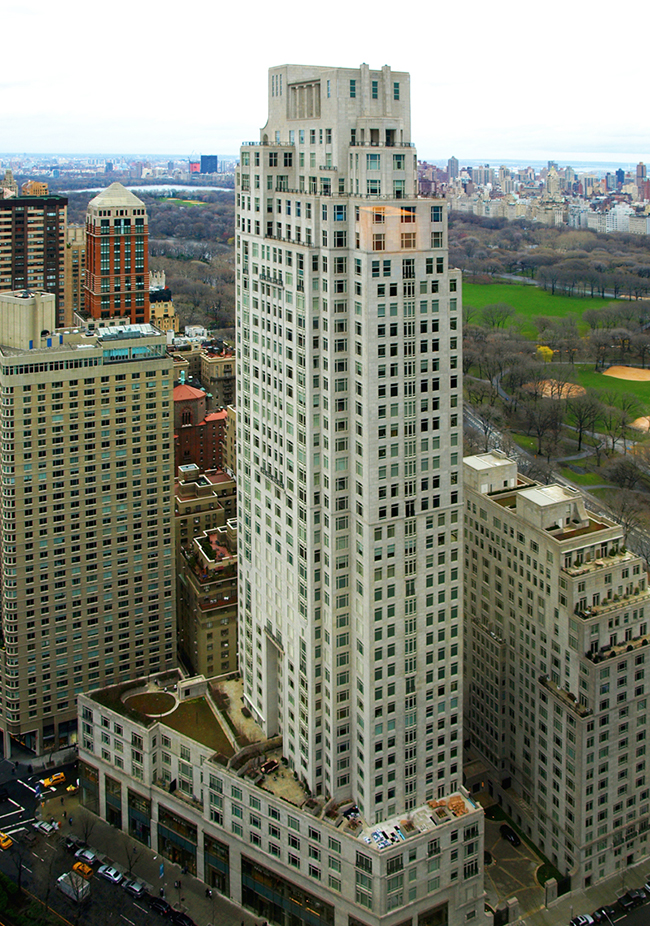 Tower at 15 Central Park West, New York City. Image by Marshall Gerometta.
In 2008, the 35-story Tower at 15 Central Park West was an unprecedented commercial and cultural success that reshaped global expectations for luxury high-rise living. Conceived as a limestone exterior that recalled the architectural lineage of Fifth Avenue and Central Park West, the project combined prewar elegance with contemporary performance and tenant amenities. Its critical acclaim, record-setting sales, and influence on international developers positioned Stern as a leading architect of a renewed commitment to contextual, masonry-based tall buildings in major cities. Other buildings of note are the 65-story 220 Central Park South completed in 2019, and the 67-story 30 Park Place completed in 2016.
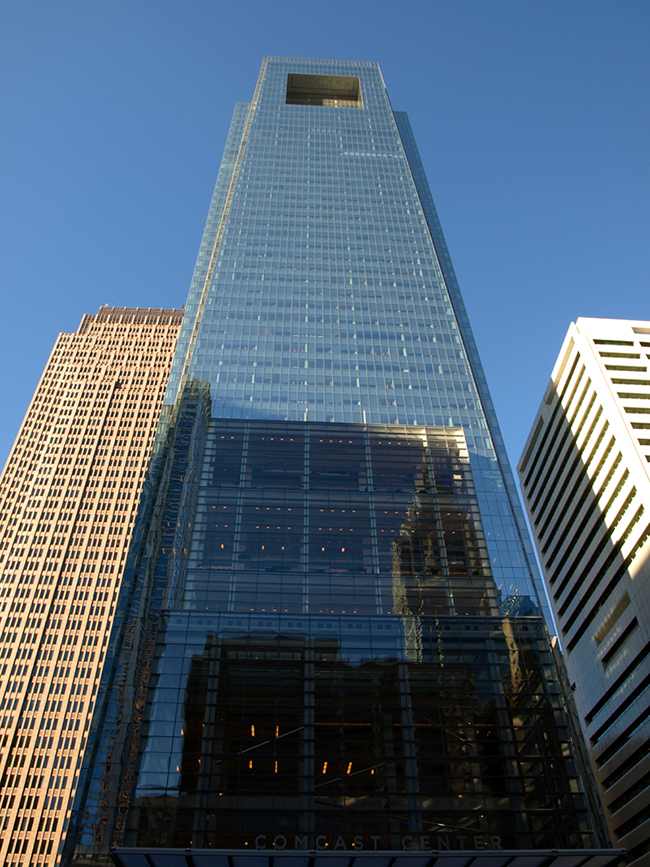 Comcast Center, Philadelphia. Image by Marshall Gerometta.
Also completed in 2008 was the 57-story Comcast Center in Philadelphia, the new headquarters for the Comcast Corporation, with typical floor plates ranging between 2,140 and 2,600 square meters (23,000 and 28,000 square feet). Taking the form of a faceted obelisk, the high-rise is clad in silvery high-performance glass with ultra-clear, low-iron glass at the building’s corners and crown. It is the tallest building completed by the firm to date, standing at 297 meters (974 feet), and in 2018, the building received a CTBUH 10-Year Award of Excellence for its enduring design and performance.
In addition to his influence on residential skyscraper design, Stern contributed to the broader built environment. In 2015, the glass-faceted Tour Carpe Diem in Courbevoie, France was the receipient of a CTBUH Urban Habitat Award of Excellence. The project championed pedestrian-friendly urbanism by reconnecting the raised esplanade that continues the axis of the Champs-Elysées to the surrounding urban fabric of the town of Courbevoie to the north. A monumental stair descends from the building’s winter garden and lobby to a public plaza on the Boulevard Circulaire, where a second front welcomes visitors at what was heretofore the back of the site. It was also the first building to exceed France’s Haute Qualité Environnementale standards and also achieved LEED-CS Platinum certification.
Other projects he worked on contributed to major civic and cultural works, including the George W. Bush Presidential Center, the Museum of the American Revolution, and the Gerald R. Ford School of Public Policy. His academic leadership as Dean of the Yale School of Architecture (1998–2016) shaped a generation of architects through a pedagogy that embraced architectural pluralism, historical awareness, and rigorous urban analysis.
For the tall building community, Stern’s legacy resides in his insistence that high-rise development must do more than pursue height—it must enhance the city. His buildings were not conceived as isolated icons, but reinforced the street wall, expressed material longevity, and contributed meaningfully to the evolving culture of dense urban living. At a time when global skylines were rapidly transforming, Stern reminded the profession that history is not an impediment to innovation but a resource for creating cities that are both forward-looking and deeply rooted.
The Council extends its sincere condolences to the Stern family, as well as the entire team at RAMSA. We recognize, with gratitude, the profound influence Stern exerted on the built world and the generations of architects, planners, and scholars who continue to learn from his example.