


History of Vertical Network Infrastructure in Urban Areas
The history of stacking technology infrastructure within tall buildings most notably began with telephone companies and their associated networks.
One such prominent example is from the 1920s where the former headquarters of the New York Telephone Company occupied an entire building in lower Manhattan between Barclay and Vesey Streets (which provided the building with its colloquial name of the “Barcley-Vesey” building for much of its lifespan). Completed in 1926, the building served as a consolidation of multiple company facilities scattered inefficiently across New York City and incorporated corporate offices above floors dedicated to administrative functions as well as switchboards and other telephone system equipment.
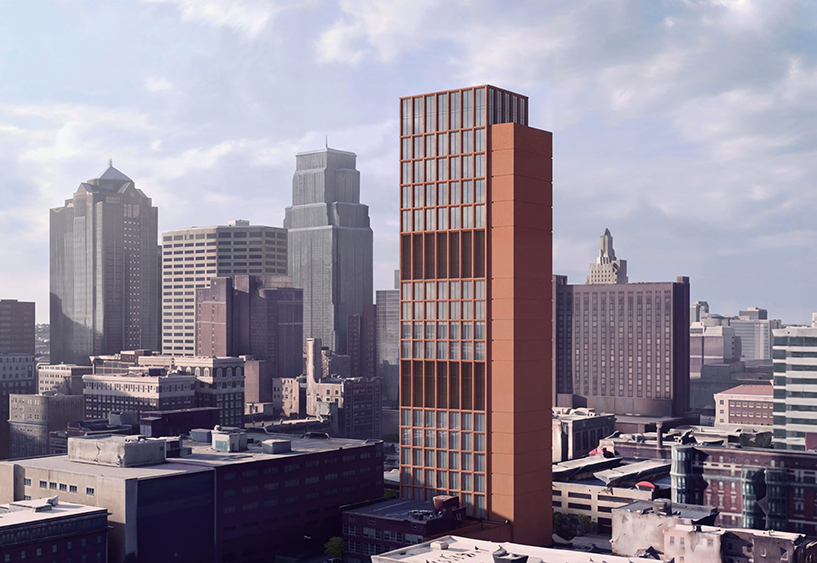
Similar types of construction were distributed throughout New York and other cities well into the mid-twentieth century. Some were notably tall and largely windowless buildings added to skylines in the 1970’s. This included the AT&T Building at 10 South Canal Street in Chicago (148 meters) and the Long Lines Building in Lower Manhattan (168 meters). In Kansas City, Missouri a building designated for similar telecommunications purposes is located downtown, not far from the proposed vertical data center of the proposed SOM-designed data center.
The AT&T Toll Building, just over 100 meters in height, had an additional 56 meters (185 foot) steel tower erected on the roof in 1981 to support antennas for line-of-sight transmission, which has since been removed.
While data centers continue to controversial across communities, the designated use may not necessarily be a permanent function in a tall building as a skyline continues to grow or needs change in the surrounding area. Case in point, the Barclay-Vesey building, know called The Barclay, has since been renovated and partly converted to residential use, exemplifying the flexibility of tall building to accommodate multiple functions over their lifespans.
As technological needs evolve, CVU expects that the emergence of tall buildings hosting such equipment will continue to be seen as an alternative to the horizontal focused development in suburban, exurban and rural locations.