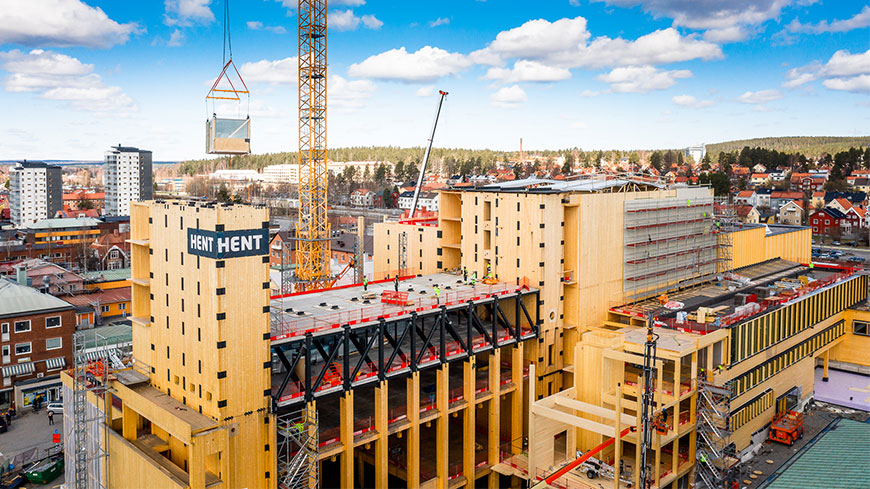
At the outset of this project, the global building industry was at a turning point, where increasing pressure toward more sustainable construction methods drove significant interest in engineered mass timber—not only because of its perceived lower carbon footprint in production, but also because of timber’s ability to sequester carbon from the atmosphere as it grows. However, the adoption of mass timber remained in its relative infancy, with heights in the 15–20 floor range typically being achieved at the time. Timber needed to act in symbiosis with other materials, such as steel, to achieve greater heights for these buildings.
The overriding objective of this project, therefore, was to capture the then-current state of the art and the full potential of steel–timber hybrid structures in high-rise buildings globally, as a means of clarifying the benefits of steel–timber hybrid construction for the tall building industry. Through detailed, data-driven case study analyses—including built, under-construction, and proposed buildings—the primary motivators that dictated and enabled the use of steel–timber hybrid systems were identified, and life-cycle costs and environmental impacts were examined. Common characteristics and drivers were published and promoted to guide and influence the future of the building industry, underscoring the value proposition of steel–timber hybrids. Through this in-depth assessment of the design, cost, environmental, and market benefits of steel–timber composite structures, a significant research report was produced, serving as a precedent reference for industry stakeholders.
Note: This project was the next step, and built upon, other CVU Timber Research Projects, namely: